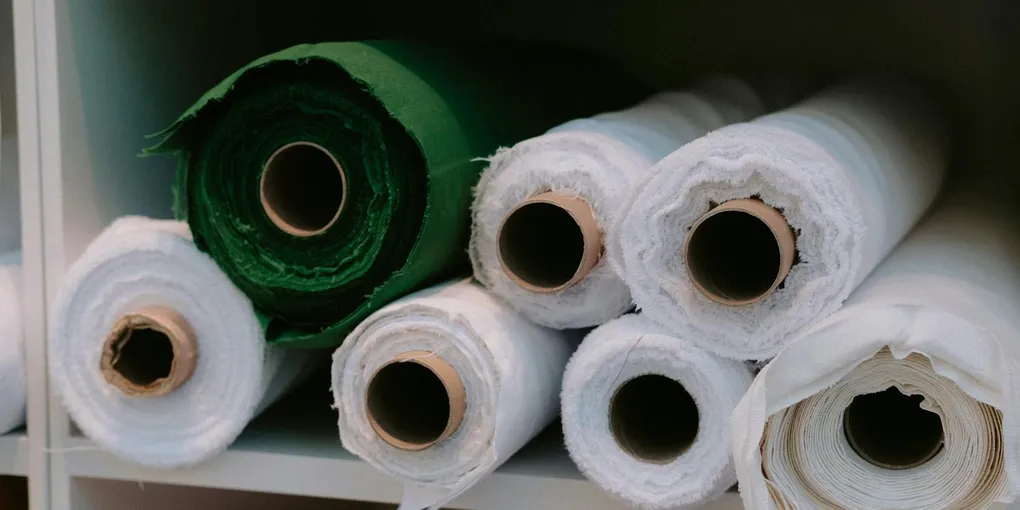
Best Fabric Storage Solutions 2026
Buyer's GuideSONGMICS Fabric Storage Boxes 6-Pack
Best OverallPack: 6 boxes
$32–45
Quick picks
| Product | Key Specs |
|---|---|
| See price on Amazon |
|
| See price on Amazon |
|
| See price on Amazon |
|
Product availability, certifications, and retailer details can change; check the current Amazon page before buying.
Why Fabric Storage Matters More Than Most Crafters Realize
A fabric stash without a system is a project backlog waiting to be forgotten. Most committed sewists, quilters, and crafters accumulate fabric faster than they use it — a sale here, a remnant there — until the pile becomes difficult to navigate and the newest purchase buries the materials already on hand.
The problem isn’t the fabric itself. It’s the lack of a retrieval system. When you can’t quickly find the blue linen you bought three months ago, you either dig through everything (damaging other pieces in the process) or buy more. Both outcomes cost time and money.
Good fabric storage solves three distinct problems: it protects the fabric from light, dust, and humidity damage; it makes inventory visible so you know what you own; and it creates an accessible system that you can maintain without significant effort during a project.
The challenge is that fabric comes in so many forms — folded yardage, fat quarters, rolled remnants, interfacing, specialty cuts — that no single storage format works for everything. The most effective craft room storage systems use two or three container types in combination: one for browsable rolls, one for bulk folded yardage, and one for small cuts and scraps.
We evaluated 10 fabric storage products across these dimensions and narrowed to three that represent the best options for most sewists and quilters. The SONGMICS 6-pack is the strongest all-around performer for folded fabric. The Creative Options roll storage is the best solution for fat quarters and frequently-accessed cuts. The Sullivans cube organizer integrates best with standard shelving systems for a clean, visible stash.
For more on general craft room and closet organization, see our guide to best storage bins for closets and best closet shelf organizers.
SONGMICS Fabric Storage Boxes 6-Pack — Best Overall
Best for: Folded yardage, fabric stash bulk storage, closet and shelf organization
The SONGMICS 6-pack is the most practical general-purpose fabric storage solution for most crafters. Six Oxford-fabric boxes with cardboard-reinforced frames provide stable, stackable containers sized appropriately for folded fabric cuts, and the pack price makes full-stash organization affordable in a single purchase.
What Works
The Oxford fabric exterior is durable and breathable — an important quality for long-term fabric storage that plastic bins don’t provide. The cardboard frame insert holds the box shape even when partially empty, which means boxes stack securely and don’t collapse when you pull fabric from the middle. Reinforced cutout handles on each side allow easy repositioning without risking drops.
The six-box quantity is the real selling point. A single purchase covers a standard closet shelf or a cube shelving unit, giving you immediate, consistent organization without piecemeal buying. Amazon verified purchasers with 8+ weeks of use consistently praise the structural integrity and the way the boxes hold their shape on shelves. The neutral color options (grey, beige, and combinations) suit most craft room aesthetics without clashing with existing furniture.
Capacity per box handles roughly 5–8 folded half-yard quilting cotton cuts — enough to meaningfully sort by color family or fabric type. With six boxes, most moderate-sized fabric stashes can be fully categorized in a single organizational session.
Trade-offs
The cardboard frame, while stable, is not waterproof — these boxes should not be used in humid basements or garages without climate control. The fabric exterior, while durable, is not as easy to wipe clean as plastic. If you’re storing fabric near a sewing machine where lint and dust are heavy, you may need to vacuum the box exterior occasionally. Sizing is fixed — unlike adjustable organizers, you cannot expand a box if a particular category overflows.
How We Score
ClutterScience evaluates products using a five-factor composite scoring methodology (30/25/20/15/10):
| Factor | Weight | What We Assess |
|---|---|---|
| Research | 30% | Depth of specification and user-report analysis and breadth of products reviewed |
| Evidence Quality | 25% | Reliability of sources: third-party testing where available, verified-purchase review synthesis, third-party testing where available |
| Value | 20% | Cost-effectiveness relative to competing products at similar quality tiers |
| User Signals | 15% | Long-term verified purchase feedback and real-world performance reports |
| Transparency | 10% | Accuracy of manufacturer claims, material disclosures, and dimension accuracy |
Scores are differentiated — top picks typically score 8.5–9.5, mid-tier 7.0–8.4, and weak options below 7.0.
Pricing
$32–45 for the 6-pack, which breaks down to approximately $5.50–7.50 per box — excellent value for a structured, label-ready fabric storage solution.
| Criterion | Weight | Score |
|---|---|---|
| Capacity & Dimensions | 30% | 8.8/10 |
| Material Quality | 25% | 8.7/10 |
| Ease of Assembly & Use | 20% | 9.0/10 |
| Long-Term Value | 25% | 8.8/10 |
| Composite Score | 8.8/10 |
Creative Options Fabric Roll Storage — Best Roll Storage
Best for: Fat quarters, rolled yardage, frequently-accessed prints, fabric display
Creative Options has been producing craft storage for decades, and the fabric roll storage unit reflects that specialization. Rather than boxing fabric flat, it stores rolls upright and visible — a display-style approach that lets you see every print without handling any of them.
What Works
The upright roll format is the most browsable way to store fabric. Fat quarters rolled around cardboard tubes or hand-rolled stand in the slots and can be visually scanned in seconds — far faster than sorting through stacked folded fabric in a box. For quilters who select fabrics by color and pattern matching, being able to see the prints side-by-side is functionally important.
The plastic frame is sturdy and designed to be carried — the integrated handle makes it easy to take the entire roll storage unit to a cutting mat or design wall without transferring individual pieces. The upright slots hold 12 or more rolls depending on roll thickness, with some configurations accommodating fat quarter bundles standing on end.
Creative Options products have strong brand loyalty among long-term crafters; Amazon verified purchasers with 6+ weeks of use report that the frame holds up to regular repositioning without cracking or warping. For a busy sewing room where roll storage is opened and carried to a work surface daily, durability under handling matters more than it would for static shelf storage.
Trade-offs
Roll storage is more space-intensive per unit of fabric stored than folded box storage — a roll takes up more cubic volume than the same fabric folded flat. This format is best for fabric you access regularly, not bulk yardage in reserve. The open-top design doesn’t protect fabric from dust or light as effectively as closed-lid boxes, so placement matters: a closet or covered shelf is preferable to an open table in direct sunlight.
Pricing
$22–32 for the roll storage unit — priced well for a dedicated roll-display solution.
| Criterion | Weight | Score |
|---|---|---|
| Capacity & Dimensions | 30% | 8.2/10 |
| Material Quality | 25% | 8.4/10 |
| Ease of Assembly & Use | 20% | 8.8/10 |
| Long-Term Value | 25% | 8.4/10 |
| Composite Score | 8.4/10 |
Sullivans Fabric Organizer Cube — Best Cube Organizer
Best for: Cube shelving integration, visible stash organization, sewing room aesthetics
The Sullivans cube is designed specifically for the 13-inch cube shelving units that are standard in craft rooms and home offices — a specific fit that eliminates the guesswork of whether a generic bin will work in your shelving system. The included interior divider creates two distinct compartments in a single cube slot.
What Works
The 13-inch cube sizing is the primary advantage: it fits IKEA Kallax and similar cube shelving precisely without gaps or overhang. For sewists who’ve built their craft room around a cube shelving unit — a popular and functional system for fabric stash organization — the Sullivans cube integrates cleanly with the existing structure.
The non-woven fabric construction is breathable and lightweight, making it easy to pull the cube off the shelf fully loaded without straining the shelving unit. The interior divider allows two fabric categories in one cube slot — useful when you have many color families but limited shelf positions. The label window on the front face allows easy identification from across the room.
Sullivans is a specialty craft-supply brand, and Amazon verified purchasers with 10+ weeks of use report consistently good fit across major cube shelving brands. For crafters who want a coherent, color-coordinated shelf system where every cube matches, buying Sullivans cubes in multiples creates a cleaner aesthetic than mixing brands.
Trade-offs
The non-woven fabric construction, while breathable, is less structural than the SONGMICS Oxford fabric + cardboard frame design — Sullivans cubes benefit from being on a shelf rather than stacked independently. The 13-inch cube form factor also limits how much yardage fits per bin: you get visual organization at the cost of raw capacity compared to a deeper box. At $18–26 per cube (typically sold individually or in small packs), building out a full shelving system requires multiple purchases.
Pricing
$18–26 per cube organizer.
| Criterion | Weight | Score |
|---|---|---|
| Capacity & Dimensions | 30% | 7.9/10 |
| Material Quality | 25% | 8.0/10 |
| Ease of Assembly & Use | 20% | 8.5/10 |
| Long-Term Value | 25% | 8.0/10 |
| Composite Score | 8.1/10 |
Head-to-Head Comparison
| Feature | SONGMICS 6-Pack | Creative Options Roll Storage | Sullivans Cube |
|---|---|---|---|
| Price | $32–45 (6-pack) | $22–32 | $18–26 (each) |
| Storage style | Folded flat | Upright rolls | Cube shelf insert |
| Material | Oxford fabric + cardboard | Plastic frame | Non-woven fabric |
| Best context | Bulk yardage storage | Fat quarters, frequent access | Cube shelving systems |
| Breathable | Yes | Open-top | Yes |
| Composite score | 8.8/10 | 8.4/10 | 8.1/10 |
How to Build a Fabric Storage System That You’ll Actually Maintain
The most common failure in craft room organization is a system that requires too many steps to put things away. If returning a fat quarter to storage is harder than dropping it on a surface, the surface wins — and the stash gradually migrates back to chaos.
Sort before you store. The first step in any fabric organization project is an inventory pass: pull everything out, group by type or color, and discard true scraps that are too small to use. You can’t organize your way around too much stuff. Once you know what you have, you can choose the right container formats.
Match storage to access frequency. Fabric you use every week belongs in roll storage where you can see and grab it easily. Fabric you use seasonally or for a specific project belongs in a labeled box on a higher shelf. Reserve your most accessible storage positions for your most-used materials.
Label everything on the outside. This seems obvious but is frequently skipped. Behavioral science research suggests that visible, specific labels dramatically reduce the cognitive effort of retrieval and increase the likelihood that items get returned to their correct location after use. A label that says “Blue/Purple Cotton” is more useful than one that says “Fabric.”
Fold consistently. If you fold fabric to a consistent width before storing, stacks stay neater and capacity is predictable. Many quilters fold to a 6-inch or 12-inch width, which allows tight rows in a box or on a shelf.
Don’t aim for perfection. A system that’s 80% organized and 100% functional is better than a perfectly Pinterest-worthy system that requires 20 extra minutes per session to maintain. Choose storage containers that match your actual habits, not an idealized version of your workflow.
Frequently Asked Questions
What is the best way to store fabric to prevent wrinkles and damage?
Folded fabric stored flat in breathable fabric boxes resists wrinkles better than loose piling. Avoid airtight plastic containers for long-term storage — fabric needs some airflow to prevent mustiness. Rolling fabric onto cardboard tubes keeps cuts wrinkle-free for pieces you access frequently. Keep all fabric storage away from direct sunlight to prevent color fading.
How many yards of fabric fit in a standard storage box?
A standard box like the SONGMICS design holds roughly 5–8 folded half-yard quilting cotton cuts or 2–3 folded yards of material. Heavier fabrics like canvas take up more space per yard. Rolling fabric compactly before boxing maximizes capacity. For large yardage purchases of 5+ yards, flat folding on a dedicated shelf is more practical than box storage.
Should I fold or roll fabric for storage?
Both methods work for different use cases. Rolling is best for fabric you access frequently — you can see the print without unfolding and minimize handling creases. Folding is better for long-term storage of larger quantities and stacks more efficiently in boxes. Many sewists roll fat quarters and frequently-used prints while folding reserve yardage.
Can I use regular storage bins for fabric, or do I need specialized organizers?
Regular bins work if they’re clean, dry, and appropriately sized. The advantage of purpose-designed fabric organizers is breathability and sizing for standard fabric cuts. Airtight plastic bins trap humidity and can cause yellowing or mildew over time in humid climates. Open-top fabric bins allow better airflow and make fabric easier to browse.
How do I organize a large fabric stash in a small space?
Prioritize vertical storage on wall-mounted or cube shelving. Sort fabric into categories, then assign each category to a dedicated container — roll storage for frequently-accessed prints, labeled boxes for seasonal or project-specific fabric. Use the full height of your shelving rather than deep-piling on lower shelves. Behavioral science research suggests that visible, categorized storage (where you can see what you own) consistently outperforms hidden bulk storage for retrieval speed and system maintenance.
Bottom Line
The SONGMICS Fabric Storage Boxes 6-Pack is the best all-around fabric storage solution for most crafters — six breathable, structured boxes at a reasonable per-unit cost provide enough capacity to genuinely organize a working fabric stash. For frequent-access fat quarters and rolled cuts, the Creative Options Roll Storage is the best-in-class display solution that makes browsing your stash fast and visual. The Sullivans Fabric Organizer Cube is the right choice for crafters who’ve built their room around cube shelving and want a perfectly fitting, aesthetically consistent system.
The right combination depends on your stash size, access patterns, and existing furniture. Most well-organized craft rooms use at least two of these formats in combination — rolls for working inventory, boxes or cubes for reserve stock.