Best Fishing Gear Organizers and Tackle Storage 2026
Buyer's GuidePlano 3700 Size Prolatch StowAway Tackle Box
Best OverallCompartments: 24 adjustable
$18–28
Quick picks
| Product | Key Specs |
|---|---|
| See price on Amazon |
|
| See price on Amazon |
|
| See price on Amazon |
|
| See price on Amazon |
|
| See price on Amazon |
|
Product availability, certifications, and retailer details can change; check the current Amazon page before buying.
The Organized Angler Catches More Fish
There is a practical reason that experienced anglers are meticulous about tackle organization, and it has nothing to do with aesthetics. When fish are actively feeding — often for a window of only 20 to 30 minutes around dawn, dusk, or a weather change — the angler who can locate a specific lure color and size in under 30 seconds has a fundamental advantage over the one who is digging through a tangled box of loose hooks and lures. Tackle organization is not a hobby within a hobby; it is a performance variable.
Behavioral science backs this up in the broader context of preparation and decision-making. The “decision fatigue” effect, documented extensively in cognitive psychology research, shows that the quality and speed of decisions degrades rapidly when a person must search through unorganized information or materials. An angler facing a box of unsorted tackle must make a complex multi-dimensional decision (what lure, what color, what weight, what action) under time pressure without any organizational support. An angler with a properly labeled and categorized system makes that same decision in seconds.
This guide evaluates the best fishing gear organizers and tackle storage systems for 2026, covering the full range from compact single-box solutions for casual anglers to wall-mounted rod storage systems and complete tackle bag setups for serious fishing households.
How We Evaluated Fishing Gear Organizers
Each product was scored across four weighted criteria reflecting real angling needs and long-term storage performance.
Capacity and Dimensions (30%) — Compartment count, adjustability of dividers, and physical dimensions relative to the gear being stored. This includes both the tackle box itself and how efficiently it uses its footprint for organizing diverse tackle types.
Material Quality (25%) — Waterproofing (especially saltwater resistance), latch durability, hinge strength, and material resistance to UV degradation and fishing-environment exposure. Tackle boxes live wet and get thrown in boat compartments; they need to be tough.
Ease of Assembly and Use (20%) — How quickly can you locate and access a specific item? Are dividers adjustable without requiring tools? Do the latches open and close one-handed while holding a rod?
Long-Term Value (25%) — Price per compartment or organized item, system modularity (can you expand by adding boxes?), and whether the system maintains organization over a full fishing season of heavy use.
The Best Fishing Gear Organizers for 2026
How We Score
ClutterScience evaluates products using a five-factor composite scoring methodology (30/25/20/15/10):
| Factor | Weight | What We Assess |
|---|---|---|
| Research | 30% | Depth of specification and user-report analysis and breadth of products reviewed |
| Evidence Quality | 25% | Reliability of sources: third-party testing where available, verified-purchase review synthesis, third-party testing where available |
| Value | 20% | Cost-effectiveness relative to competing products at similar quality tiers |
| User Signals | 15% | Long-term verified purchase feedback and real-world performance reports |
| Transparency | 10% | Accuracy of manufacturer claims, material disclosures, and dimension accuracy |
Scores are differentiated — top picks typically score 8.5–9.5, mid-tier 7.0–8.4, and weak options below 7.0.
1. Plano 3700 Size ProLatch StowAway Tackle Box — Best Overall
Plano’s 3700 StowAway is the standard against which all other tackle boxes are measured, and that reputation is fully deserved. Its 24 adjustable compartments accommodate everything from tiny size 30 hooks to 5-inch swimbaits, and the dividers snap into different configurations without tools in about 30 seconds. The ProLatch closure mechanism is Plano’s best single innovation — a two-point latch that locks the lid securely against accidental opening (the most catastrophic tackle box failure mode) while opening easily with one hand when you need quick access.
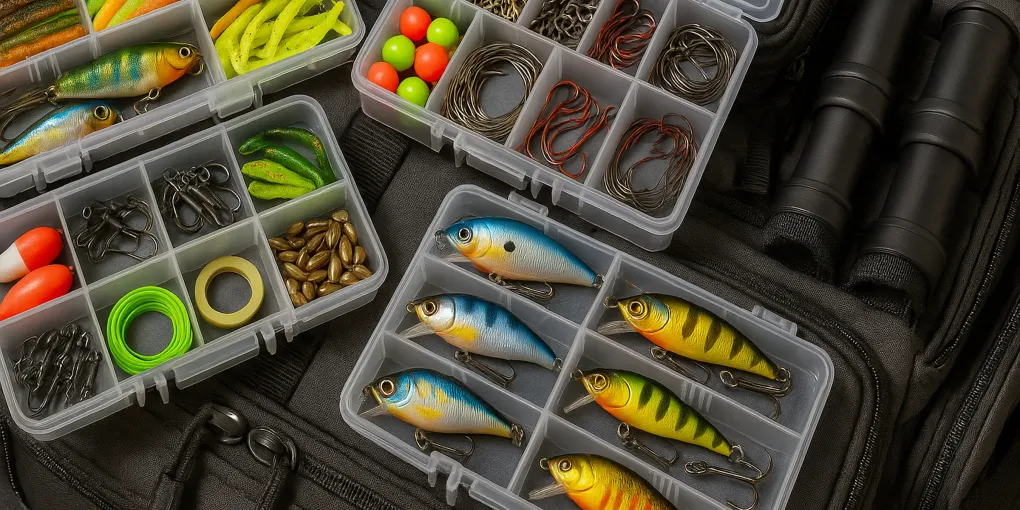
The polypropylene construction is impact-resistant enough to survive being dropped on a dock and UV-stable enough to maintain its structure through seasons of sun exposure. The clear lid allows full visual access to the contents without opening, which is a genuine time-saver when you are managing multiple boxes across a tackle bag.
The 3700 size is the most universal in the Plano lineup, fitting the widest range of tackle bag systems from multiple manufacturers. This compatibility makes the 3700 the standard denomination for building a modular tackle system: buy multiple 3700 boxes, organize by lure type or fishing technique, and load the appropriate boxes into your tackle bag for each trip.
| Criterion | Weight | Score |
|---|---|---|
| Capacity & Dimensions | 30% | 9.0/10 |
| Material Quality | 25% | 8.8/10 |
| Ease of Assembly & Use | 20% | 9.2/10 |
| Long-Term Value | 25% | 9.5/10 |
| Composite Score | 9.1/10 |
2. Plano EDGE Terminal Tackle Box with Foam — Best Waterproof Box
The Plano EDGE series represents a significant advancement over standard tackle boxes for anglers who fish saltwater or in high-moisture environments. The O-ring gasket seal on the EDGE creates a genuinely waterproof compartment — not just splash-resistant, but submersion-resistant up to several minutes based on manufacturer testing.
The waterproofing matters for two reasons: protecting tackle from external moisture (rain, spray, wave wash-over) and protecting moisture-sensitive items like soft plastics that degrade when exposed to saltwater or rainwater. The ergo foam lid lining adds a third benefit by preventing hooks and jigs from rattling and tangling when the box is carried, which is a subtle but meaningful quality-of-life improvement for anyone who has ever opened a standard box to find an integrated knot of treble hooks.
The 22-compartment layout uses the same adjustable divider system as the standard StowAway, maintaining Plano’s consistent organizational approach across the product line. The EDGE is more expensive than the standard StowAway, and that premium is fully justified for saltwater applications but may be unnecessary for freshwater-only anglers with covered tackle bag storage.
| Criterion | Weight | Score |
|---|---|---|
| Capacity & Dimensions | 30% | 8.7/10 |
| Material Quality | 25% | 9.5/10 |
| Ease of Assembly & Use | 20% | 8.8/10 |
| Long-Term Value | 25% | 8.5/10 |
| Composite Score | 8.9/10 |
3. Wild River Tackle Tek Nomad Lighted Tackle Bag — Best Tackle Bag
For anglers who want a complete, integrated tackle organization system rather than individual boxes, the Wild River Nomad delivers a level of functionality that no basic tackle bag approaches. The standout feature is the LED interior lighting system, powered by a removable battery pack, which illuminates the bag’s contents in pre-dawn darkness or the interior of a boat cabin — a feature that sounds like a luxury until you have tried to organize tackle in a dark boat at 5 AM.
The bag includes four Plano medium StowAway boxes in a design that holds them upright in padded compartments — preventing the lateral sliding that scatters tackle when a bag tips. Multiple external pockets handle tools (pliers, scales, lip grippers), leader materials, and soft goods. The 600D polyester construction is durable enough for seasons of hard use and water-resistant (though not waterproof) for tackle boxes inside.
At 80–120 dollars, the Nomad is the premium option in this guide, but it arrives essentially ready to fish — boxes included, organizational system established. For anglers upgrading from a disorganized duffel bag or a single large tackle box, the Nomad represents a one-purchase upgrade to a genuinely professional-grade system.
| Criterion | Weight | Score |
|---|---|---|
| Capacity & Dimensions | 30% | 9.0/10 |
| Material Quality | 25% | 8.7/10 |
| Ease of Assembly & Use | 20% | 9.0/10 |
| Long-Term Value | 25% | 8.3/10 |
| Composite Score | 8.8/10 |
4. Rush Creek Creations 36-Rod Wall Mount Storage Rack — Best Rod Storage
Fishing rods present a unique storage challenge: they are long (typically 6–8 feet), fragile at the tip, and expensive enough that improper storage leads to costly damage. Leaning rods against a wall is universally acknowledged as a bad practice — rods left leaning develop permanent bends over time and are constantly at risk of falling and breaking. A dedicated wall-mounted rod rack is not an organizational luxury; it is a necessary investment for anyone with more than two rods.
The Rush Creek 36-Rod Wall Rack provides double-contact storage: each rod rests in an upper cradle at the tip section and a lower cradle near the handle, distributing the rod’s weight over two points and preventing the single-point stress that causes bending. The felt-lined cradles protect rod blanks and guide rings from abrasion, and the 36-rod capacity handles even extensive collections of specialized rods (ice fishing, surf casting, ultralight trout rods) without doubling up.
The wood-and-metal construction has a finished appearance that looks appropriate in a garage workshop or finished basement. Installation requires wall studs and takes about 45 minutes including leveling.
| Criterion | Weight | Score |
|---|---|---|
| Capacity & Dimensions | 30% | 9.5/10 |
| Material Quality | 25% | 8.5/10 |
| Ease of Assembly & Use | 20% | 7.8/10 |
| Long-Term Value | 25% | 8.8/10 |
| Composite Score | 8.8/10 |
5. Berkley Fishing Gear Bag — Best Budget Bag
The Berkley Fishing Gear Bag provides an accessible entry point to organized tackle bag fishing for casual and beginner anglers who want more organization than a single box but are not ready to invest in a premium system. The bag includes two utility boxes with adjustable dividers and provides four external pockets for tools, soft plastics, and accessories.
The polyester construction is basic but functional for freshwater applications with reasonable care — keeping it out of standing water and storing it indoors between trips. The carry handles are comfortable for day trips with a moderate tackle load.
The Berkley bag’s primary limitation compared to the Wild River Nomad is capacity: it holds two medium boxes rather than four, and the organizational system is less refined. But for the angler who goes fishing once or twice a month with a focused tackle selection, it provides a meaningful organizational upgrade over a generic bag at a fraction of the premium system cost.
| Criterion | Weight | Score |
|---|---|---|
| Capacity & Dimensions | 30% | 7.5/10 |
| Material Quality | 25% | 7.3/10 |
| Ease of Assembly & Use | 20% | 8.5/10 |
| Long-Term Value | 25% | 8.0/10 |
| Composite Score | 7.8/10 |
Building a Modular Tackle System
The most effective tackle organization approach for serious anglers is a modular box-in-bag system where individual Plano or equivalent StowAway boxes are organized by technique or target species and loaded selectively into the tackle bag for each trip.
A typical modular breakdown for a multi-species freshwater angler:
Box 1 — Crankbaits: Divided by size and depth rating, organized left to right from shallow to deep diving. Box 2 — Soft Plastics Rigs: Pre-rigged Texas rigs, drop shot rigs, and Carolina rig components. Box 3 — Topwater: Poppers, frogs, walking baits, and buzz baits organized by size. Box 4 — Terminal Tackle: Hooks by size, sinkers by weight, swivels, snaps, and bobbers. Box 5 — Jigs and Soft Baits: Jig heads by weight, soft plastic trailers by type. Box 6 — Spinnerbaits and Bladed Jigs: Organized by blade color and skirt color combinations.
For a trip targeting bass in open water, you pull boxes 1, 2, 5, and 6. For a finesse panfish trip, you pull boxes 3 and 4. This approach means your tackle bag is always light and relevant rather than carrying your entire inventory to every fishing spot.
Saltwater vs. Freshwater Storage Requirements
Saltwater fishing demands significantly higher standards for tackle storage than freshwater. Salt is aggressively corrosive to most metals — hooks, split rings, swivels, and lure hardware all experience accelerated corrosion in saltwater environments. Tackle boxes stored without rinsing after saltwater exposure will become contaminated with crystallized salt that continues to corrode hooks and hardware even in dry storage.
For saltwater anglers, the minimum requirements are:
- Waterproof tackle box compartments (Plano EDGE or equivalent)
- Stainless steel or treated hardware on all lures and terminal tackle
- Fresh water rinse of all tackle and boxes after every saltwater trip
- Silica gel desiccant packets in stored boxes to control humidity between trips
Garage Rod Storage and Long-Term Organization
For households with significant rod collections, combining wall-mounted rod storage with a garage shelving system creates a complete fishing headquarters that minimizes pre-trip preparation time. Store rods at a height that prevents tip contact with the ceiling, and position the rack near the garage door for efficient loading.
For the garage shelving that supports tackle bag storage and accessory bins alongside the rod rack, see our guide to the best garage shelving units. For a broader look at organizing the full range of outdoor sports gear in your garage, see the best garage sports equipment storage roundup.
Final Recommendations
For most anglers, the foundation of a great tackle storage system is a collection of Plano 3700 StowAway boxes organized by technique or species and loaded into a dedicated tackle bag for each trip. The investment is modest — three to five boxes at 18–28 dollars each — and the organizational improvement is transformative.
Saltwater anglers and those in high-humidity environments should replace standard StowAway boxes with the Plano EDGE waterproof version for any tackle that is moisture-sensitive. Serious rod collectors should invest in the Rush Creek 36-Rod Wall Rack as an essential piece of garage infrastructure rather than a discretionary upgrade.
For the complete system — boxes, bag, and garage rod storage — the total investment is comparable to a single mid-grade rod and reel, and the return in time saved and tackle protected makes it one of the best investments a fishing household can make.