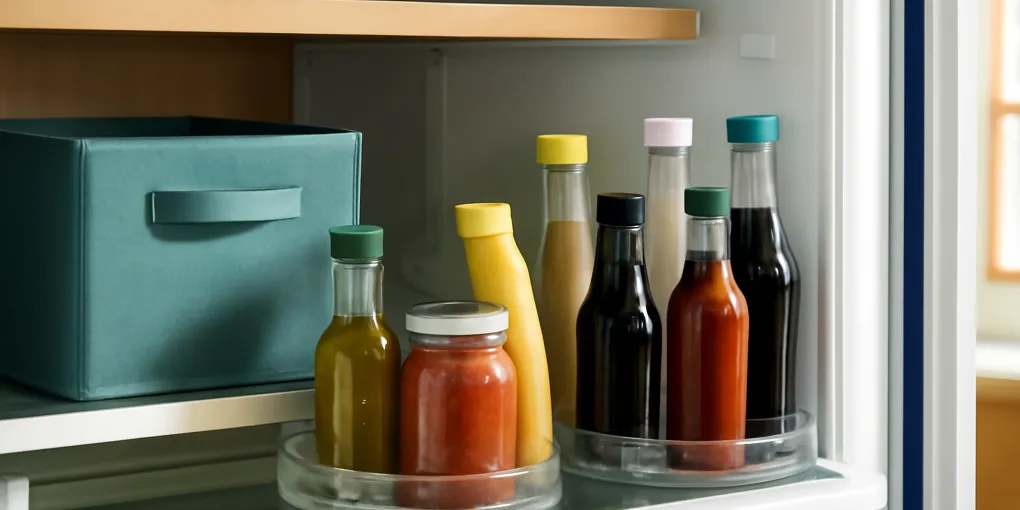
Best Fridge Turntables and Condiment Shelves for Crowded Refrigerator Doors
Buyer's GuideClear Refrigerator Turntable
Best for crowded condiment zonesBest For: Sauces, jars, and small bottles on an eye-level shelf
$15-32
Quick picks
| Product | Key Specs |
|---|---|
| See price on Amazon |
|
| See price on Amazon |
|
| See price on Amazon |
|
Product availability, certifications, and retailer details can change; check the current Amazon page before buying.
A refrigerator condiment problem is rarely about having one too many bottles. The real problem is that small jars, tall dressings, squeeze bottles, and half-used sauces share a cold shelf with poor visibility. When the back row disappears, you buy another mustard, forget the open salsa, or leave leftovers cooling while searching for the right sauce.
For most crowded refrigerators, the best first organizer is a clear refrigerator turntable (search current options on Amazon). Use it for small and medium jars on a shelf, not for every bottle in the door. Add narrow fridge bins (browse current bins on Amazon) only when tall bottles are falling over or multiplying.
If your issue is leftover containers rather than condiments, use the fridge leftover bin reset protocol first. Leftovers need date visibility and fast use-up cues; condiments need grouping, rotation, and duplicate control.
Quick picks for refrigerator condiment clutter
- Best overall: Search Amazon for clear refrigerator turntables for jars, sauces, pickles, and short bottles that disappear behind taller items.
- Best for door overflow: Search Amazon for narrow fridge bottle bins when dressings and squeeze bottles slide around.
- Best for short jars: Search Amazon for clear stackable fridge risers when small jars need a back-row sightline.
- Skip: solid opaque bins, oversized lazy Susans that hit the door, and organizers that crowd the refrigerator’s back wall.
Why turntables work for condiments
A turntable solves the back-row problem. Condiments are used quickly and briefly; nobody wants to remove six bottles to find one jar. A rotating tray lets you see the label, check the cap, and return the item to the same zone. That matters more than capacity.
Choose a clear tray with a raised rim. The rim keeps small jars from sliding off when the tray turns. Clear plastic helps you see spills and sticky rings before they become a shelf-cleaning project. Smooth sides are easier to wipe than decorative divided trays.
Measure the shelf depth and door clearance. A 12-inch turntable may fit on the shelf but hit the door bin when the refrigerator closes. In a shallow apartment refrigerator, a 9- or 10-inch tray may be more useful than the largest model. If the shelf has a raised front lip, choose a turntable with a slightly smaller diameter so it sits flat instead of rocking when loaded with glass jars.
Shopping option: Search Amazon for clear refrigerator turntables.
When a narrow bin is better
A narrow bin is better for tall bottles that do not rotate well: ketchup, salad dressing, hot sauce, barbecue sauce, and squeeze bottles. The bin gives them a lane, prevents domino spills, and lets you pull the group forward during a meal.
The risk is that a bin becomes a cold junk drawer. Avoid bins so deep that you cannot see the labels. Limit each bin to one job, such as salad dressings, cooking sauces, or backup condiments. If a bottle is not open yet, decide whether it belongs in the pantry instead.
Look for handles and flat bottoms. Handles help when the bin is loaded. A flat bottom prevents narrow bottles from tipping. If the bin is too wide, it will steal shelf space from leftovers, dairy, and produce.
Shopping option: Search Amazon for narrow fridge condiment bins.
When shelf risers help
Shelf risers help with short jars: capers, curry paste, jam, small pickles, minced garlic, and specialty sauces. These items are often too short for the door and too easy to hide behind milk or juice. A riser creates a second sightline.
Use risers sparingly. Refrigerators need cold air to move, and overbuilt shelf systems make cleaning harder. One clear step at the back of a condiment zone can be enough. Avoid stacking heavy glass jars above lightweight containers that are removed often.
A riser is not the right product for tall bottles. If bottles barely clear the shelf now, a riser will make them scrape or tip. Use it only where the added height improves visibility without creating a new collision.
Shopping option: Search Amazon for clear fridge shelf risers.
Fit checks before buying
| Fit check | What to verify |
|---|---|
| Door clearance | Turntable or riser does not hit door bins when closed |
| Airflow | Organizer does not press against vents or crowd the back wall |
| Spill visibility | Clear or light-colored material shows sticky leaks quickly |
| Category limit | Each tray or bin has one job, not every condiment in the house |
| Cleaning access | Organizer lifts out with one hand and fits in the sink |
The useful system is usually small: one turntable for open jars, one narrow bin for tall bottles, and one backup zone outside the refrigerator. If you need three large bins for condiments, the problem may be duplicate purchasing rather than storage hardware.
Door storage versus shelf storage
The refrigerator door is convenient, but it is not always the best visibility zone. Door bins are deep, move every time the door opens, and often become the place where half-used sauces go to disappear. Use the door for tall bottles that fit securely and are used often. Use a shelf turntable for small jars, specialty sauces, and items that need label visibility.
Do not move everything out of the door at once. Start with one crowded category, such as Asian cooking sauces, breakfast spreads, or salad dressings. Put open duplicates on the turntable and backups in one narrow bin or pantry zone. If the door closes more easily and you stop rebuying the same sauce, the change worked.
A shelf turntable also helps households with multiple cooks. Instead of asking where the chili crisp, capers, or mustard went, each person can rotate the tray and return the jar to the same place. That small friction reduction matters during dinner prep when the refrigerator door is open and cold air is escaping.
For families with kids, put the safest everyday condiments in the easiest door bin and move glass jars or spicy specialty sauces to the shelf tray. That keeps quick lunch packing simple without turning the door into a mixed-height bottle jam. Keep heavy glass away from bins that children yank forward.
Two-week condiment reset
After installing the organizer, use a two-week test. During week one, put every opened condiment in the new zone and discard anything moldy, leaking, unlabeled, or obviously past the product’s instructions. During week two, watch what gets used. Daily items stay in the front or on the easiest part of the turntable. Specialty items move to the back half or a smaller category tray.
At the end of the test, write down the three categories you actually keep: for example, salad dressings, hot sauces, and cooking sauces. That list becomes the grocery boundary. If a new sauce does not fit one of those categories, it needs a meal plan before it earns refrigerator space.
This reset is also when you decide whether you need more hardware. Most refrigerators do not need a full set of matching bins. They need one good turntable, one lane for tall bottles, and a visible leftover zone that is not crowded out by condiments.
A useful final rule is one open bottle per type unless you have a specific meal planned. One Dijon, one yellow mustard, one everyday hot sauce, and one salad dressing are easier to use than five half-empty choices. If specialty sauces are part of your cooking, give them a smaller tray together instead of letting them sprawl through the main refrigerator door.
Food safety and source notes
The USDA’s refrigeration guidance emphasizes keeping refrigerators at safe cold temperatures and avoiding practices that interfere with cooling. FDA food-safety guidance also emphasizes prompt refrigeration and clean storage. A fridge organizer should support those basics: labels visible, spills cleaned, door closed quickly, and cold air not blocked by overpacked plastic.
Condiment organizers do not make old food safe. Check the product label after opening, discard moldy or questionable items, and keep the refrigerator at the recommended temperature.
FAQ
Is a lazy Susan better than a fridge bin?
For small jars and sauces, yes. A turntable exposes the back row without unpacking the shelf. For tall squeeze bottles, a narrow bin is usually better because bottles can tip or hit each other on a turntable.
Should I label condiments with dates?
Label items that linger, especially specialty sauces, opened jars, and homemade condiments. A small month-and-year label on the cap is often enough to prevent mystery bottles from living in the back row.
Can refrigerator organizers block airflow?
Yes. Avoid pushing large bins against vents or packing organizers so tightly that cold air cannot move. Leave gaps around the back wall and do not use shelf systems that make the refrigerator harder to clean.
Sources
- FDA, Refrigerator Thermometers: Cold Facts about Food Safety — supports temperature control and safe refrigerated storage.
- FDA, Safe Food Handling — supports prompt refrigeration, clean storage, and checking food-storage practices.
Bottom line
Buy the smallest organizer that restores visibility. A clear turntable is the best first move for jars, a narrow bin is better for tall bottles, and a shelf riser is useful only when short jars need a back-row sightline.