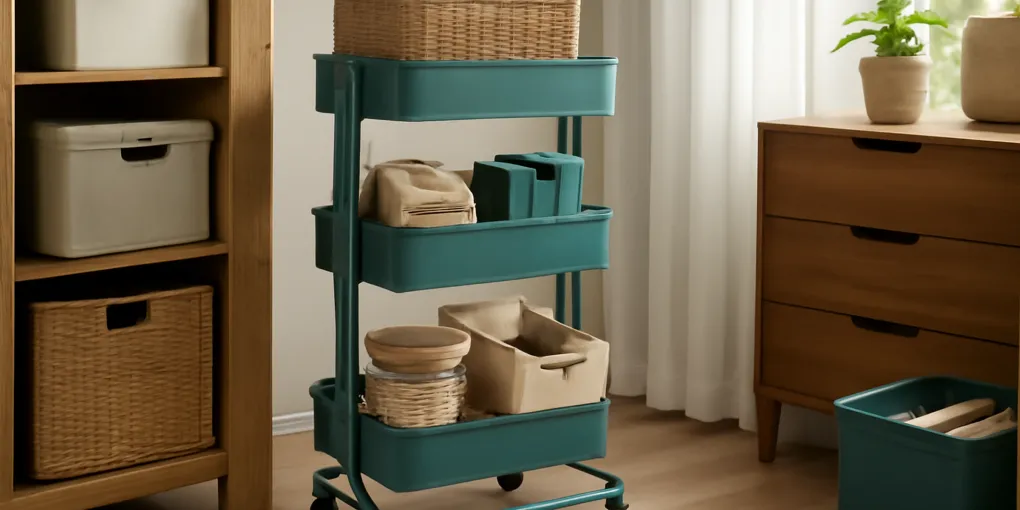
IKEA RÅSKOG Utility Cart Review: Best Uses for Craft, Laundry, and Snack Overflow
ReviewIKEA RÅSKOG utility cart
Best compact metal cartBest For: Craft supplies, laundry add-ons, snack overflow, or small-home zones that need to roll away
Quick picks
| Product | Key Specs |
|---|---|
| See price on Amazon |
|
| See price on Amazon |
|
| See price on Amazon |
|
Product availability, certifications, and retailer details can change; check the current Amazon page before buying.
The IKEA RÅSKOG utility cart has become a small-space organizing staple because it is compact, metal, open, and easy to repurpose. That flexibility is also the risk. A cart that can hold anything often becomes a rolling junk drawer unless the household gives it one job.
This review looks at where the RÅSKOG-style three-tier cart earns its footprint: craft stations, laundry add-ons, snack overflow, homework supplies, and temporary project storage. It is not the best answer for every loose item. For adjacent systems, see our best rolling cart organizers and best craft cart organizers.
Quick verdict
The RÅSKOG utility cart is worth considering when you need open, movable storage for one active category and have a clear parking spot. It is weaker as a general overflow cart, toddler-access storage, or long-term substitute for cabinets.
- Best fit: craft tools, laundry extras, snack overflow, homeschool supplies, or project kits.
- Weak fit: tiny loose items, chemicals, heavy pantry stock, and anything that should be behind a door.
- Main measurement: cart footprint plus handle and wheel clearance along the route.
- Best alternative: drawers or closed bins when items are small, sharp, dusty, or child-sensitive.
Product starting point
- Main cart: Search Amazon for IKEA RASKOG utility carts
- Budget alternative: Search Amazon for SimpleHouseware three-tier rolling carts
- Closed-storage alternative: Search Amazon for IRIS USA 6-Drawer Scrapbook Rolling Storage Cart
IKEA lists the RÅSKOG as a utility cart with open tiers and casters. That design is useful only if the items benefit from open access. If you are trying to hide clutter, choose closed drawers or a cabinet instead.
What the RÅSKOG cart does well
The cart is strongest when the category is active and mobile. A craft cart can move to the table and return to a corner. A laundry cart can hold stain spray, dryer balls, mesh bags, and lint tools beside a stacked washer setup. A snack cart can hold school-lunch extras during packing time and then roll back to a pantry wall.
The open sides make it easy to see what is available. That helps with duplicate control. If the middle shelf is full of markers, you know not to buy another pack. If the bottom shelf is all loose scraps, you know the cart needs internal cups or a different storage method.
Where it disappoints
The RÅSKOG style disappoints when it is used as an extra countertop. Receipts, random cords, toys, scissors, mail, and returns can all land on the top tier because the cart is visible and convenient. Its open three-tier design is the point, so it will not hide visual clutter the way an IRIS drawer cart, a lidded project bin, or a cabinet can.
It also disappoints when used for tiny parts without internal containers. Beads, sticker scraps, button batteries, sewing needles, and small fasteners need cups with lids, drawer inserts, or a closed cart because they can fall through gaps, hide under larger items, or become child hazards. HealthyChildren.org childproofing guidance is a good reminder that small objects and accessible household hazards should be managed from a child’s point of view. Open cart storage is not appropriate for every category.
Best uses by room
| Room or zone | Strong use | Better alternative when |
|---|---|---|
| Craft table | Markers, glue sticks, paper pads, cups of tools | Supplies include blades, beads, solvents, or tiny choking hazards |
| Laundry closet | Mesh bags, lint roller, dryer balls, stain stick | Chemicals need locked or high storage |
| Pantry edge | Snack packs for lunch packing | Food attracts pests or needs airtight storage |
| Home office | Printer paper, notebooks, cables in bins | Sensitive papers need a file cabinet |
| Nursery or kid room | Diapers and wipes for adult use | Children can unload or climb the cart |
The common thread is supervision and boundaries. If the cart can roll into a walkway or invite climbing, it does not belong in that spot.
Setup protocol after purchase
Before loading the cart, choose the home base. A good home base has floor clearance, does not block a door swing, and gives the cart a reason to return. Then assign one job to each shelf.
For a craft cart:
- Top shelf: current-project tools in cups.
- Middle shelf: paper, notebooks, or flat supplies.
- Bottom shelf: bulk refills in lidded bins.
For a laundry cart:
- Top shelf: mesh bags and daily tools.
- Middle shelf: stain treatment products if they are safe for that household location.
- Bottom shelf: clothespins, dryer balls, or refill packs.
If one shelf becomes miscellaneous during setup, stop and edit. The cart should not launch with a junk tier.
RÅSKOG vs drawers vs fixed shelf
Choose RÅSKOG when movement and visibility are the point. Choose drawers when containment is the point. Choose a fixed shelf when the category is heavy, rarely moved, or better kept off the floor.
A rolling cart can make a small home easier when the same supplies move between two locations. It can make clutter worse when it becomes a portable holding pen for decisions the household is avoiding.
How we evaluate the cart
| Factor | Weight | What matters |
|---|---|---|
| Job clarity | 30% | The cart has one category and a home base. |
| Footprint fit | 20% | It parks without blocking doors, drawers, or walking paths. |
| Containment | 20% | Small supplies use cups, bins, or drawers when needed. |
| Mobility | 15% | Wheels help the category move, not wander. |
| Safety fit | 15% | Child access, sharp tools, chemicals, and tip risk are handled. |
FAQ
Is RÅSKOG better than a plastic drawer cart?
RÅSKOG is better for visible, grab-and-go supplies. A drawer cart is better for tiny loose pieces, dust control, and categories that should not sit open.
Can I use it as a pantry cart?
Yes, for packaged snack overflow or lunch packing items, but not as a replacement for airtight pantry storage. Keep heavy cans and bulk staples on stable shelves.
Does the cart roll well on carpet?
It depends on the carpet and load. Test the route if possible. If the cart will live on thick carpet, a fixed shelf or handled bin may be less frustrating.
Sources
- IKEA RÅSKOG utility cart product page: https://www.ikea.com/us/en/p/raskog-utility-cart-white-20382932/
- IKEA trolley category for utility-cart context: https://www.ikea.com/us/en/cat/trolleys-20493/
- HealthyChildren.org childproofing guidance: https://www.healthychildren.org/English/safety-prevention/at-home/Pages/Childproofing-Your-Home.aspx