Lost Sock Storage: A Small Laundry-Room System
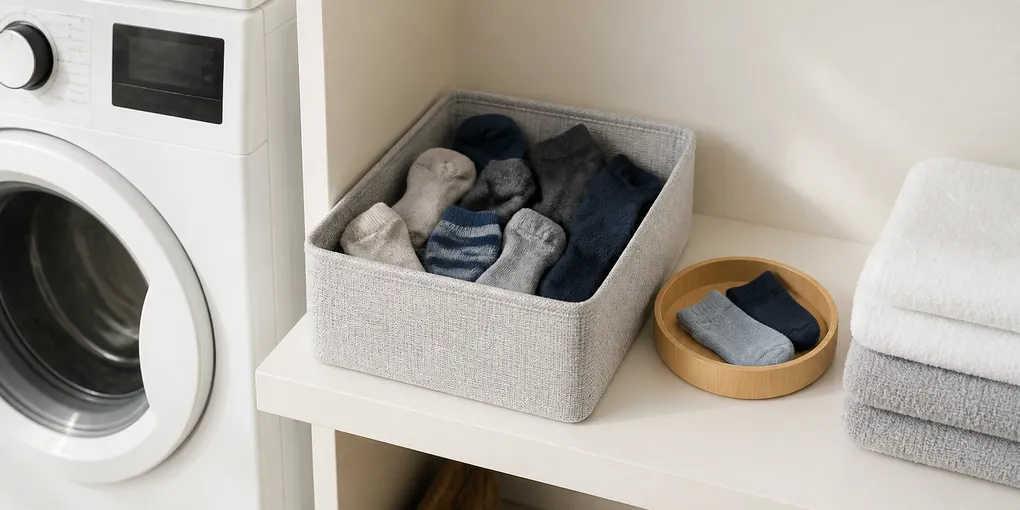
ProtocolAn unmatched sock needs a temporary address, not a second laundry pile. Put one shallow, open container beside the place where you fold or sort clean laundry. A single can go straight into the bin, stay visible until its partner appears, and leave again without spreading across the counter or disappearing into a drawer.
Put the bin where the pair breaks
Follow one clean load from the dryer or rack to the drawer. The lost-sock spot belongs where you normally pair socks—often a folding counter, a narrow shelf beside the machine, or the top of a closed appliance.
If you fold on the washer, place the opening within reach of that surface. If folded clothes move into owner baskets, keep the sock bin beside those baskets. The American Cleaning Institute includes pairing socks among ordinary laundry tasks; placing the container at that moment removes an extra trip from the routine.
A cupboard across the room may look tidy, but it asks you to remember a second action. A visible container near the fold turns “deal with this later” into one small movement.
Choose a container you can scan at a glance
The best size is the smallest one that holds the usual singles from a laundry cycle with some empty space left over. Shallow matters more than wide: when you can see the bottom, a matching stripe or cuff is easier to spot.
An open basket, tray, or fabric bin can all work. You also need a clear patch beside it where three or four socks can be spread out for a quick match. That surface may simply be part of the counter; it does not need its own organizer.
Skip the deep drawer. Once single socks sit below other clothes, the visual reminder is gone and matching requires a search.
Use one motion when a sock is left over
Finish pairing the current load first. When one clean sock remains, move it directly into the open bin. There is no need to sort by person, color, or fabric unless your household already uses those categories during folding.
For a household that returns laundry by person, a simple divider can help. For everyone else, one shared container keeps all possible matches in the same place. Add categories only when they shorten the next matching pass.
Pairs that are still sitting in the current load stay on the folding surface until that load is finished. This keeps the holding bin from filling with socks that were never truly unmatched.
Match for two minutes, then move on
Pick a cue you already have: the next load finishing, towels being folded, or the end of a weekend laundry reset. Spread the singles on the counter, make the obvious pairs, and return the rest to the bin.
Stop after the easy matches. Comparing every faded shade and worn heel can turn a tiny cleanup into a project. The bin’s job is to keep singles together long enough for likely partners to meet, while the rest of the laundry continues toward drawers and closets.
For a broader fold-and-return routine, see our weekend laundry reset system. The lost-sock pass should fit inside that routine, not compete with it.
Let the container set the limit
When the bin is full, check the places where socks commonly pause: the latest clean basket, the dryer area, the folding surface, and the drawers where pairs are returned. Make the available matches, then decide what happens to the remaining singles.
A recently separated sock can wait through another cycle. A worn single can leave the active collection or be repurposed for a household job. What matters is keeping the limit visible instead of quietly graduating to a larger and larger container.
Set it up before the next load
- Clear one shallow spot beside the folding area.
- Place one open container there for clean unmatched socks.
- Leave a small patch of counter or a tray available for matching.
- Put the next true single into the container as soon as folding ends.
- Check the bin after the next load and make the obvious pairs.
If the container stays empty while socks collect elsewhere, move it closer to the point where you notice the mismatch. If it fills too quickly, shorten the wait before matching instead of adding more storage.
Care boundary
This routine begins after socks have been washed and dried. Follow each garment’s care label and the machine instructions for washing decisions; the container only gives a clean single a temporary home.
Sources
- American Cleaning Institute: Getting Kids to Help with Laundry
- American Cleaning Institute: Do I Need to Wash This?
Frequently Asked Questions
- Put it at the point where clean socks are separated or folded, with its opening facing the person doing that task. A shallow shelf, the top of a closed appliance, or the folding surface can work when the bin does not interrupt the next laundry step.
- Use the smallest container that holds one normal laundry cycle's unmatched socks with a little visible spare room. A small limit makes the bin a temporary holding zone instead of long-term storage.
- Use a short matching pass at a recurring point in the laundry routine, such as after folding a load or before putting away towels. Choose a frequency that keeps the contents visible and easy to scan.
- Set a review point before the bin becomes crowded. At that point, check the usual laundry path and then decide whether to keep, repurpose, or remove each remaining single sock.