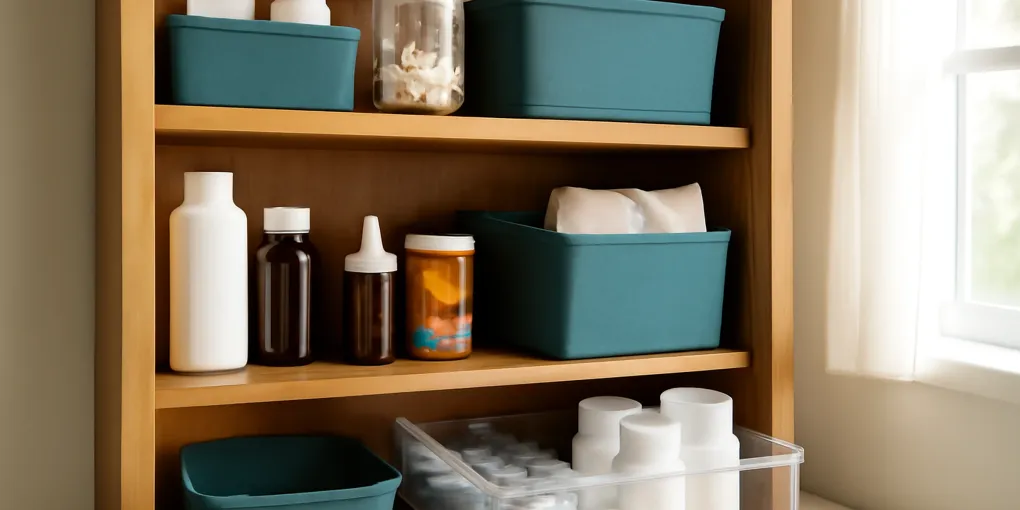
Why Medicine Cabinets Turn Into Expired Mini-Pharmacies
Evidence ExplainerQuick picks
Locking Medicine Storage Box
★ Top pickSmall Clear Medicine Bins
Cabinet Door Reminder Labels
Medicine cabinets become expired mini-pharmacies because they collect decisions made during headaches, fevers, cuts, travel, dental visits, allergies, and late-night pharmacy runs. Each item feels too important to throw away in the moment. Months later, the cabinet holds duplicate pain relievers, half-used ointments, expired cold medicines, old prescriptions, loose dosing cups, and mystery blister packs.
This is not ordinary bathroom clutter. A messy medicine zone can hide expiration dates, make duplicate ingredients harder to notice, and put medicines within reach of children or visitors. The goal is not a prettier shelf. The goal is a smaller, safer active set.
If your bathroom clutter problem is mostly toiletries, start with why bathroom drawers collect expired mini toiletries. If the question is whether medicines belong in a cabinet at all, compare a medicine lock box vs bathroom cabinet before reorganizing. Medicine storage needs a stricter safety standard.
Quick picks for a safer medicine zone
- Access risk first: Search Amazon for locking medicine boxes. Choose this when children, visitors, housemates, or caregivers make casual bathroom access the main hazard.
- Visibility first: Search Amazon for clear medicine organizer bins. Use two or three shallow bins when the cabinet problem is duplicates, hidden labels, and mixed first-aid supplies.
- Expiration memory first: Search Amazon for medicine date labels. Add these when products are orderly but old bottles still survive because no one checks dates before symptoms start.
Why expired medicine survives the first cleanup
Medicine cabinet clutter has a different psychology from makeup or towels. People keep old medicines because the future need feels uncertain and urgent. If a fever starts at midnight, no one wants to regret discarding a bottle of medicine. That fear makes the cabinet a holding area for products that would not survive a calm review.
The second reason is that expiration dates are small and scattered. Dates can be printed on cartons that were thrown away, on bottle shoulders, on crimped tube ends, or on blister-pack foil. A crowded shelf turns date checking into work.
The third reason is duplicate buying. When no one can see whether the household already has antihistamine, saline spray, bandages, or pain reliever, the next errand adds another package.
Why bathroom storage can be the wrong default
A medicine cabinet is convenient, but convenience is not the only criterion. Many labels call for storage in a cool, dry place. Bathrooms can be humid and warm from showers. That does not mean every product is ruined by bathroom storage, but it means the label should decide the location.
The FDA advises reading medicine labels and following storage directions. The American Academy of Pediatrics emphasizes keeping medicines up, away, and out of sight and using child-resistant packaging as a backup rather than the only protection. If children visit the home, a lockable container may be a better choice than an easy-open mirrored cabinet.
The active-set rule
A safer medicine cabinet has an active set, not a history archive. The active set includes current daily medicines, clearly labeled first-aid supplies, and short-term products that are still in date and likely to be used safely.
Move or remove everything else. Old prescriptions, unidentified pills, expired products, duplicate open bottles, and items without readable labels do not belong in the active cabinet.
For many households, the active set fits into three bins:
- Daily or current medicines.
- First aid: bandages, antiseptic, gauze, thermometer supplies.
- Short-term symptoms: cold, allergy, stomach, or pain products that are in date and labeled.
Shopping path: Search Amazon for small clear medicine organizer bins.
Access control beats perfect categories
If children, teens, guests, renters, or caregivers share the home, access control matters more than beautiful labeling. A locking medicine box or lockable cabinet can be the right primary product, especially for prescriptions and products that should not be casually handled.
Shopping path: Search Amazon for locking medicine storage boxes.
Do not rely on height alone if children climb or if visitors use the bathroom unsupervised. Also do not assume child-resistant caps are child-proof. They reduce risk but do not replace storage decisions.
A 20-minute medicine cabinet reset
- Clear a table away from children and pets.
- Move every medicine, supplement, first-aid item, dosing cup, and tube from the cabinet to the table.
- Keep items in original containers whenever possible so labels, ingredients, and directions stay attached.
- Pull out expired products, unreadable labels, loose pills, and prescriptions no longer being used.
- Check disposal guidance before throwing away medicines.
- Group the remaining active set by use.
- Put current daily medicines in the most controlled location, not automatically the easiest shelf.
- Add a visible expiration-check label or calendar reminder.
- Return only the active set.
Disposal is part of the organizing system
A medicine cabinet reset is incomplete if expired products move to a bag under the sink. The FDA recommends drug take-back options as the preferred disposal route for many unused medicines. The DEA also supports National Prescription Drug Take Back Day and year-round collection locations.
Some medicine labels include specific disposal instructions. Follow those directions. If you are unsure, use official FDA or pharmacy guidance rather than social-media shortcuts.
What to buy and what to skip
Buy a locking box when access is the main risk. Buy clear bins when visibility and duplicate buying are the main problems. Buy date labels or a small cabinet checklist when the cabinet looks clean but products quietly expire.
Skip large lazy Susans for medicine unless the cabinet is deep and the turntable does not hide labels. Skip decorative opaque boxes if they make dose, ingredient, and expiration information harder to see. Skip decanting pills into unlabeled containers unless a pharmacist or care plan specifically supports that system.
FAQ
Is it okay to keep first-aid supplies with medicine?
Yes, if the categories are clearly separated and access is safe. Bandages and gauze may be fine in an open first-aid bin while medicines need locked or higher storage.
Should I keep the cardboard boxes?
Keep packaging when it contains directions, dosing tools, lot numbers, or expiration details not repeated on the bottle or tube. If the box is bulky, cut out the instruction panel and keep it with the product.
What if I cannot read the expiration date?
Treat unreadable products cautiously. If the date, ingredient, or directions cannot be verified, the product does not belong in the active cabinet.
How do I stop duplicate cold medicine buying?
Create one labeled symptom bin and keep a short door label listing what is inside. Check it before pharmacy trips.
Sources
- U.S. Food and Drug Administration, Where and How to Dispose of Unused Medicines: https://www.fda.gov/consumers/consumer-updates/where-and-how-dispose-unused-medicines
- U.S. Food and Drug Administration, Safe Disposal of Medicines: https://www.fda.gov/drugs/buying-using-medicine-safely/safe-disposal-medicines
- American Academy of Pediatrics, Medication Safety Tips: https://www.healthychildren.org/English/safety-prevention/at-home/medication-safety/Pages/Medication-Safety-Tips.aspx