Why the Laundry Chair Happens: The Science of Half-Clean Clothes
Evidence ExplainerQuick picks
| Product | Key Specs |
|---|---|
| See price on Amazon |
|
| See price on Amazon |
|
| See price on Amazon |
|
Product availability, certifications, and retailer details can change; check the current Amazon page before buying.
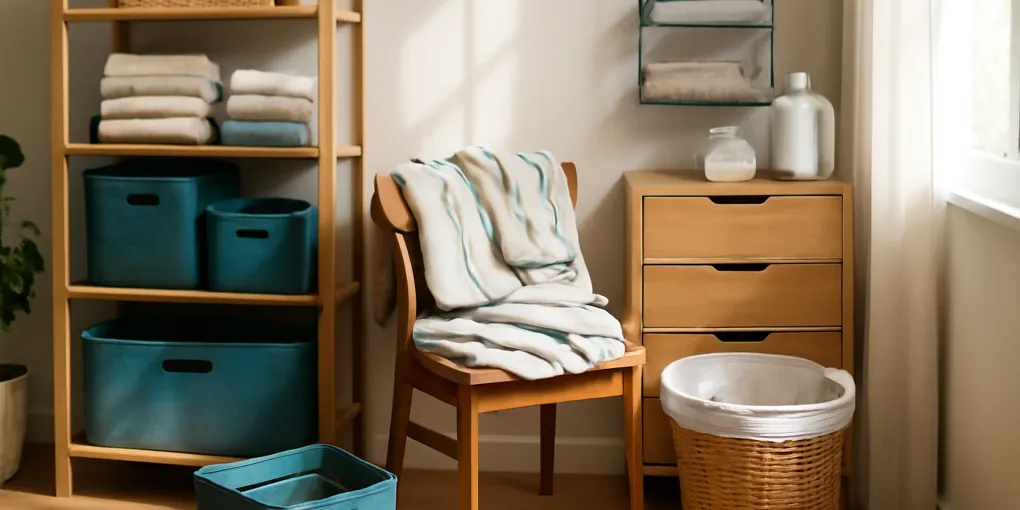
The laundry chair is not a character flaw. It is a storage category that most bedrooms never officially design for. Clean clothes have a drawer or closet. Dirty clothes have a hamper. But the sweater worn for two hours, the jeans that can be reworn tomorrow, the hoodie that should air out, and the outfit you plan to finish sorting later often have no clear home.
That pile persists because it is solving a real problem. The items are not ready for one of the two normal endpoints. Putting them back with fully clean clothes can feel wrong. Tossing them into the hamper can feel wasteful, especially when laundry takes time, water, detergent, and shared-building coordination. Folding them neatly may also feel too much for a decision that is supposed to be temporary. A chair accepts ambiguity with zero effort, which is why it wins.
The fix is not to shame yourself into folding faster. The fix is to build a visible, limited, low-friction landing zone for worn-but-not-dirty clothing. That system should answer three questions quickly: can this be worn again, does it need to air out, and when does it leave the bedroom? Once the category exists, the chair loses its job.
For the broader reset that prevents rooms from turning into catch-all zones, pair this article with the landing zone reset protocol. The same principle applies: clutter appears where the next action is unclear.
Quick product fixes for the laundry chair
- Best first fix: See current Amazon options for bedroom hook rails. Put it close to where you change clothes, not on the prettiest empty wall.
- Best structured option: See current Amazon options for bedroom valet stands. Use this when you repeat work outfits or set out tomorrow clothes.
- Best air-out option: See current Amazon options for over-door drying racks. Choose this for damp towels, workout layers, sweaters, travel clothes, or garments that need airflow.
Do not start with a huge basket unless you want a deeper pile. A basket hides the decision debt that made the chair happen. Hooks, rails, and open racks are better because they expose overflow before the system becomes another backlog.
The science of the half-clean category
The laundry chair sits at the intersection of categorization, effort, and timing. Human environments work better when objects have obvious categories. A fork goes in the cutlery drawer. A wet towel goes on a hook. A bill goes to an inbox. Half-clean clothes are harder because their category depends on condition, future use, body contact, weather, odor, and personal tolerance.
Behavioral science often describes this kind of friction as a decision bottleneck. When the correct action is unclear, people choose the lowest-effort temporary action. In a bedroom, the lowest-effort action is usually a horizontal surface at waist height. A chair is easier than a hanger, easier than a drawer, easier than a hamper decision, and easier than walking to a laundry area. It is not surprising that it becomes the default.
There is also a loss-aversion element. Throwing lightly worn clothes into the hamper can feel like wasting useful wear. Putting them back into the closet can feel like contaminating clean items. Leaving them visible keeps the option open. The chair preserves the future decision, but it also charges interest: the longer the pile sits, the harder it is to remember what is clean, what is worn, and what fell there accidentally.
Why chairs beat closets
A closet usually asks for a sequence: open the door, find the hanger, orient the garment, button or smooth it enough to hang, push other clothes aside, and close the door. A drawer asks for folding. A hamper asks for a commitment to wash. A chair asks for one motion. When you are tired, changing quickly, parenting, packing, or getting ready in the morning, the one-motion option wins.
Bedrooms also carry timing pressure. Many clothing decisions happen during transitions: after work, before a shower, before bed, after exercise, or while choosing an outfit. Those moments are rarely when someone wants to evaluate fabric care labels, odor, weather, and tomorrow’s schedule. The chair allows the person to postpone the decision until later. Unfortunately, later often arrives with another clothing change, so the pile grows.
The most useful system therefore has to be as easy as the chair but more informative. A good rewear zone should take one motion, keep fabric visible, allow air circulation, and make overload obvious. If your proposed solution requires careful folding or moving three things out of the way, it will probably lose to the chair again.
What belongs in a rewear zone
A rewear zone is for clothes that are dry, unstained, odor-free, and likely to be worn again soon. Common examples include jeans, cardigans, sweatshirts, overshirts, lightly worn dresses, lounge pants, belts, scarves, and the outfit you plan to put back on after a shower. It can also hold tomorrow clothes, but only if those items are separated from ambiguous worn items.
It is not for socks, underwear, sweaty base layers, damp workout clothes, spilled-on shirts, or items that already smell. Those should go to laundry or to an airing setup before a final decision. A rewear zone should not become quarantine storage for everything you do not want to fold. If an item needs repair, dry cleaning, stain treatment, donation, or seasonal storage, give it a different destination.
The rule of thumb is simple: if you would be comfortable wearing the item again within the next day or two, it can enter the rewear zone. If you would need to inspect it carefully before deciding, it probably belongs in the hamper or on an airing rack with a deadline.
The airflow problem
Half-clean clothes often need air more than containment. Fabric worn close to the body can hold moisture even when it does not feel wet. A tight pile traps that moisture and makes it harder to distinguish fresh from stale. This is why a chair pile can become unpleasant even when every individual garment seemed acceptable at first.
Open storage helps because it separates surfaces. A hook rail lets a hoodie hang instead of compressing into jeans. A valet stand keeps pants and shirts in a clearer order. An over-door rack gives damp items more exposure to air. None of these products magically sanitizes clothing, but they reduce the conditions that make a pile confusing and musty.
Airflow is also a decision aid. When items hang separately, you can see what is there. You notice the jeans you planned to rewear, the sweater that has been waiting too long, and the shirt that should go to laundry. A basket makes the category invisible. A visible rail creates a small amount of useful pressure.
Wall-mounted hook rail
A hook rail is the simplest durable fix because it is nearly as easy as the chair. It supports one-handed use, keeps clothes visible, and can be mounted close to the changing area. The best rail is not necessarily decorative; it is the rail you will actually use when tired.
Use hooks for jeans, hoodies, cardigans, belts, bras, and tomorrow clothes. Do not stack five garments on one hook. If every hook is full, the next item must trigger a decision. That capacity limit is a feature, not a flaw.
Shopping option: See current Amazon options for bedroom wall hook rails.
Bedroom valet stand
A valet stand works best for people who already think in outfits. It gives pants, shirts, belts, and accessories a temporary structure without pretending they are clean enough for long-term storage. It is especially useful for work clothes worn once, a travel outfit staged for an early departure, or a blazer that should not collapse into a chair pile.
The tradeoff is floor space. A valet stand needs a stable footprint and a location where it will not become a dumping rack for unrelated items. It also works poorly if the household mainly struggles with soft hoodies, athletic wear, pajamas, and loose layers.
Shopping option: See current Amazon options for bedroom valet stands.
Over-door drying rack
Choose an over-door drying rack when the clothes need air before they need a decision. This often includes workout layers, travel clothes, wool sweaters, damp towels, and garments worn briefly in humid weather. The rack keeps fabric separated without taking permanent wall space, which makes it useful in rentals and small bedrooms.
Check door swing and clearance before buying. A rack that prevents the door from closing will become annoying quickly. Also check whether the door is strong enough for the load and whether the rack’s hooks rub the frame. In a tight bedroom, a folding rack that collapses when empty may be more practical than a fixed over-door unit.
Shopping option: See current Amazon options for over-door drying racks.
G6/CS composite score
ClutterScience uses the G6/CS composite to avoid recommending products just because they look tidy in a staged photo. For this problem, the highest-scoring fix is not the most beautiful one. It is the option that lowers next-action cost while keeping worn clothing limited, visible, and easy to reset.
| Factor | Weight | What it means for half-clean clothes |
|---|---|---|
| Research | 30% | Does the fix match the way people actually change clothes, postpone decisions, and reuse garments? |
| Evidence Quality | 25% | Are claims supported by household-behavior research, textile-care guidance, clear dimensions, and observable use patterns? |
| Value | 20% | Does the product solve a repeated bottleneck without replacing a free habit that would work as well? |
| User Signals | 15% | Do real households keep using it after the first week, or does it become another place to pile clothing? |
| Transparency | 10% | Are capacity limits, mounting needs, materials, and failure points obvious before buying? |
On that framework, a hook rail usually scores highest for most bedrooms because it is inexpensive, visible, and nearly as fast as the chair. A valet stand scores well when the household has deliberate outfit reuse, but it can feel too formal for hoodies and lounge clothes. An over-door drying rack scores best when airflow is the main issue, especially for exercise layers, travel clothing, towels, and sweaters.
A three-zone bedroom clothing system
The simplest durable system divides bedroom clothing into three destinations. Clean storage is for fully clean items that are ready for normal drawers, shelves, or hangers. This area should not have to compete with worn clothes. If the closet is so full that clean clothing is hard to return, solve that volume problem before judging the laundry chair habit.
Dirty laundry is for anything sweaty, damp, stained, odor-bearing, or clearly finished. The hamper should be easy to reach from where you undress. If the hamper lives across the hall or behind a closet door, the chair will keep intercepting clothes.
Rewear storage is for the gray zone. Keep it small by design. A rail with five hooks, one valet stand, or one over-door rack is enough for most people. The goal is not to store every possible maybe item. The goal is to hold a short queue of clothes that will either be reworn soon or sent to laundry.
The two-minute reset
A rewear system only works if it has a closing loop. Once a day, preferably when changing into sleep clothes or making the bed, scan the chair, rail, stand, and hamper. Ask four questions: is anything damp, is anything clearly dirty, is anything ready to rewear tomorrow, and has anything been waiting too long?
Move dirty items to the hamper immediately. Move tomorrow items to the front of the rail or stand. Return clean-looking items only if you are comfortable storing them with clean clothes; otherwise, keep them in the rewear zone for one more wear. Anything that has been in the zone for three days without being chosen probably belongs in the hamper or back in clean storage after inspection.
The reset should take less than two minutes. If it takes longer, the rewear zone is too large or the closet is too crowded. Reduce capacity before adding furniture.
FAQ
Why do half-clean clothes end up on a chair instead of in the closet?
Because the chair handles uncertainty with almost no effort. The clothes are not fully clean, not clearly dirty, and often needed soon. A separate rewear zone gives that category a legitimate home without forcing a false clean-or-dirty decision.
Is it safe to put worn-once clothes back in the closet?
Dry, odor-free outer layers can often return to storage, especially if they had limited wear. Items with sweat, moisture, stains, food smells, or close body contact should go to laundry. If you are unsure, air the item separately and set a deadline rather than burying it in the closet.
What is the simplest laundry chair fix?
Install a small hook rail near the changing area and use it only for worn-but-not-dirty clothes. Keep the capacity low. Once the hooks are full, the next garment must go to the hamper, return to clean storage, or replace something on the rail.
How do I stop the laundry chair from becoming another pile?
Use a capacity limit and a reset rule. The three-day or two-wear rule works well for many households: after three days in the rewear zone or two wears, the item gets a final decision.
Final recommendation
Treat the laundry chair as data. It shows that your bedroom is missing a category, not that you are failing at laundry. Create a small rewear zone where clothes can air out, stay visible, and leave on a schedule. For most bedrooms, start with a hook rail because it is cheap, fast, and easy to test. Choose a valet stand if you manage outfits. Choose an over-door drying rack if airflow is the main bottleneck.
The winning system should be almost as easy as dropping clothes on the chair, but more informative. It should keep clean clothes clean, dirty clothes moving toward the wash, and half-clean clothes from becoming a mystery pile. If the product or rule cannot do that on a tired weekday, simplify it until it can.
Sources
- Saxbe and Repetti, No Place Like Home: Home Tours Correlate With Daily Patterns of Mood and Cortisol, PubMed record: https://pubmed.ncbi.nlm.nih.gov/19934011/
- American Cleaning Institute, laundry basics and clothing care resources: https://www.cleaninginstitute.org/cleaning-tips/clothes/laundry-basics