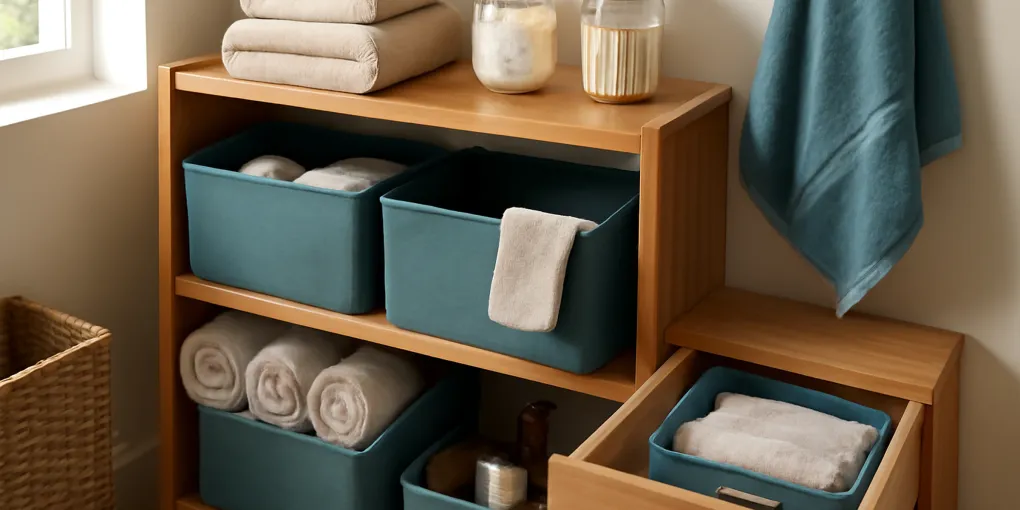
KES Bathroom Towel Rack With Shelf
Best wall shelf plus hooksBest for: Tiny bathrooms that need clean towels above and damp towels on hooks
Quick picks
| Product | Key Specs | Pros / Cons |
|---|---|---|
| See price on Amazon |
|
|
| See price on Amazon |
|
|
| See price on Amazon |
|
|
Product availability, certifications, and retailer details can change; check the current Amazon page before buying.
Quick product shortlist
Use this shortlist to choose a product style before you measure. The links are named product or brand searches so you can compare current dimensions, finishes, prices, and return terms before buying.
- Best wall shelf plus hooks: KES Bathroom Towel Rack With Shelf (Search Amazon for KES bathroom towel rack with shelf) for tiny bathrooms that need clean towels above and damp towels on hooks. Watch-out: confirm stud or anchor requirements before loading towels.
- Best rental hook set: Command Bath Large Towel Hooks (Search Amazon for Command bath large towel hooks) for renters who need a no-drill place for active towels. Watch-out: adhesive hooks need clean tile or painted surfaces and light loads.
- Best rolled-towel bin: mDesign Metal Wire Storage Basket (Search Amazon for mDesign metal wire bathroom storage basket towels) for guest towels or backup hand towels on an open shelf. Watch-out: wire baskets show contents and need shelf depth.
Quick picks
Use this as a shortcut to the products mentioned below; verify dimensions and mounting limits against your space before buying.
- wall mounted towel shelf small bathroom: See current price on Amazon
- over toilet towel storage: See current price on Amazon
- bathroom towel hooks heavy duty: See current price on Amazon
- rolled towel basket bathroom: See current price on Amazon
How We Score Small-Bathroom Towel Storage
Use the checks below to compare whether the product actually fits the room, survives daily handling, and makes the next reset easier.
| Factor | Weight | What It Measures |
|---|---|---|
| Research | 30% | Fit with bathroom humidity, reach distance, laundry rhythm, and household reset behavior |
| Evidence Quality | 25% | Consistency with home-safety guidance, manufacturer limits, and practical organizing constraints |
| Value | 20% | Space recovered per dollar, durability in moisture, and setup time |
| User Signals | 15% | Common complaints: damp towels, falling hooks, cramped doors, overloaded shelves, and messy guest towels |
| Transparency | 10% | Clear sizing limits, mounting caveats, and when a cheaper hook is enough |
A towel system should do two jobs: keep dry towels clean and make used towels dry quickly. Small bathrooms fail when those jobs are mixed. A stack of clean towels beside damp towels looks organized for one day, then becomes laundry confusion.
The Small Bathroom Towel Problem
Small bathrooms rarely need more towel inventory. They need better towel traffic. Towels move through a cycle: clean storage, active use, drying, laundry, and return. If any step lacks a home, the room fills with damp fabric, overstuffed shelves, or floor piles. The best bathroom towel storage for small bathrooms protects that cycle without stealing the walking path.
Start by counting real use. How many people shower here? Do guests use this bathroom? Is there a separate linen closet? How often does laundry happen? A household that washes towels twice a week needs less in-room storage than a household that launders weekly. A guest bath may need only two visible towels and a backup basket. A family bath may need hooks assigned by person so damp towels do not pile on one bar.
Best Overall: Wall Shelf Plus Hooks
The highest-scoring setup for most small bathrooms is a shallow wall shelf for clean folded towels plus hooks for damp towels. The shelf stores a controlled amount of clean inventory. The hooks handle the active drying stage. Separating those two jobs prevents the most common towel mess: clean towels squeezed into the same space where wet towels need air.
Choose a shelf shallow enough that it does not invite head bumps or door conflicts. In many bathrooms, ten to twelve inches of depth is plenty for folded bath towels or rolled towels. Use wall anchors appropriate to the wall type and follow the manufacturer’s load rating. If mounting above a toilet, make sure items cannot easily fall into the tank area or behind the fixture.
Hooks should be spaced so towels do not overlap heavily. A hook is faster than a bar for children and guests, but dense hooks can keep towels damp. If towels remain wet between uses, reduce towel size, add spacing, improve ventilation, or move some drying outside the bathroom.
Best No-Drill Option: Over-Door Hooks
Renters often start with over-door hooks, and that can be a good choice when the door has enough clearance. The advantage is speed: no drilling, no patching, and no permanent commitment. The drawback is collision. Thick hook racks can scrape trim, prevent doors from closing, or make towels hit the wall.
Measure the top gap before buying. Check whether the door can still close quietly. Felt pads can reduce rubbing, but they do not fix a rack that is too thick. Over-door hooks are best for active towels, robes, or guest towels used during a visit. They are not ideal for heavy stacks of clean towels.
Best Over-Toilet Storage
Over-toilet units are useful when the bathroom has no linen closet and the wall above the toilet is otherwise empty. Pick a unit with a narrow profile, stable legs, and shelves that are easy to wipe. Avoid storing very heavy items high above the toilet. If the unit is tall, treat it like furniture that may need anti-tip protection according to manufacturer instructions.
Over-toilet storage works best with a strict inventory rule: one shelf for clean towels, one small bin for toilet paper or guest supplies, and no mystery overflow. If every shelf becomes mixed bathroom storage, towels get pushed out and the unit becomes visual clutter.
Best Basket Strategy
A basket can be excellent for rolled guest towels or washcloths. It is less successful for daily damp towels. Use baskets for dry inventory, not for wet fabric unless the basket is clearly a laundry hamper and has airflow. Choose washable or wipeable materials in bathrooms because humidity, dust, and product residue build up quickly.
A floor basket should not narrow the walking path or block the vanity. If the basket must sit on the floor, put it in a corner that does not interfere with shower exits. CDC fall-prevention guidance emphasizes reducing tripping hazards, and bathroom floors are already higher-risk because of water and tight movement.
Inventory Rule: Two Plus One
For a small bathroom, start with the two plus one rule: two towels per regular user plus one guest or backup towel in the bathroom. Extra household towels can live in a linen closet, bedroom closet, or laundry area. If there is no other storage, use a labeled backup bin outside the tightest bathroom zone.
This rule is not universal. Babies, pets, swimming, or frequent guests may require more. The point is to match storage to the laundry rhythm instead of letting towel inventory expand until the bathroom feels smaller.
Setup Protocol
First, remove every towel from the bathroom. Sort bath towels, hand towels, washcloths, guest towels, cleaning rags, and worn-out towels. Cleaning rags should not share the same visible storage as body towels. Retire frayed towels to utility use or textile recycling where available.
Second, assign the cycle: clean towels on a shelf or basket, active towels on hooks or bars, laundry in a hamper, and backups outside the room if possible. Third, load the clean towel zone to about 80 percent. If towels have to be forced into place, the zone is too full.
Finally, test after two showers and one laundry cycle. If damp towels are still landing on the floor, the active-use location is inconvenient. If clean towels are disappearing too quickly, the laundry rhythm and inventory rule need adjustment.
Safety, Moisture, and Cleaning
Bathroom storage has to handle moisture. Avoid unfinished wood in splash zones. Leave air around damp towels. Use washable liners only when they can dry fully. Do not mount shelves where someone might strike them while stepping out of the shower.
The National Fire Protection Association’s home escape guidance is a useful reminder for any tight room: exits and paths should remain clear. In bathrooms, that means towel ladders, baskets, and hampers should not block the door or create a trip point near the tub.
For under-sink zones that should not compete with towel storage, see how to organize under a bathroom sink.
Product Fit Checklist
Use this checklist before ordering. Measure the wall width, door swing, toilet-tank clearance, vanity clearance, and the distance from shower or tub to the proposed hook. Check whether a towel can hang without touching the floor, trash can, toilet, or damp shower curtain. If the towel touches another surface while drying, the setup may look organized but still feel unpleasant to use.
For shelves, test the fold style before buying. Some households fold towels into wide rectangles; others roll them. A shelf that fits rolled guest towels may be too shallow for thick bath sheets. If you use oversized bath sheets, measure the folded towel stack rather than relying on product photos.
For hooks, check the mounting surface. Hollow-core doors, tile, drywall, and solid wood all require different hardware. Adhesive hooks can be useful for lightweight hand towels, but they are risky for heavy damp bath towels in humid rooms. If a hook fails once, do not simply replace it in the same way; change the mounting method, reduce the load, or move the towel to a better surface.
Guest Bathroom Variation
A guest bathroom needs fewer active towels and more clarity. Put two clean towels where guests can see them, add one obvious hand towel location, and keep backups in a labeled basket or nearby closet. Guests should not have to open every cabinet to find a towel. Avoid filling the vanity with household overflow; it makes the room feel borrowed rather than prepared.
For short visits, a small basket of rolled towels can be enough. For overnight guests, hooks matter more because towels need a place to dry between uses. If multiple guests share one small bath, use distinct hook positions rather than a single crowded bar.
What to Skip
Skip decorative ladders if they block the path or wobble when towels are removed. Skip deep floor baskets if they become damp laundry by accident. Skip giant towel sets if laundry happens frequently enough that the extras are only creating shelf pressure. Also skip any organizer that requires moving clean towels to access toilet paper, cleaning supplies, or medication. Mixed utility storage is the quickest way for a small bathroom to feel crowded again. Keep the rule simple enough that a tired person can follow it after a shower.
Evidence Notes and Sources
CDC fall prevention guidance supports keeping walking paths clear and reducing tripping hazards: https://www.cdc.gov/falls/. CPSC tip-over guidance is relevant for tall freestanding bathroom shelves and over-toilet units: https://www.cpsc.gov/Safety-Education/Safety-Education-Centers/Tipover-Information-Center. NFPA home escape guidance reinforces the importance of clear doors and paths: https://www.nfpa.org/education-and-research/home-fire-safety/escape-planning. EPA moisture and mold resources explain why damp materials and poor ventilation deserve attention in bathrooms: https://www.epa.gov/mold.
The practical organizing claim is narrow: towel storage works when clean, active, and dirty towels have separate homes. A product is only useful if it supports that movement.
FAQ
What is the best towel storage for a tiny bathroom?
A shallow wall shelf plus spaced hooks is usually the best first option because it separates clean storage from damp drying without taking floor space.
Are towel bars or hooks better?
Bars spread towels for drying, while hooks are easier to use quickly. In a small shared bathroom, hooks often get better compliance, but they need enough spacing for airflow.
How many towels should I keep in a small bathroom?
Start with two towels per regular user plus one guest or backup towel. Store larger backups outside the bathroom when possible.
Should towels be stored over the toilet?
They can be, if the unit is stable, shallow, easy to clean, and not overloaded. Avoid heavy stacks high above the toilet and follow all manufacturer anchoring guidance.