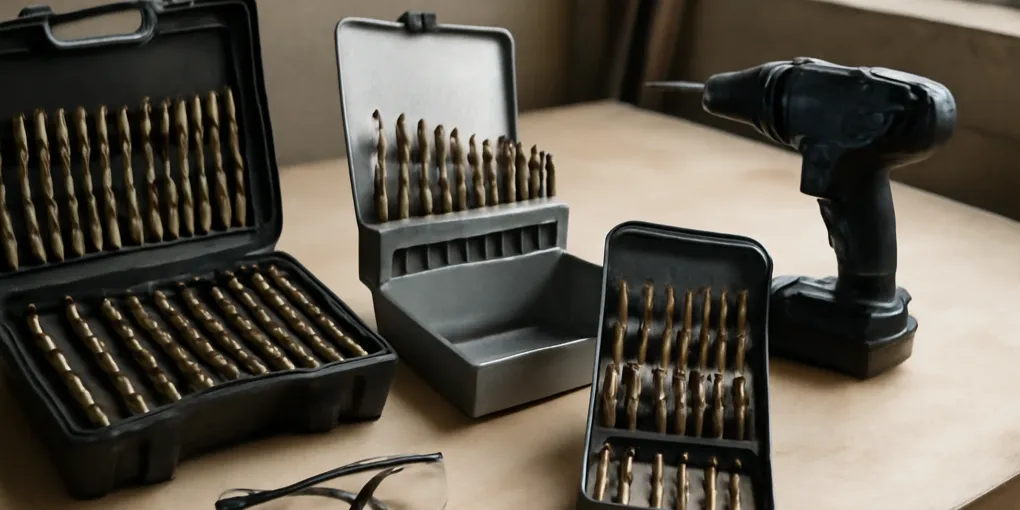
Best Drill Bit Organizers for Mixed Sets, Loose Bits, and Small Workshops
Buyer's GuideDEWALT ToughCase+ accessory case
Best portable modular caseBest For: Job-to-job transport of compatible bit bars and driver accessories
Quick picks
| Product | Key Specs |
|---|---|
| See price on Amazon |
|
| See price on Amazon |
|
Product availability, certifications, and retailer details can change; check the current Amazon page before buying.
A drill bit organizer should answer two questions quickly: what kind of bit is this, and what exact size is it? A generic compartment box can contain loose bits while still forcing you to measure every one. A molded kit case can travel well while wasting space when half the original set is gone.
The best format depends on the bits you already own. Inventory first. Do not buy a case from a product photo and hope the holes match.
Quick picks
- Best portable modular case: check current DEWALT ToughCase+ accessory case options on Amazon for compatible removable holders and accessories.
- Best configurable compact case: check current Bosch Custom Case System components on Amazon when you are building around compatible bit clips.
These bounded shopping paths lead to named product families with published holder systems. Check the current product dimensions, included holders, size range, seller, and return terms before ordering.
Sort by cutting job before size
Make six groups on a towel or shallow tray:
- General-purpose twist bits
- Masonry bits
- Brad-point wood bits
- Spade and auger bits
- Step and hole-saw components
- Driver bits, nut setters, and countersinks
Do not put driver bits into twist-drill index holes just because the shank fits. The organizer should prevent the wrong bit from reaching the drill.
Worn, chipped, bent, or badly corroded bits need inspection and appropriate disposal or sharpening, not a premium slot. Handle cutting edges carefully and wear eye protection when using drilling equipment. OSHA’s hand and power tool guidance emphasizes guarding, maintenance, and using tools according to manufacturer instructions (OSHA hand and power tools).
Pick the organizer format
Huot fractional drill index
A metal drill index is the clearest format for a bench collection of loose fractional twist bits. Each correctly sized hole gives one bit a location, making missing sizes visible. It is a poor choice for masonry tips, hex-shank driver bits, and oversized specialty cutters.
Check the smallest and largest hole, increment pattern, whether the case is labeled for the system you use, and the overall closed dimensions. If you own metric or number-letter bits, buy the matching index rather than forcing them into near-size fractional holes.
DEWALT ToughCase+ accessory case
DEWALT’s ToughCase+ system is designed around connectable cases and removable bit bars for compatible accessories. That makes it useful when bits travel between a garage, vehicle, and project area. The tradeoff is compatibility: a loose mixed-brand collection may not grip correctly in holders intended for a particular shank style.
Use this format when portability and retained holders matter more than seeing every diameter at once. Confirm what the case includes; an empty case, a bit set, and replacement bit bars are different purchases.
Bosch Custom Case System
Bosch’s Custom Case System uses configurable cases and bit clips within that product family. It works for a compact, purpose-built kit, such as common starter-hole bits plus driver bits for furniture assembly. It is not automatically the best home for every inherited loose bit.
Compare the clip style, bit length, case depth, and whether specialty bits can lie flat without pressing against the lid. A customizable case only saves space if the existing bits fit securely.
Open drawer tray
An open tray is fast when the drill station stays in one dry workshop. It can separate short bits, long bits, countersinks, and accessories without unlatching a case. The weaknesses are dust, movement, and uncertain size identification.
Choose a tray with non-slip feet or a drawer fit that prevents sliding. Keep a compact drill gauge nearby for unmarked bits, but return each measured bit to a defined section.
Fit matrix
| Your collection | Best starting format | Why | Skip when |
|---|---|---|---|
| Mostly loose fractional twist bits | Labeled metal drill index | Individual size holes reveal gaps | Bits are metric or specialty shapes |
| Mostly hex-shank drivers and starter-hole bits | Modular retained case | Clips hold transportable accessories | Holders do not match existing shanks |
| Small curated mixed set | Configurable compact case | Builds one project-ready kit | Long bits press against the lid |
| Large mixed-brand collection in a toolbox | Divided drawer plus separate twist-bit index | Separates families without forcing fit | Workshop is damp or drawer is too deep |
| Bits travel to job sites | Latched hard case with retained holders | Reduces spills and lost bits | Case cannot survive the actual transport load |
Measurements to take before buying
Count and measure rather than estimating:
- System: fractional, metric, or number-letter
- Smallest and largest twist-bit diameter
- Shank: round, three-flat, or hex
- Longest overall bit length
- Number of masonry and brad-point bits
- Width, depth, and height of the target drawer or shelf
- Whether the case must fit a tool bag
For a metal index, verify every part of the stated range. For modular cases, verify the holders, not just the outer box. For drawers, make sure the tallest bit does not strike the drawer above.
Audit a mixed collection before choosing a case
An inherited jar of bits often contains duplicates, damaged cutters, and accessories for tools that are no longer in the workshop. Empty it onto a light-colored towel so small dark bits cannot roll into a floor gap. Keep the drill and battery on a separate surface.
Start with shank shape. Hex-shank accessories belong together even when one is a drill and another is a driver. Round-shank twist bits form a second group. Masonry bits usually have a distinctive carbide tip; keep them away from sharpened wood bits so the tips do not strike each other.
Read stamped sizes under bright light. Place unreadable round bits in a temporary measurement row rather than guessing. A drill gauge can identify the diameter, but flute damage, shank wear, and cutting geometry still determine whether the bit is usable. If a bit is bent, chipped, or of uncertain purpose, isolate it for an experienced tool user to inspect. Do not test an unknown bit just to identify it.
Count the usable pieces in each family after the audit. That count determines how many retained clips, index holes, or tray compartments you need. Add modest room for replacements, not a second empty organizer for hypothetical future purchases.
Build a portable project kit without stripping the bench set
A compact case works best when it serves a repeated job. For flat-pack furniture, that might mean a small starter-hole bit, two common driver bits, a countersink, and a magnetic holder. For hanging shelves, the kit may need separate wood and masonry starter-hole bits plus the fastener’s specified driver.
Do not move the only correctly sized precision bit into a travel case that never returns. Either mark the case’s home position in the drawer or maintain a deliberate bench set and travel set. The distinction prevents a common workshop failure: the organizer looks complete, but the required bit is in a tool bag in another vehicle.
After loading a portable case, close it and gently rotate it over the workbench. Listen for loose metal and reopen it. Every bit should remain in its holder without a cutting edge contacting the lid. This is a retention check, not a drop test. If accessories escape their clips, choose a fitted holder or keep that bit in the bench drawer.
Label the container at the decision level
Useful outer labels describe the system and job: FRACTIONAL TWIST 1/16-1/2, METRIC, MASONRY, or FURNITURE ASSEMBLY. A label such as DRILL BITS does not prevent a metric and fractional mix-up.
Inside a drawer, orient size markings so they can be read before a bit is pulled. If the molded holder already has permanent size marks, keep them visible and clean instead of covering them with decorative labels. Record missing sizes on a short restock card; an empty hole is information, not a reason to buy a complete new set.
Moisture and sharp-edge checks
Bits should be clean and dry before storage. If the garage is humid enough to rust tools, solve that environment rather than trapping damp bits in a closed plastic case. Inspect foam for retained moisture and metal boxes for condensation. Leave a recently cleaned bit out until its flutes and shank are fully dry.
Store large spade, auger, and hole-saw cutters so their edges cannot be grabbed accidentally. Keep the organizer below face height and away from the edge of a shelf. Remove the battery from a cordless drill or follow its storage instructions before arranging accessories nearby.
What to avoid
- One deep bin where cutting edges strike each other
- An unlabeled index with holes that almost match
- Magnets near loose ferrous swarf that will contaminate clean bits
- Soft foam that holds damp debris against steel
- A portable case whose clips release when turned upside down
- Keeping broken bits because an empty slot looks untidy
This buyer’s guide is narrower than the best hardware organizers guide. Use that guide for screws, nuts, anchors, and fasteners. Use a drill bit organizer when exact diameter, cutting type, shank retention, and edge protection are the buying criteria.
Frequently Asked Questions
- Separate twist, masonry, brad-point, spade, step, and driver bits first. Then use a correctly sized index for twist bits and dedicated holders or cases for specialty shapes.
- They can share a drawer, but not an index with mismatched holes. Use separate clearly identified metric and fractional sections to avoid choosing a near-size substitute.
- Store clean, dry bits in a dry cabinet or case, correct the workshop moisture source, and follow the tool maker's care guidance. Do not seal damp bits into foam or plastic.