Best Stamp and Die Storage (2026): Pockets, Magnetic Cases & Project Boxes
Buyer's GuideAvery Elle Stamp and Die Storage Pockets
Best OverallBest For: Clear stamps and matching wafer dies filed vertically
$12-25 per pack
Quick picks
| Product | Key Specs |
|---|---|
| See price on Amazon |
|
| See price on Amazon |
|
| See price on Amazon |
|
Product availability, certifications, and retailer details can change; check the current Amazon page before buying.
Quick answer: the best stamp and die storage for most craft rooms
Choose clear storage pockets when you want to browse complete stamp-and-die sets, a magnetic case when loose wafer dies are the problem, or 12x12 project boxes when one active project needs paper and embellishments together. Most paper crafters do not need a generic drawer divider: they need a system that keeps matching pieces visible and protected.
Avery Elle Stamp and Die Storage Pockets are the best first buy for most crafters because they keep clear stamps, backing cards, stencils, and matching dies visible in one fileable packet. Choose an ArtBin Magnetic Die Storage Case if your main problem is loose steel dies slipping out of envelopes. Add IRIS 12x12 Scrapbook Storage Cases when you build full project kits with paper, stamps, dies, and embellishments.
Quick picks
- Best overall: Avery Elle Stamp and Die Storage Pockets. Best for stamp sets you browse often, especially 4x6 and 5x7 clear stamp sets with coordinating dies. Shop stamp storage pockets
- Best for wafer dies: ArtBin Magnetic Die Storage Case. Best for nested circles, alphabet dies, sentiment strips, and small metal pieces that need a magnetic surface. Shop magnetic die cases
- Best for projects: IRIS 12x12 Scrapbook Storage Case. Best for kits that include paper, stamps, dies, stickers, and embellishments for one album, class, or card batch. Shop 12x12 craft cases
What stamp and die storage needs to solve
Clear stamps and thin metal dies fail in different ways. Stamps stick to backing sheets, collect lint, and become hard to identify when several sets are stacked. Wafer dies bend, catch on envelopes, and disappear into paper scraps because many pieces are small and silver. A good system keeps the artwork visible, the die edges protected, and the matching pieces together.
For most craft rooms, the practical setup is three zones:
- Daily-use file: clear pockets standing upright in a drawer, shoebox-style bin, or photo box near the work surface.
- Loose-die case: magnetic sheets for small, delicate, or unmounted dies that would otherwise fall out of pockets.
- Project cases: 12x12 boxes for active layouts, classes, or seasonal card batches where paper and embellishments need to stay together.
If you are rebuilding a whole room, pair this page with our broader craft storage organizer guide and craft room pegboard picks. This guide stays narrower: it is about stamps, dies, and paper-craft projects, not paint, yarn, or general closet bins.
Avery Elle Stamp and Die Storage Pockets - Best overall
Best for: clear stamp sets, photopolymer sheets, stencils, and matching wafer dies filed vertically.
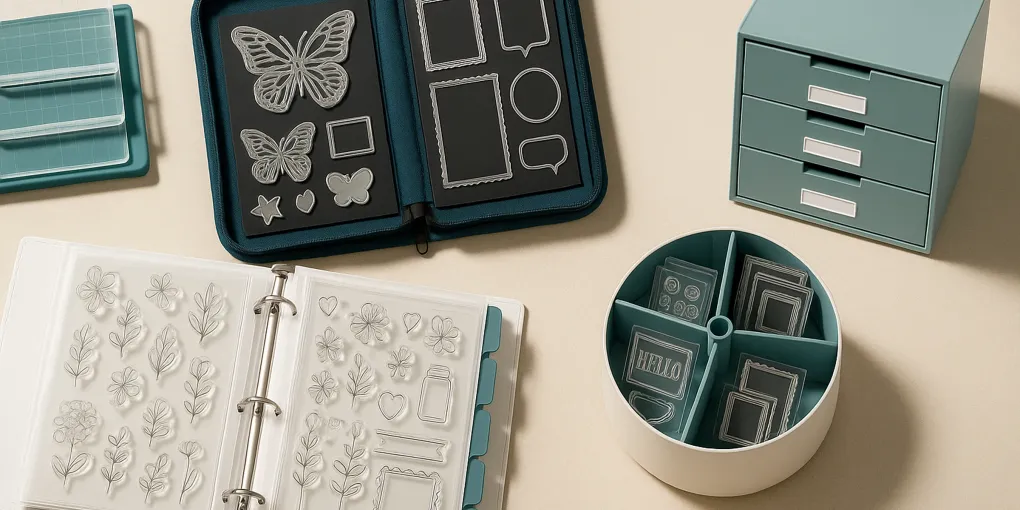
Avery Elle-style storage pockets solve the main search intent for this page: finding a way to browse stamp artwork without opening every package. The clear pocket holds the stamp sheet and its backing card, and a thin magnetic sheet can be added when the set includes metal dies.
What works
The pocket format is flexible. A small craft collection can live in one handled bin, while a larger card-making collection can scale into labeled rows by holiday, sentiment, floral, background, shape, and alphabet. Because each set stays in a flat packet, you can flip through the row like recipe cards instead of digging through a stack.
This format also works well for matching stamp-and-die bundles. Put the stamps and packaging artwork in the pocket, then add a magnetic insert behind the artwork for the dies. That prevents the common failure where the stamp set remains visible but the tiny die pieces migrate into a separate pouch.
Trade-offs
Pockets do not stand by themselves. You still need a drawer, open bin, photo box, or shelf file that holds the pockets upright. They also protect against dust and lost pieces better than they protect against heavy crushing, so do not stack heavy punches or paper pads on top of them.
Best buying check: measure your largest backing card before buying. Many stampers need both medium and large pockets because background stamps and oversize stencil sets do not fit neatly into one size.
ArtBin Magnetic Die Storage Case - Best for thin metal dies
Best for: wafer dies, alphabet dies, nesting shapes, border dies, and tiny sentiment pieces.
A magnetic die case is the right answer when your stamp storage is mostly fine but your thin dies keep escaping. The ArtBin-style case uses magnetic sheets that hold steel dies flat, making it easier to see whether a small leaf, dot, apostrophe, or sentiment strip is missing before you close the case.
What works
Magnetic pages are especially useful for die sets that do not have a matching clear stamp sheet. Nesting circles, scalloped rectangles, tags, numbers, and alphabets are easier to compare when they sit on a flat magnetic surface rather than in separate envelopes.
A case also gives portability. If you cut dies at a separate station or bring supplies to a class, a handled case is safer than loose magnetic cards tossed into a tote.
Trade-offs
A die case is not the best primary storage for clear stamps. It hides the stamp artwork, wastes depth on flat stamp sheets, and can become heavy if you fill every page with metal. Use it for die-heavy categories and keep complete stamp sets in clear pockets.
Best buying check: look for enough magnetic sheet area for your largest nesting dies. A case can hold many small sentiments but fill quickly with large background plates.
IRIS 12x12 Scrapbook Storage Case - Best project kit storage
Best for: scrapbook layouts, seasonal card batches, classes, and project bundles that include 12x12 paper.
The IRIS-style 12x12 case is not the fastest way to browse an entire stamp collection. It is useful because it keeps all pieces for one project together: paper, stamps, dies, stickers, photos, and notes.
What works
The hard-sided 12x12 format protects cardstock corners and keeps project supplies from spreading across a desk or dining table. If you make holiday cards, wedding invitations, class kits, or album pages in batches, one case per project prevents partial sets from getting mixed back into general storage before the project is finished.
Trade-offs
These cases take more shelf space than pockets and can become opaque piles if you use them for everything. They work best as active-project storage, not as the main catalog for every stamp and die.
Best buying check: choose clear cases if the case will sit on a shelf, and label the spine or handle end with the project name and date.
How to choose by craft-room setup
| Setup | Best storage format | Why it fits |
|---|---|---|
| Small desk or shared table | Clear pockets in one handled bin | Fast setup and cleanup without a dedicated room |
| Dedicated card-making drawer | Clear pockets filed vertically | Best visibility per inch of drawer space |
| Die-heavy collection | Magnetic die case plus labeled pockets | Keeps loose metal pieces from slipping out |
| Scrapbook or class projects | 12x12 project cases | Keeps paper and embellishments with the stamps and dies |
| Large collection | Pockets by category plus project cases for active work | Separates the permanent library from current projects |
Scoring notes
| Product | Visibility | Protection | Scalability | Best-use fit | Overall |
|---|---|---|---|---|---|
| Avery Elle Stamp and Die Storage Pockets | 9.5 | 8.0 | 9.0 | 9.5 | 9.0 |
| ArtBin Magnetic Die Storage Case | 8.5 | 9.0 | 7.5 | 9.0 | 8.5 |
| IRIS 12x12 Scrapbook Storage Case | 7.5 | 8.5 | 8.0 | 8.5 | 8.1 |
The pockets score highest because they solve the broadest stamp-and-die problem: visible browsing with matching pieces kept together. The magnetic case scores higher for loose dies but lower as an all-purpose stamp organizer. The 12x12 case is strongest for projects, not permanent library browsing.
Frequently asked questions
Should clear stamps and matching dies be stored together?
Usually yes. Store the stamp sheet, backing card, and matching dies in the same labeled pocket when the set is normally used together. Use a magnetic insert or thin magnet card inside the pocket for tiny dies so they do not slide to the bottom or get thrown away with packaging scraps.
Are magnetic die cases better than plastic stamp pockets?
Magnetic cases are better for loose wafer dies, especially tiny sentiments, nesting shapes, and delicate border dies. Plastic pockets are better for complete stamp sets and stamp-and-die bundles because they keep the stamp artwork visible and file like recipe cards.
What size storage pocket works for card-making stamp sets?
Most card makers need a mix of small pockets for mini sentiment sets, medium pockets for standard 4x6 or 5x7 clear stamp sets, and larger pockets for oversize background stamps. Measure the backing card before buying a full pack so the tab, label, and magnet insert all fit without curling.
How should I label stamp and die storage?
Label by theme first, then occasion: birthdays, holidays, florals, alphabets, backgrounds, shapes, and sentiments. Put the label on the top edge if pockets sit in a drawer and on the front face if they sit in a shelf bin.
Bottom line
Start with clear stamp-and-die pockets if you want one system that works for most card-making supplies. Add a magnetic die case only for loose metal dies that need a flat holding surface, and use 12x12 cases for active projects rather than your whole stamp library. For bins, carts, and shelving that hold the wider collection, compare craft supply organizers.
Shop Avery Elle-style stamp pockets | Shop ArtBin magnetic die cases | Shop IRIS 12x12 craft cases