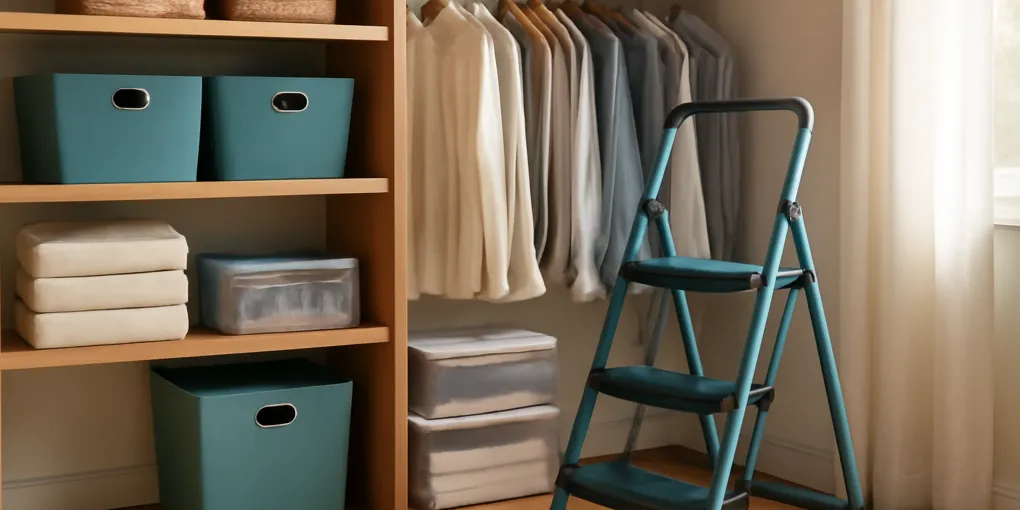
Best Step Stools for High Closet Shelves: Safer Reach Without Turning the Closet Into a Climb Zone
Buyer's GuideCosco 2-Step Big Step Folding Step Stool
Best everyday closet reachBest For: High closet shelves where adults need a broad top step and a handhold
Quick picks
| Product | Key Specs |
|---|---|
| See price on Amazon |
|
| See price on Amazon |
|
| See price on Amazon |
|
Product availability, certifications, and retailer details can change; check the current Amazon page before buying.
High closet shelves create a predictable bad habit: someone needs one bin, the step stool is in another room, and a rolling chair or lower shelf becomes the shortcut. A good closet step stool is not about reaching a few extra inches. It is about making the safe reach tool easier to use than the risky workaround.
This guide focuses on adult closet use: seasonal bins, linens, luggage cubes, handbags, and off-season shoes stored above normal reach. If the problem is shelf layout rather than reach, start with our closet zone system guide or best clear stackable sweater bins for closet shelves.
Quick picks
- Best everyday adult reach: Search Amazon for Cosco 2-Step Big Step
- Best park-it-nearby utility stool: Search Amazon for Rubbermaid RM-P2
- Best fold-flat closet slot: Search Amazon for Delxo 2 Step Ladder
The best choice depends on shelf height, floor clearance, and whether the stool will actually live near the closet. A compact stool stored three rooms away will not change behavior. A slightly bulkier stool parked beside the closet often does.
The safety job is reach, not climbing
The CDC’s falls-prevention guidance emphasizes reducing household trip and fall risks by improving lighting, removing hazards, and using safer support. In a closet, the relevant detail is simple: do not make people balance on furniture, shelves, bins, or a single narrow edge while pulling weight from overhead.
A closet step stool should let the user face the shelf, keep both feet on a stable surface, and lift a bin without twisting. If you need to lean sideways around hanging clothes or stand on the very front lip of the step, the stool is not solving the reach problem.
High closet storage also changes what belongs on the top shelf. Store light, occasional, clearly labeled items up high. Heavy appliance boxes, bulk books, glass decor, and dense tool bins belong lower. The safest step stool cannot make a heavy overhead lift a good idea.
How to choose the step height
Start with the person who uses the closet most often. Have them stand on the floor and identify the shelf zone they can reach without raising onto toes. The stool should bring the shelf into comfortable hand position, not just fingertip contact.
A one-step folding stool works for a shallow linen closet when the top shelf holds towels or light bins. For bedroom closets with shelves above a double-hang rod, a two-step stool is usually more controlled. The second step reduces the temptation to stretch while one hand is buried in clothing.
Avoid buying the tallest option by default. More height can mean more wobble, more storage friction, and a bigger object to navigate around. If the shelf is high enough that a household ladder feels necessary, use a real step ladder rated for the task instead of a tiny closet stool.
Platform, feet, and handhold details
Look for a platform that fits an adult foot without requiring heel-over-edge balancing. A textured tread is useful, but it is not a substitute for a broad step. Rubber feet matter on hardwood, tile, and laminate because closet floors often collect dust that can reduce grip.
A handhold or high back rail helps when the user is stepping up and down, but it should not become the thing they pull against while lifting a bin. The strongest setup is still two feet stable, body facing the shelf, item light enough to control, and a clear landing spot at waist height.
If the closet has carpet, check whether narrow feet sink or rock. If the floor has a door track, shoe pile, or rug edge, clear the landing zone before the stool arrives. The best stool will feel unsafe if it opens on top of clutter.
Fit by closet layout
| Closet situation | Better stool choice | Watch-out |
|---|---|---|
| Reach-in bedroom closet with top shelf | Two-step folding stool with handhold | Must open fully without hitting sliding doors |
| Linen closet in hallway | Non-folding two-step stool parked nearby | Do not leave it in the walking path |
| Small apartment closet | Fold-flat two-step ladder stool | It only works if setup is quick and obvious |
| Kid closet | Lower the child items instead | A stool can invite climbing to unsafe storage |
| Garage overflow closet | Utility two-step stool or step ladder | Heavy bins should not live overhead |
The storage spot for the stool is part of the purchase. A fold-flat stool can slide between a wall and hamper. A molded stool may need a labeled parking zone under a shelf. If there is no place to park it, the household will eventually hide it, and hidden reach tools do not get used.
Buying mistakes that make closet stools useless
The most common mistake is buying the smallest folding stool because it looks easy to hide. A tiny stool can be fine for a pantry shelf, but a high bedroom closet often needs a second step, a wider platform, or a handhold. If the stool feels unstable during the first week, it will end up buried behind shoes.
The second mistake is ignoring the door style. Sliding closet doors reduce the usable opening. A bifold door can pinch the setup area. A reach-in closet with a low rod may force the user to stand slightly back from the shelf. Measure the open-door clearance before choosing a stool with a wide rear frame.
The third mistake is treating weight capacity as the only safety specification. Capacity matters, but so do step depth, foot material, hinge quality, and whether the user can open the stool completely on the actual floor. A stool that technically supports the user but rocks on a rug edge is still a bad fit.
Finally, do not buy a stool to solve a storage decision. If the top shelf is packed with mystery bins, the first fix is editing and labeling. The stool should make a known item reachable, not preserve a clutter zone that nobody wants to sort.
What to put on high shelves after you buy it
Use the stool purchase as a reason to edit the top shelf. Keep high storage light, boxed, and clearly grouped:
- Off-season scarves, hats, or swim gear in clear bins.
- Extra pillowcases and guest towels in fabric cubes.
- Empty travel packing cubes or soft bags.
- Lightweight holiday textiles.
Move these lower:
- Heavy keepsake boxes.
- Glass frames and breakable decor.
- Bulk paper stacks.
- Tools, paint cans, and cleaning chemicals.
- Anything a child may try to retrieve alone.
A step stool reduces reach risk, but it should not justify storing the wrong items overhead.
Adult, kid, and older-adult fit
A closet step stool should match the people who will actually use it. For adults, the key question is whether the stool makes the top shelf reachable without twisting while holding a bin. For older adults or anyone with balance concerns, a small closet stool may not be the right tool at all. A lower storage plan, a more stable step ladder, or moving heavy items down can be a safer choice.
For children, the answer is usually different: move their items lower. A high-shelf stool can turn a closet into an unsupervised climb zone, especially when toys, costumes, or favorite shoes are visible above reach. Put kid-access items in lower bins and use high shelves for adult-managed storage only.
Renters should also think about where the stool will live. A stool leaning behind a bedroom door may bang trim or block the door from opening fully. A fold-flat model can work well, but only if the household has a consistent slot for it and everyone opens it fully before stepping up.
How we evaluate closet step stools
| Factor | Weight | What matters |
|---|---|---|
| Stability | 30% | Wide feet, non-slip contact, and no rocking on the actual closet floor. |
| Reach control | 25% | The user can face the shelf and lift without stretching sideways. |
| Storage friction | 20% | The stool lives near the closet without blocking the path. |
| Platform comfort | 15% | Steps are broad enough for adult feet during quick retrieval. |
| Household fit | 10% | Kids, renters, older adults, and narrow doorways are considered. |
FAQ
Can I use a dining chair instead of a closet step stool?
A dining chair is a poor closet reach tool because it is not designed for repeated overhead retrieval, and the seat height can encourage twisting. A properly rated step stool or step ladder is the safer default.
Is a one-step stool safer because it is lower?
Not always. A low stool can be safer for slightly high shelves, but unsafe if it makes the user stretch. Choose the lowest tool that lets the user retrieve the item with control.
What should not go on a high closet shelf?
Heavy bins, breakables, chemicals, and child-desired items should not depend on a high reach. Put those items lower or move them to a better storage zone.
Sources
- CDC falls prevention guidance: https://www.cdc.gov/falls/prevention/index.html
- HealthyChildren.org childproofing guidance: https://www.healthychildren.org/English/safety-prevention/at-home/Pages/Childproofing-Your-Home.aspx