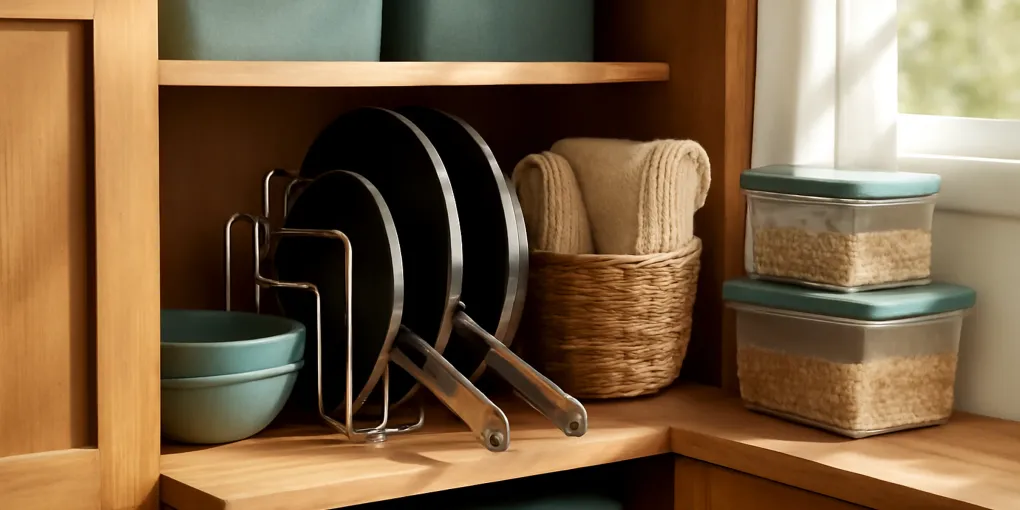
Best Vertical Pan Organizers for Small Cabinets: Racks That Stop the Skillet Stack
Buyer's GuideYouCopia StoreMore Adjustable Pan Rack
Best adjustable rackBest for: Mixed skillets, lids, and shallow pans in a small cabinet
Quick picks
| Product | Key Specs | Pros / Cons |
|---|---|---|
| See price on Amazon |
|
|
| See price on Amazon |
|
|
| See price on Amazon |
|
|
Product availability, certifications, and retailer details can change; check the current Amazon page before buying.
Quick product shortlist
Use this shortlist to choose a product style before you measure. The links are named product or brand searches so you can compare current dimensions, finishes, prices, and return terms before buying.
- Best adjustable rack: YouCopia StoreMore Adjustable Pan Rack (Search Amazon for YouCopia StoreMore adjustable pan rack) for mixed skillets, lids, and shallow pans in a small cabinet. Watch-out: tall handles need side clearance.
- Best budget rack: SimpleHouseware Expandable Pan Organizer (Search Amazon for SimpleHouseware expandable pan organizer) for budget pan storage where shelf width varies. Watch-out: expandable rails need a flat shelf.
- Best pull-out upgrade: Rev-A-Shelf Pull-Out Cookware Organizer (Search Amazon for Rev-A-Shelf pull out cookware organizer) for deep base cabinets where pans vanish in the back. Watch-out: measure cabinet opening and mounting requirements.
The best vertical pan organizer for a small cabinet is the rack that lets you remove the front skillet without unpacking a metal tower. In a cramped kitchen, the goal is not to display every pan. It is to stop the scrape-lift-restack cycle that makes people leave cookware on the stove.
A good rack solves three problems at once: access, coating protection, and weight control. A bad rack adds one more unstable object inside a cabinet. That difference comes down to measurements, pan mix, and whether the organizer is strong enough for the cookware you actually own.
Quick picks
Use this best vertical pan organizers for small cabinets product comparison as the shopping shortlist, then check the measurements, mounting limits, cleaning friction, and return terms against the room or cabinet described below.
- Best first choice for mixed skillets and lids: adjustable vertical pan rack (Search Amazon for adjustable vertical pan racks).
- Best for heavier cookware: heavy-duty U-slot pan organizer (Search Amazon for heavy-duty U-slot pan organizers).
- Best for deep base cabinets: pull-out cabinet pan organizer (Search Amazon for pull-out pan organizers).
Measure the cabinet opening, not only the empty shelf. Face frames, hinges, shelf lips, and long handles are the usual reasons a rack fails.
Why pan stacks create clutter
Cookware stacks punish everyday use. If the pan you need is third from the bottom, you lift weight, risk scratching coatings, and need counter space to stage the other pans. After dinner, the easiest “temporary” answer is leaving the pan on the stove, where it becomes visible clutter.
Vertical storage changes the motion. Each pan gets a lane, so the daily skillet can come out without moving the stockpot lid, grill pan, or small omelet pan. That is the same friction-reduction logic behind our food container lid storage explainer: items disappear when the storage position fights the way they are used.
Adjustable vertical racks: best first option
An adjustable rack is the best first choice when the cabinet holds a mix of skillets, lids, and shallow pans. Moveable dividers let you widen the slot for a sauté pan and narrow the slot for lids or sheet-pan-like pieces.
Best use: nonstick skillets, stainless skillets, lids, small cutting boards, and shallow pans that are used weekly.
Caveat: adjustable does not mean unlimited. Tall handles can hit the shelf above or the cabinet door. Wide pans may need to sit diagonally, which reduces capacity. If the rack is light, keep the heaviest pan near the side or back so it does not tip forward.
Current options: Search Amazon for Compare adjustable vertical pan racks on Amazon.
Heavy-duty racks: best for cast iron and stainless
A heavier U-slot rack makes sense when the cookware itself is heavy. Cast iron, carbon steel, and thick stainless pans need stronger dividers than thin wire. A sturdy rack also reduces metal-on-metal rubbing when pans are pulled out.
Best use: one or two cast-iron skillets, stainless pans, and heavier lids in a lower cabinet.
Caveat: shelf strength matters. Do not load a weak adjustable shelf with several heavy pans just because the rack can hold them. Put the heaviest items low, keep handles from protruding into the walking path, and avoid stacking heavy cookware above shoulder height.
Current options: Search Amazon for heavy-duty pan organizers.
Pull-out organizers: best for deep cabinets
A pull-out pan organizer is the premium answer for deep base cabinets where the rear half becomes a cookware graveyard. Slides bring the rack forward, so you can see the pan without kneeling and reaching past a door frame.
Best use: homeowners or long-term renters with permission to install cabinet hardware, especially in kitchens with deep lower cabinets.
Caveat: installation is the product. Check the interior width, slide clearance, screw depth, and whether the cabinet bottom is strong and flat. If pipes, lazy Susan hardware, or a center stile blocks the path, a simple freestanding rack may work better.
Current options: Search Amazon for pull-out cabinet pan organizers.
Cookware rack buying checks
The best pan organizer is the one that fits the cabinet and the heaviest pan, not the tallest rack in the listing. Check:
- Slot width and height: skillets with tall rims, lids, or long handles need more space than flat product photos suggest.
- Weight: cast iron and stainless pans need a heavy rack or anchored pull-out system; thin wire racks can flex.
- Access path: the pan you use most should slide out without lifting three other pieces first.
Measurement checklist
Start with inside cabinet width, depth, and usable height. Then measure the door opening. A rack may fit the shelf but fail at the face frame. If the cabinet has adjustable shelves, measure from shelf surface to shelf underside and include the thickness of pan handles.
Measure your widest pan across the rim and the longest handle from rim to tip. For vertical storage, handle angle can decide whether the door closes. If a handle points up, it may hit the shelf above. If it points out, it may hit the door or block a neighboring cabinet.
Finally, check the cabinet floor. A rack needs a flat surface. If shelf liner bunches or the cabinet bottom is uneven, the rack can rock when a pan is removed.
Coating and safety notes
Nonstick cookware should not be scraped repeatedly by bare metal dividers. Look for coated dividers, smooth edges, or use thin pan protectors between delicate surfaces. Do not wedge pans so tightly that removing one drags across another.
For home safety, keep heavy cookware low and stable. CDC fall-prevention guidance emphasizes reducing home hazards that can contribute to trips or falls; a pan rack that makes handles protrude into a walkway solves one problem by creating another.
Setup plan by cabinet type
For a narrow base cabinet, choose one rack and limit it to the pans used most often. Store lids separately if they make the rack too tight. A narrow cabinet usually works best when the daily skillet, small nonstick pan, and one lid are visible at the front, with specialty cookware stored elsewhere.
For a deep base cabinet, decide whether the rear space is worth accessing every week. If it is, a pull-out organizer may justify the higher price. If the rear space holds holiday pans or a roasting rack, a simple front rack plus a labeled back zone is cheaper and less fussy.
For a cabinet above shoulder height, avoid heavy vertical cookware storage entirely. High cabinets are better for light lids, trays, and pans used rarely. Heavy pans should stay in lower cabinets where a missed grip is less dangerous and where the rack can sit on a stable shelf.
What to do with lids
Lids often break pan systems because they look flat but behave awkwardly. Glass lids are heavy, handles protrude, and mixed diameters make neat stacks unstable. If a vertical rack has narrow lid slots, use them for the two or three lids that match daily pans. Put rare lids in a separate bin or a door-mounted rack only if the cabinet door can handle the hardware and weight.
Do not store lids loose behind the pan rack. The rear lid will eventually slide flat, block the rack, and restart the digging problem. If a lid has no matching pan, remove it from the cabinet before buying more organizers.
Daily-use layout
Put the pan used most often in the front slot with its handle pointing toward the hand that normally grabs it. Place heavier pans in center or side slots where the rack is least likely to tip. Keep delicate nonstick pans away from rough cast iron, and avoid forcing two pans into one lane just to preserve advertised capacity.
Leave one empty inch if possible. That small gap makes the rack easier to use with one hand and gives lids a place to settle without scraping. A completely packed organizer looks efficient in a photo but often recreates the same friction as a stack.
FAQ
Should lids go in the same rack as pans?
Yes if the rack has enough narrow slots and lids do not make the daily pan harder to reach. If lids clatter or fall forward, use a separate lid rack on the door or a dedicated narrow slot.
Are pan racks worth it in rental kitchens?
Freestanding racks are usually rental-friendly because they do not require drilling. Pull-out organizers are better for deep cabinets, but only install them if your lease or landlord allows cabinet hardware changes.
How do I stop a pan rack from sliding?
Use a rack with rubber feet or place it on a grippy liner that lies flat. If the rack still moves every time you pull a pan, it is either overloaded or too light for the cookware.
Source notes
For general household safety and stable storage reminders, see CDC fall-prevention guidance on reducing home hazards: https://www.cdc.gov/falls/prevention/index.html. For kitchen safety basics around safe handling and clean prep areas, see FDA food safety guidance: https://www.fda.gov/food/buy-store-serve-safe-food/food-safety-your-kitchen.