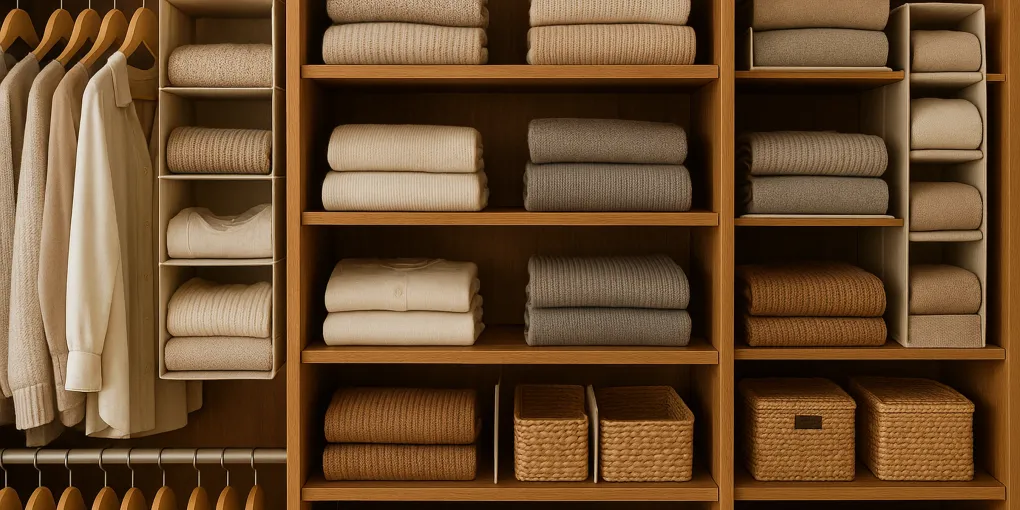
SONGMICS Modular Wardrobe Closet System
Best OverallMaterial: Steel frame with fabric panels
$65–95
Quick picks
| Product | Key Specs |
|---|---|
| See price on Amazon |
|
| See price on Amazon |
|
| See price on Amazon |
|
| See price on Amazon |
|
| See price on Amazon |
|
Product availability, certifications, and retailer details can change; check the current Amazon page before buying.
The Wardrobe as a Daily Decision System
The average person makes over 200 clothing-related decisions per week. Research on decision fatigue — a well-documented phenomenon in behavioral psychology — shows that the quality of decision-making degrades with each decision made in a day. A wardrobe that requires searching, rearranging, and deliberating over every clothing choice imposes a real cognitive cost that accumulates across the morning routine.
An organized wardrobe works as a decision support system rather than a storage system. When clothing is organized by category, hang zone, and color within category, the morning routine becomes a series of fast pattern matches rather than open-ended searches. This is not a trivial benefit — researchers at Columbia University found that reducing the decision load of routine choices (by simplifying and regularizing the environment) measurably improved performance on subsequent cognitive tasks.
The wardrobe also functions as an environmental cue for identity and self-presentation — a well-organized wardrobe that displays your clothing clearly tends to increase intentionality in daily dress choices. The inverse is also true: a disorganized wardrobe defaults choices to the same few easily visible items, which is one reason many people feel they “have nothing to wear” despite owning many clothes.
We reviewed 10 wardrobe organizer products across modular systems, double-hang units, stackable fold organizers, shelf dividers, and hanging shelves. Here is the complete breakdown.
SONGMICS Modular Wardrobe Closet System — Best Overall
Best for: Apartments without built-in closets, rental housing, bedrooms needing a dedicated clothing zone
The SONGMICS modular wardrobe system earns Best Overall because it provides the most complete clothing storage solution for spaces that lack built-in closet infrastructure — and it does so at a price point that is genuinely accessible for renters and first-time apartment dwellers.
What Works
The modular frame system is the key differentiator. Unlike single-purpose hanging racks or fixed wardrobes, the SONGMICS system allows individual configuration of the internal layout: choose your combination of hanging rod sections, fixed shelves, and drawer modules from a set of compatible components. A typical configuration for one person’s wardrobe provides two hanging zones (one double-hang for short garments, one full-length for dresses and coats), two to three shelf tiers, and a drawer module for accessories.
The steel tube frame is stronger than most fabric wardrobe competitors and remains stable under a full garment load without leaning or flexing. The fabric side and back panels prevent dust accumulation on clothing while the open design (no solid door) allows airflow that prevents the moisture and odor buildup common in enclosed plastic wardrobes.
The system disassembles in 20 minutes and reassembles without tools — the correct choice for anyone who moves apartments regularly.
What to Know
The fabric panels add a casual aesthetic that integrates well in studio apartments but may look out of place in more formal bedroom settings. For formal bedrooms, covering the unit with curtain panels (a common styling choice) creates a more cohesive look.
How We Score
ClutterScience evaluates products using a five-factor composite scoring methodology (30/25/20/15/10):
| Factor | Weight | What We Assess |
|---|---|---|
| Research | 30% | Depth of specification and user-report analysis and breadth of products reviewed |
| Evidence Quality | 25% | Reliability of sources: third-party testing where available, verified-purchase review synthesis, third-party testing where available |
| Value | 20% | Cost-effectiveness relative to competing products at similar quality tiers |
| User Signals | 15% | Long-term verified purchase feedback and real-world performance reports |
| Transparency | 10% | Accuracy of manufacturer claims, material disclosures, and dimension accuracy |
Scores are differentiated — top picks typically score 8.5–9.5, mid-tier 7.0–8.4, and weak options below 7.0.
Scoring
| Criterion | Weight | Score |
|---|---|---|
| Capacity & Dimensions | 30% | 9.0/10 |
| Material Quality | 25% | 8.3/10 |
| Ease of Assembly & Use | 20% | 8.8/10 |
| Long-Term Value | 25% | 8.5/10 |
| Composite Score | 8.7/10 |
Whitmor Supreme Closet Organizer System — Best Value System
Best for: Existing reach-in closets, double-hang clothing sections, maximizing rod capacity
The Whitmor Supreme Organizer is the most cost-effective way to substantially increase the hanging capacity of an existing standard closet. By adding a second hanging rod below the primary rod for short garments (shirts, jackets, folded pants on clip hangers), it doubles the hanging capacity of a closet section.
What Works
The double-hang configuration is the single highest-ROI closet organization change available. Most clothing — shirts, blouses, folded trousers, jackets — requires only 36 to 40 inches of vertical hanging clearance. A standard 6-foot-tall closet with a single rod wastes 3 feet of vertical space below every short garment. Adding a lower rod captures that wasted vertical space at minimal cost.
The Whitmor system includes shelf sections above the rod for folded items and an upper shelf for boxes or bins. The chrome-finished steel is durable under the mechanical stress of daily clothing retrieval.
What to Know
The system’s shelf width is fixed at purchase — measure your closet width carefully before ordering. The double-hang configuration works best for the section of your closet dedicated to short garments. Reserve the full-height rod section for dresses, coats, and long items that require uninterrupted vertical hang clearance.
Scoring
| Criterion | Weight | Score |
|---|---|---|
| Capacity & Dimensions | 30% | 8.5/10 |
| Material Quality | 25% | 7.8/10 |
| Ease of Assembly & Use | 20% | 8.5/10 |
| Long-Term Value | 25% | 8.0/10 |
| Composite Score | 8.2/10 |
ClosetMaid Stackable Organizer with Drawer — Best Stackable Unit
Best for: Adding fold storage sections to hanging closets, sweaters and folded clothing zones
The ClosetMaid stackable laminate organizer fills the gap between a pure hanging system (no fold storage) and a pure shelving system (no hanging). It drops into a closet floor section or free-standing position and creates a multi-drawer, multi-shelf fold storage module with a clothing rod at the top for a short hanging zone above.
What Works
The laminated wood construction looks more finished than wire or fabric alternatives — it integrates well with bedroom furniture aesthetics. The combination of drawers (for smaller folded items) and open shelves (for sweaters and jeans) covers the full range of fold-stored clothing categories. The stackable design allows height expansion by adding a second unit on top.
What to Know
Laminated wood is heavier than wire or fabric systems — the unit stays in position but is not easily moved. Assess your preferred closet layout before installation, as repositioning requires significant effort.
Scoring
| Criterion | Weight | Score |
|---|---|---|
| Capacity & Dimensions | 30% | 8.3/10 |
| Material Quality | 25% | 8.8/10 |
| Ease of Assembly & Use | 20% | 7.5/10 |
| Long-Term Value | 25% | 8.5/10 |
| Composite Score | 8.3/10 |
Zober Hanging Closet Shelf Dividers 4-Pack — Best Shelf Dividers
Best for: Preventing clothing pile collapse on existing closet shelves
Shelf dividers are the simplest and lowest-cost intervention for closets that already have shelves but suffer from clothing piles collapsing into each other. The Zober steel dividers clip onto existing shelf panels and create vertical separation walls between clothing categories.
What Works
Installation requires no tools — the dividers clip onto the shelf front and rear with a spring-loaded grip. The 4-pack creates four separate clothing zones on a single shelf, preventing sweater piles from merging and keeping each category neatly separated. The chrome finish is smooth and does not snag delicate fabrics.
What to Know
Dividers work on standard fixed-shelf thickness between 5/8 and 1 inch. Verify shelf thickness before purchasing. Wire shelving requires a divider design specifically rated for wire — the Zober model is designed for solid wood or laminate shelves.
Scoring
| Criterion | Weight | Score |
|---|---|---|
| Capacity & Dimensions | 30% | 6.5/10 |
| Material Quality | 25% | 8.3/10 |
| Ease of Assembly & Use | 20% | 9.8/10 |
| Long-Term Value | 25% | 8.0/10 |
| Composite Score | 8.0/10 |
mDesign Wardrobe Hanging Fabric Shelves 6-Shelf — Best Hanging Shelves
Best for: Converting hanging rod space to fold storage, apartments with limited shelf space
Hanging fabric shelf units attach to the closet rod and hang vertically, converting otherwise unused vertical rod space into a six-level fold storage tower. A standard 24-inch section of hanging rod becomes a storage tower for sweaters, t-shirts, jeans, and accessories.
What Works
The six-shelf configuration provides approximately 24 to 30 inches of vertical fold storage — enough for a complete top-to-bottom outfit arrangement or six categories of folded clothing. The open-front design makes retrieval easy without removing items from above. Fabric construction is lightweight and gentle on folded garments.
What to Know
Fabric shelves have load limits — each shelf supports approximately 10 to 12 lbs. This is sufficient for folded clothing but not for heavy items (stacked books, shoe collections). The hanging attachment means the shelf moves slightly when items are removed from lower tiers — stabilize by placing heavier items on lower shelves.
Scoring
| Criterion | Weight | Score |
|---|---|---|
| Capacity & Dimensions | 30% | 8.5/10 |
| Material Quality | 25% | 7.3/10 |
| Ease of Assembly & Use | 20% | 9.5/10 |
| Long-Term Value | 25% | 7.5/10 |
| Composite Score | 8.1/10 |
Designing Your Complete Wardrobe Organization System
The most effective wardrobe organization approaches use a zone-based structure:
Zone 1 — Hanging (full length): Dresses, coats, suits, and long skirts. Minimum 55 inches vertical clearance. This zone should represent about 20 to 30 percent of the total rod length for most wardrobes.
Zone 2 — Hanging (double): Shirts, blouses, jackets, folded trousers. The double-hang configuration doubles capacity here. This zone should represent 50 to 60 percent of the total rod length.
Zone 3 — Fold storage: Sweaters, jeans, athletic wear, t-shirts. Handled by a hanging fabric shelf unit or stackable organizer module.
Zone 4 — Accessories: Shelves or drawers for accessories (belts, scarves), small bins for socks and underwear.
For a complete closet organization system, this wardrobe approach pairs with the detailed recommendations in our best closet organization systems guide. For sweater-specific storage considerations, see our best sweater storage organizers article.
How We Evaluated Wardrobe Organizers
Capacity and space efficiency (30%): How much clothing does the system store per square foot of floor or closet space occupied? Systems that maximize vertical space and allow both hanging and fold storage configurations score highest.
Material quality and durability (25%): Frame rigidity, shelf load capacity, fabric durability, and finish quality under the daily mechanical stress of clothing retrieval.
Ease of assembly and use (20%): Assembly time and difficulty, tool requirements, and whether reconfiguration is possible without dismantling the entire system.
Long-term value relative to price (25%): A wardrobe organizer should last through years of daily use without structural failure. We assessed frame stability, shelf integrity under sustained load, and whether the system can adapt to changing wardrobe sizes over time.
Frequently Asked Questions
- Use a double-hang system for short clothing (shirts, jackets, folded pants) to double your hanging capacity on one rod section. Add a hanging fabric shelf unit to the rod for folded items like sweaters and t-shirts that do not need to hang. Reserve the primary hanging rod for dresses, suits, and long coats that require full-length hang space. This approach typically doubles or triples the organized capacity of a standard single-rod closet.
- The fold-vs-hang decision depends on the garment type and your available space. Hang items that wrinkle easily under the weight of folding — dress shirts, blazers, trousers, dresses. Fold items that are bulky on hangers or hold shape well when stacked — sweaters, t-shirts, jeans, athletic wear. Hanging too many items crowds the rod and causes garments to wrinkle from contact; over-folding dense sweaters damages fiber structure. The KonMari method's vertical fold approach maximizes drawer and shelf storage for folded items while reserving hang space for garments that need it.
- Standard spacing guidelines recommend 4 to 5 hangers per foot of rod for normal clothing thickness (shirts, blouses, light jackets). Heavier garments (coats, suits, padded jackets) require more space — plan for 2 to 3 per foot. Velvet slim-profile hangers allow more items per foot than bulky plastic hangers without increasing crowding; switching to slim hangers often adds 30 to 40 percent more hanging capacity on an existing rod.
- A freestanding modular wardrobe system is the correct solution. The SONGMICS modular unit provides a complete clothing storage infrastructure (hanging rod, shelves, drawers) in a freestanding unit that requires no wall mounting and can be disassembled for moving. Cover it with curtain panels for an integrated bedroom aesthetic.
- Two practices determine long-term wardrobe organization: the one-in-one-out rule (when a new garment is added, an existing garment is donated or discarded) and a seasonal rotation schedule (off-season clothing moved to under-bed storage or a secondary closet). See our companion guide to seasonal clothing storage for detailed rotation strategies and storage container recommendations.