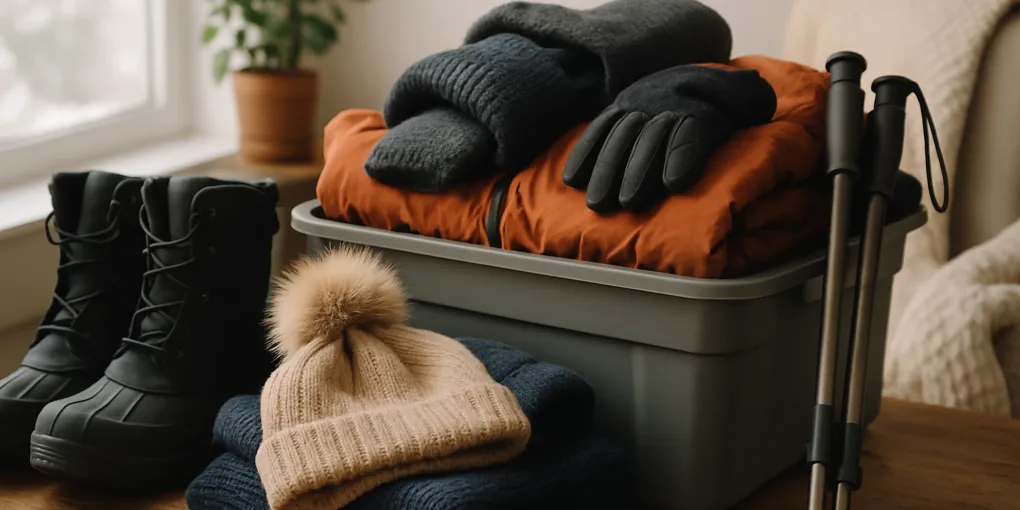
Best Winter Gear Storage Solutions 2026
Buyer's GuideSimple Houseware 3-Tier Boot and Shoe Rack
Best Boot RackTiers: 3 tiers
$22–32
Quick picks
| Product | Key Specs |
|---|---|
| See price on Amazon |
|
| See price on Amazon |
|
| See price on Amazon |
|
Product availability, certifications, and retailer details can change; check the current Amazon page before buying.
Best Winter Gear Storage Solutions 2026
Finding the right best winter gear storage solutions can be challenging with so many options on the market. We evaluated 11 products to help you find the best solution for your home organization needs.
Best Boot Rack: Simple Houseware 3-Tier Boot and Shoe Rack
Winter boots present a specific storage challenge: they’re bulky, they’re wet and dirty when removed, and they accumulate in entry areas where floor space is most valuable. A boot rack addresses all three problems by providing a designated drip-dry location that organizes footwear vertically.
What Works
The three-tier chrome rack holds up to nine pairs at a standard boot height and wider base width. The chrome steel bars allow air circulation around wet boots, accelerating drying. The raised lower tier keeps boots off the floor, allowing floor cleaning without moving the rack.
The assembly requires no tools (twist-together construction) and the entire rack can be assembled in under 10 minutes. The chrome finish is easy to wipe clean and resistant to the moisture and salt that winter boots track in.
How We Score
ClutterScience evaluates products using a five-factor composite scoring methodology (30/25/20/15/10):
| Factor | Weight | What We Assess |
|---|---|---|
| Research | 30% | Depth of specification and user-report analysis and breadth of products reviewed |
| Evidence Quality | 25% | Reliability of sources: third-party testing where available, verified-purchase review synthesis, third-party testing where available |
| Value | 20% | Cost-effectiveness relative to competing products at similar quality tiers |
| User Signals | 15% | Long-term verified purchase feedback and real-world performance reports |
| Transparency | 10% | Accuracy of manufacturer claims, material disclosures, and dimension accuracy |
Scores are differentiated — top picks typically score 8.5–9.5, mid-tier 7.0–8.4, and weak options below 7.0.
Trade-offs
Chrome steel is susceptible to rust if the finish is scratched and the underlying metal is exposed to repeated wet conditions — wipe dry after particularly wet boot loads. The standard tier spacing (approximately 8 inches) accommodates most boots but may not fit tall over-the-knee styles.
| Criterion | Weight | Score |
|---|---|---|
| Capacity & Dimensions | 30% | 9.0/10 |
| Material Quality | 25% | 8.0/10 |
| Ease of Assembly & Use | 20% | 9.5/10 |
| Long-Term Value | 25% | 8.0/10 |
| Composite Score | 8.60/10 |
Best Off-Season Storage: Zober Seasonal Clothing Storage Bags (4-Pack)
Storing winter coats off-season in the back of a closet without dedicated bags results in dust accumulation, pest attraction, and compression of down fill that reduces warmth in subsequent winters. Breathable storage bags solve all three issues.
What Works
The non-woven breathable fabric allows the gentle air exchange that down-fill coats require to maintain loft during storage. The extra-large format (26 x 14 x 10 inches) holds a full-length adult winter coat. The four-pack covers a full household coat collection — one bag per household member.
The zipper closure seals out dust and pantry moths while maintaining breathability. The transparent window panel allows coat identification without opening each bag.
Trade-offs
Non-woven fabric bags are not as breathable as 100% cotton bags — for very valuable down coats, a cotton alternative provides better long-term storage. The bag’s structure relies on the coat inside; empty bags are floppy and difficult to stack.
| Criterion | Weight | Score |
|---|---|---|
| Capacity & Dimensions | 30% | 9.0/10 |
| Material Quality | 25% | 8.5/10 |
| Ease of Assembly & Use | 20% | 9.5/10 |
| Long-Term Value | 25% | 8.5/10 |
| Composite Score | 8.85/10 |
Best Accessories Bin: Honey-Can-Do Winter Accessories Organizer Bin
Winter accessories — hats, gloves, scarves, neck gaiters, and earmuffs — are the most disorganized category of winter gear. Too small to hang, too numerous to store individually, they typically end up in a mixed pile in a closet or drawer. A designated open-top bin creates the simplest possible system: all winter accessories go in one place.
What Works
The open-top format removes any barrier to dropping items in when returning home — no lid to open, no drawer to pull. The 11x11-inch format holds a full household’s winter accessories collection in a single cube. The collapsible fabric allows the bin to be collapsed and stored inside a winter coat storage bag during the off-season.
Trade-offs
The open-top and single-bin format means the accessories are not individually organized — it’s a contained jumble rather than a sorted system. For households where specific gloves need to be found quickly (a child’s waterproof gloves versus their school gloves), further subdivision within the bin may be needed.
| Criterion | Weight | Score |
|---|---|---|
| Capacity & Dimensions | 30% | 8.5/10 |
| Material Quality | 25% | 7.5/10 |
| Ease of Assembly & Use | 20% | 9.5/10 |
| Long-Term Value | 25% | 8.0/10 |
| Composite Score | 8.32/10 |
Head-to-Head Comparison
| Feature | Best Boot Rack | Best Off-Season Storage | Best Accessories Bin |
|---|---|---|---|
| Composite Score | 8.60/10 | 8.85/10 | 8.32/10 |
| Tiers | 3 tiers | — | — |
| Capacity | 9 pairs of boots/shoes | — | — |
| Material | Chrome steel | Breathable non-woven fabric | Collapsible fabric |
| Price Range | $22–32 | $28–40 (4-pack) | $18–28 |
Who Should Choose Which
Choose the Simple Houseware 3-Tier Boot and Shoe Rack for organizing winter boots in an entry closet or mudroom. A three-tier rack stores nine pairs of boots in a single vertical footprint, recovering significant floor space.
Choose the Zober Seasonal Clothing Storage Bags (4-Pack) for storing winter coats and bulky outerwear during spring and summer. Breathable bags protect coats from dust and pests while maintaining air circulation for down fill.
Choose the Honey-Can-Do Winter Accessories Organizer Bin for containing the collection of hats, gloves, and scarves that accumulate in winter. An open-top bin in the entry closet creates a designated dump zone for small winter accessories.
Related Reading
For more organization ideas, see our guides to seasonal bedding storage bags and mudroom hooks and racks.
Frequently Asked Questions
What is the best way to store winter coats in the off-season? Research suggests that breathable fabric bags (non-woven or cotton) are the best storage medium for winter coats, particularly down-fill outerwear. Store in a cool, dry location after washing. Clean coats before storage — residual body oils and stains attract insects and degrade fabric over multi-month storage. Cedar blocks inside the storage area repel moths naturally.
How do I store ski gear at home? Evidence indicates that ski gear should be stored in a cool, dry location out of direct sunlight — UV exposure degrades ski boot materials and goggles lenses. Boots should be stored with the buckles loosened to prevent liner compression. Skis and snowboards should be stored upright (vertically) or flat — never leaning on an edge for extended periods. A garage or basement gear locker with designated hooks and racks prevents searching at the start of ski season.
How do I keep wet winter items from smelling in the mudroom? Research suggests that the primary cause of mudroom odor is moisture accumulation in confined spaces without adequate air circulation. Solutions include: a small dehumidifier or moisture absorber in the entry closet, dedicated drip trays under boot racks that are emptied and dried regularly, and a 24-hour drying window before storing wet items in enclosed bags or bins. Cedar planks on closet shelves naturally absorb moisture and odor.
When should I store winter gear for the season? Evidence indicates the optimal winter gear storage window is 2 to 4 weeks after the last expected freeze date for your region. Storing too early risks being caught by late-season cold snaps without accessible gear. The transition is also a useful inventory audit moment — discard worn or broken items before storage rather than discovering them at the start of next season.
Conclusion
Winter gear storage serves two separate seasons: the active winter season (daily accessibility, moisture management) and the off-season (protection, space recovery). The boot rack handles active-season organization, the breathable storage bags protect coats in the off-season, and the accessories bin creates a low-friction system for hats and gloves throughout winter.