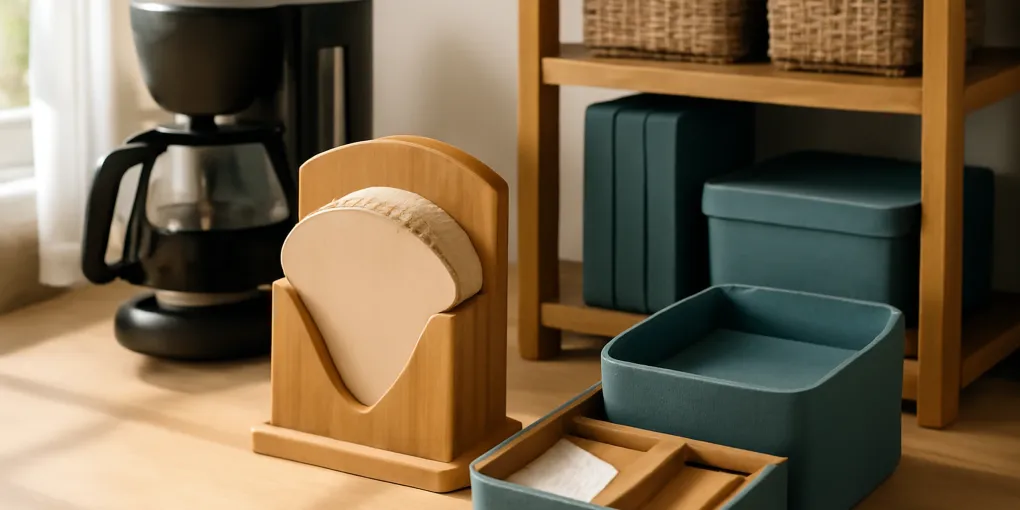
Hario V60 paper filter holder
Quick picks
| Product | Key Specs |
|---|---|
| See price on Amazon | — |
| See price on Amazon | — |
Product availability, certifications, and retailer details can change; check the current Amazon page before buying.
A coffee filter holder is one of those tiny organizers that can either make a morning routine smoother or become another object on the counter. The difference is not the material. It is whether the holder protects filters from moisture, keeps the right shape easy to grab, and lives exactly where coffee is made.
This review covers simple holders for paper filters, not full coffee pod drawers or espresso stations. If your whole kitchen counter is crowded, start with why flat surfaces become clutter magnets. If you need pantry-level beverage storage, see best pantry organization systems.
Quick picks
Search options: Search Amazon for Hario V60 filter holders or Search Amazon for mDesign lidded filter boxes.
Overall rating: 4.1 out of 5 for daily coffee drinkers with a dry coffee station. Lower for tiny counters, mixed filter shapes, and households that brew only occasionally.
Best for: pour-over users, drip-coffee households that hate torn plastic sleeves, and open shelves where a neat stack matters.
Not best for: humid sink-adjacent counters, mixed cone and basket filters, or cabinets where the original filter pack already works.
What works well
The main benefit is one-hand access. Paper filters are light and annoying to remove from torn sleeves, especially before coffee. A holder keeps the stack upright, open, and predictable. That can prevent the common coffee-station sprawl: filters leaning on mugs, scoops hiding in the bag, and the brewer area collecting little paper scraps.
A second benefit is inventory. When filters are visible, you know when the stack is low. That is more useful than discovering an empty sleeve on a busy morning.
A third benefit is protecting shape. Cone filters can bend when shoved into a crowded drawer. Basket filters can flatten or collect crumbs. A holder gives the filter one clean job and one clean spot.
What does not work
An open holder does not protect filters from steam, sink splash, grease, or dust. If the coffee maker sits next to the stove or sink, choose a lidded box or move filters into a cabinet. FDA safe food-handling guidance emphasizes clean prep areas and separation from contamination sources (FDA safe food handling). Coffee filters are dry paper, but the storage principle still matters: keep items that touch food and drink away from wet or dirty zones.
A holder also does not solve a chaotic coffee station. If the same tray holds filters, sugar packets, medicine, keys, batteries, and pet treats, the filters will not stay clean or easy to grab. Reset the station before judging the holder.
Countertop holder vs lidded box
A countertop holder is best when filters are used every day and the holder sits far from splashes. It should be heavy enough not to tip when one filter is pulled out. It should match the filter shape. Cone filters need angled support. Basket filters need a wider, flatter pocket.
A lidded box is better for open shelving, occasional brewing, or dusty kitchens. It costs one extra motion, but it protects the stack. Choose a lid that opens fully and does not crush the filters.
A drawer or cabinet bin is best when counter space is scarce. Put filters beside the coffee maker supplies, not across the kitchen. If grabbing a filter requires opening three doors, the original sleeve will come back to the counter.
Fit checks before buying
Measure the filter shape first. Number 2 and number 4 cone filters are not the same storage problem. Basket filters need width rather than height. If you use unbleached and white filters for different brewers, decide whether they need separate homes.
Then check the counter zone. The holder should not sit under a cabinet where steam condenses. It should not block the water reservoir. It should not crowd the grinder, scale, kettle, or mug landing zone.
Finally, check cleaning. A holder with narrow grooves may catch dust and coffee grounds. A simple smooth holder is easier to wipe.
Daily-use score
| Category | Score | Notes |
|---|---|---|
| Research fit | 4.0 | Strong for routine friction, modest for occasional use |
| Evidence quality | 3.9 | Value depends on moisture control and placement |
| Value | 4.2 | Low-cost if it prevents torn sleeves and duplicate buying |
| User signals | 4.1 | Easy to judge by morning access |
| Transparency | 4.3 | Limits are obvious in wet or crowded spaces |
Composite score: 4.1 out of 5.
Who should skip it
Skip a filter holder if you brew once a week and the filter pack stores neatly in a cabinet. Skip an open holder if the only available counter spot is beside the sink. Skip decorative holders that expose filters to grease near a range. Skip any holder that does not match your filter shape, even if it looks good in product photos.
Coffee Filter Holder FAQ
Is wood, metal, or acrylic better?
Any can work. Wood looks warm but should stay dry. Metal is sturdy and easy to wipe. Acrylic makes the stack visible but can show dust. Placement matters more than material.
Where should filters live in a small kitchen?
Put them in the smallest dry zone within one step of the brewer: a lidded box on a shelf, a shallow drawer, or a narrow cabinet bin.
Should I store filters with coffee beans?
They can share a coffee station, but keep filters separate from oily bags, scoops, and grounds. The filter stack should stay clean and dry.
Sources
- FDA safe food handling: https://www.fda.gov/food/buy-store-serve-safe-food/safe-food-handling
- CDC food safety prevention overview: https://www.cdc.gov/food-safety/prevention/index.html
Frequently Asked Questions
- It is worth it when filters are used daily and the holder sits in a dry, dedicated coffee zone. It is not worth prime counter space for occasional use.
- A lid helps on dusty shelves or near cooking splatter. Open holders are fine when filters are used quickly and kept away from water.
- Usually no. The shapes store differently, and mixing them makes both harder to grab cleanly.