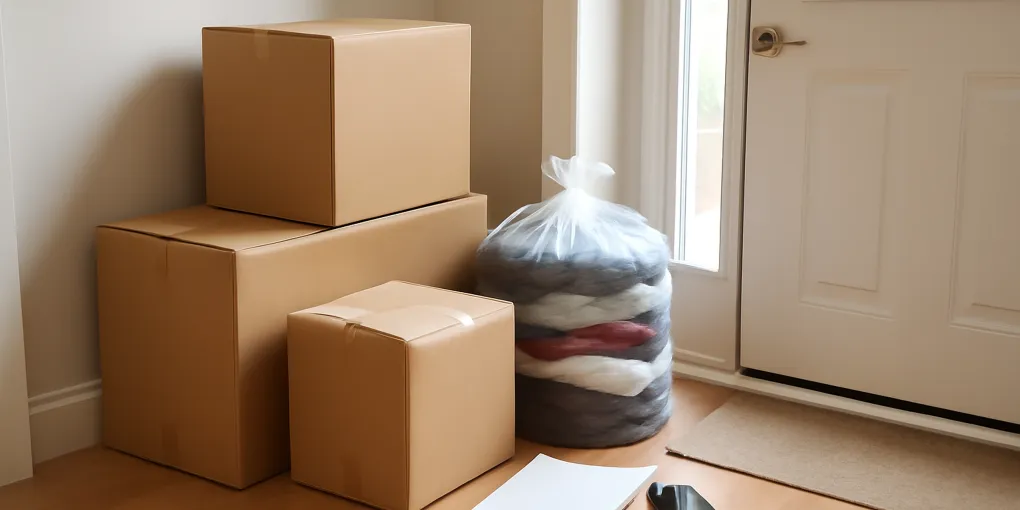
Donation Pickup Staging Before a Move: A 7-Day Protocol
ProtocolQuick picks
| Product | Key Specs |
|---|---|
| See price on Amazon |
|
| See price on Amazon |
|
Product availability, certifications, and retailer details can change; check the current Amazon page before buying.
A donation pile becomes expensive on moving week when it occupies the same floor space, boxes, and attention as belongings that are actually going to the new home. The fix is not another “donate” sign. It is a timed removal plan with an acceptance check, a safe staging boundary, and a backup destination.
This seven-day protocol is distinct from a first-night essentials box or a moving-label roundup. Its only job is to get accepted donations out before movers arrive while preserving enough documentation for the donor.
Seven days out: choose the receiving organization first
Start with the recipient, not the pile. Local charities differ in what they accept, whether they enter a home, what condition they require, and how far in advance pickup must be scheduled. Confirm on the organization’s current site or by phone:
- ZIP code and pickup availability.
- Accepted furniture dimensions and condition.
- Whether clothing must be bagged or boxed.
- Rules for books, housewares, electronics, mattresses, and exercise equipment.
- Items the crew will not take.
- Whether curbside placement is permitted.
- How the receipt is issued.
Goodwill’s national donation guidance tells donors to check with the local organization because acceptance rules vary (Goodwill donation guidance). Habitat for Humanity likewise notes that ReStore pickup and accepted items depend on the local store (Habitat ReStore donations). A truck arriving does not guarantee every item leaves.
Book pickup for at least two or three days before moving day when possible. That leaves time for weather, capacity, or an item refusal.
Six days out: make four decisions, not one donation pile
Sort each candidate into one of four destinations:
| Destination | Examples | Required next step |
|---|---|---|
| Scheduled pickup | Accepted furniture and boxed housewares | Add to charity inventory |
| Drop-off | Small accepted items that fit your vehicle | Assign driver and deadline |
| Sell or give directly | Valuable item with a confirmed recipient | Set pickup deadline before charity day |
| Dispose or recycle | Broken, stained, hazardous, or rejected item | Find correct municipal route |
Do not label damaged goods “donation” to avoid a disposal decision. A charity pays labor and disposal costs when unusable items arrive.
Five days out: stage without blocking the move
The staging zone must be dry, secure, and outside required access routes. Never block:
- Exterior doors or emergency exits.
- Stairs and handrails.
- Electrical panels, utility shutoffs, or fire equipment.
- Hallways the moving crew will use.
- Garage-door tracks or a vehicle’s sight line.
- Child or pet access to unstable furniture and bags.
Create a visible floor boundary with removable painter’s or masking tape if the surface allows it. Duck Brand color masking tape is one bounded option. Check Duck Brand color masking tape on Amazon. Test adhesive on an inconspicuous area and remove it promptly; the color is only a boundary, not proof of contents.
Keep furniture upright and stable. Do not stack heavy cartons on a chair, lean mirrors against a traffic wall, or make a tower the pickup crew must dismantle.
Four days out: pack by acceptance rule
Use medium cartons one person can lift. Bankers Box SmoothMove medium boxes are a bounded box type with handles, but ordinary sound cartons work if the charity accepts them. Check Bankers Box SmoothMove medium moving boxes on Amazon.
Pack hard goods so they do not break through the base. Bag textiles only when the recipient permits bags. Keep pairs and sets together. Do not include:
- Household chemicals, paint, fuel, or aerosols.
- Open food, medicine, or personal-care liquids.
- Broken glass or exposed blades.
- Recalled products.
- Child safety products the organization excludes.
- Wet, moldy, pest-affected, or smoke-damaged textiles.
- Personal documents hidden in drawers or book pages.
Open every donated drawer, pocket, and container before it enters the zone. Remove keys, IDs, cash, jewelry, photos, device storage cards, and medications.
Three days out: make a plain-language inventory
Photograph the items in logical groups before closing boxes. Number boxes on two sides and keep the inventory on your phone or in the move folder.
Useful entry: D03, six dinner plates, four mugs, two saucepans.
Unhelpful entry: kitchen stuff.
For furniture, record the basic item and condition rather than assigning an unsupported value. The IRS explains recordkeeping and substantiation requirements for charitable contributions in Publication 526 and related guidance (IRS Publication 526). If a deduction matters, consult the current rules; the charity generally does not determine fair market value for you.
Pickup day: separate the crew path from the moving path
Before arrival:
- Confirm the appointment window and access instructions.
- Move pets and children away from the door route.
- Keep your phone, keys, and paperwork with you.
- Point out only the staged items.
- Do not let unmarked moving cartons drift into the donation boundary.
- Record refused items immediately.
- Obtain or save the receipt before the task leaves your mind.
Do not add last-minute mystery bags while the truck is loading. The acceptance check and inventory exist to prevent accidental donations and rejected clutter.
The refusal plan
A pickup crew may reject an item because of condition, size, local policy, access, or truck capacity. Decide the fallback before pickup day:
- Local charity drop-off with confirmed acceptance.
- Municipal bulky-item collection.
- Electronics or hazardous-waste program.
- Textile recycling where available.
- Scheduled junk removal for true waste.
Set a final removal deadline at least one day before movers arrive. A rejected sofa should not become an argument on loading morning.
Completion checklist
The donation lane is closed only when:
- No donation item remains in the mover path.
- Refused items have another booked route.
- Photos and inventory are saved.
- The receipt is in the move or tax-record folder.
- Tape and empty cartons are removed.
- The recipient’s confirmation is closed out.
The article-specific buying decision is modest: buy sturdy medium boxes and a removable visual marker only if current supplies cannot create a safe boundary. Do not buy a rack, shelving unit, or reusable bin merely to hold objects that should leave within a week.
Sources
- Goodwill Industries International, donation guidance and local acceptance: https://www.goodwill.org/donors/donate-stuff/
- Habitat for Humanity, ReStore donation and pickup guidance: https://www.habitat.org/restores/donate-goods
- IRS, Publication 526, Charitable Contributions: https://www.irs.gov/forms-pubs/about-publication-526
- IRS, determining the value of donated property: https://www.irs.gov/forms-pubs/about-publication-561
Frequently Asked Questions
- Book as soon as the move date is firm, then set the pickup several days before loading day so a delay does not leave donations in the truck path.
- Only if the area stays dry, secure, and outside walking and vehicle paths. Do not block doors, stairs, electrical panels, or the mover route.
- Photograph grouped items, keep a plain-language inventory, obtain the charity's receipt, and follow current IRS guidance if claiming a deduction.