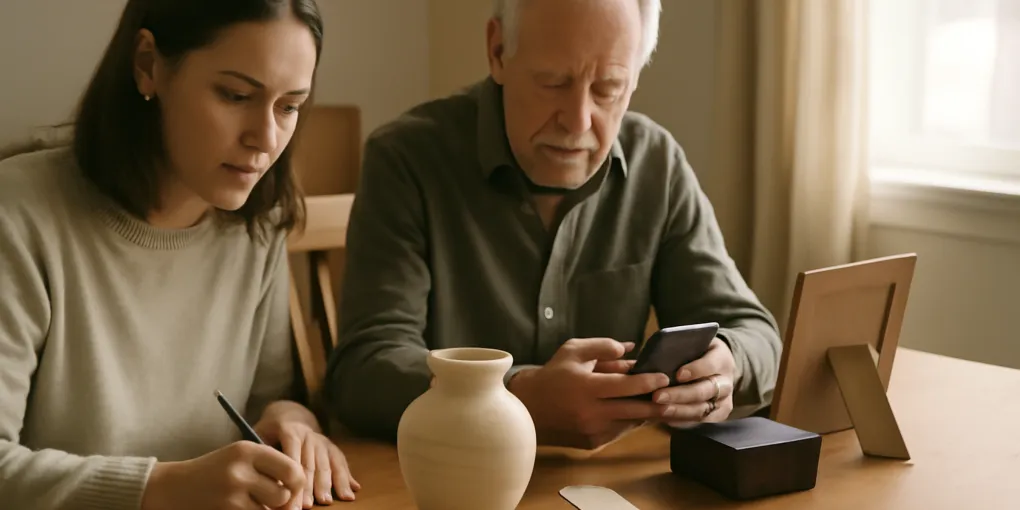
How to Make an Heirloom Photo Inventory Before Downsizing a Parent's Home
ProtocolQuick picks
| Product | Key Specs |
|---|---|
| See price on Amazon |
|
| See price on Amazon |
|
Product availability, certifications, and retailer details can change; check the current Amazon page before buying.
Downsizing a parent’s home becomes harder when every object has to be explained, assigned, packed, and remembered at the same time. A photo inventory separates the information work from moving day. It records what an object is, why it matters, who owns it, and what decision is still pending.
The inventory does not determine legal ownership or replace an appraisal, will, trust, or estate plan. It is a family workflow created with the current owner’s participation. If capacity, ownership, or family conflict is in question, pause and get appropriate professional advice.
The U.S. National Archives recommends handling family papers and photographs carefully, using clean dry hands, avoiding damaging fasteners and adhesives, and storing originals in suitable conditions (National Archives family archives guidance). Apply the same restraint here: photograph first, attach nothing to a fragile item, and do not turn documentation into damage.
Set the boundary with the owner
Before opening cabinets, agree on the scope. A useful first session covers 10 to 20 known keepsakes, not the entire house.
Ask the owner:
- Which objects feel important enough to document?
- Which stories should be recorded in their own words?
- Who may see the inventory?
- Are there objects that should not be photographed?
- Is the current task documentation, a destination decision, or both?
Do not invite relatives to claim items during the first session unless the owner explicitly wants that. Documentation is calmer when it is not also a competition.
Build the inventory sheet
Use a spreadsheet, table, or paper form with one row per object. Include these fields:
| Field | What to record | Example format |
|---|---|---|
| Item ID | Short unique code | H-001 |
| Current owner | Person who owns or controls the item | Full name |
| Description | Material, color, form, identifying marks | Blue ceramic vase, floral relief |
| Dimensions | Height, width, depth | 12 x 6 x 6 inches |
| Condition | Visible chips, tears, stains, missing parts | Small base chip |
| Story/source | Who made, used, or gave it | Owner’s own words |
| Preferred destination | Keep, named person, sell, donate, undecided | Undecided |
| Move location | New home, family pickup, storage, appraisal area | Family pickup |
| Photo files | Matching filenames | H-001-a.jpg, H-001-b.jpg |
| Decision date | Date and who approved it | YYYY-MM-DD, owner |
Avoid value estimates unless a qualified appraisal or reliable record supports them. “Family believes this is valuable” is a note for appraisal, not a price.
Photograph each object without harming it
1. Prepare one clear surface
Use a stable table, indirect window light, and a plain neutral background. Keep drinks, packing tape, markers, and food away. Large furniture can stay in place if the walking path is safe.
2. Assign the ID off the object
Write the item ID on a card and place it beside the object for the first photo. Do not stick a label directly onto photographs, leather, painted wood, ceramic glaze, metal patina, textiles, books, or paper.
If temporary IDs are needed on outer boxes or polypropylene sleeves, check current Avery removable color-coding label options on Amazon. Test removal on the container, never on the heirloom.
3. Take four useful views
- One full-object view
- One side or back view
- One close-up of a maker’s mark, signature, inscription, or distinctive feature
- One condition photo showing chips, stains, cracks, repairs, or missing pieces
Frame the object closely so faces, account papers, keys, medication, addresses, and unrelated valuables stay outside the photograph.
4. Rename the files immediately
Use the item ID before the camera’s default number: H-001-a-full.jpg, H-001-b-mark.jpg, and H-001-c-condition.jpg. The inventory row and the images can then be matched even after files are copied.
5. Record the story in the owner’s words
A phone voice memo can capture a short story if the owner agrees. Name it with the same ID, then summarize it in the sheet. Ask concrete questions: Who used this? Where did it come from? What detail should the next person know?
Do not pressure someone to produce a perfect family history. “Belonged to my aunt; used at holiday dinners” is useful.
Separate decisions that look similar
| Status | Meaning | Physical action |
|---|---|---|
| Keep at new home | Owner plans to take it | Move to measured packing zone |
| Family pickup approved | Owner approved a named recipient | Record name and pickup deadline |
| Appraisal needed | Identity or value affects the decision | Protect in place and schedule a qualified appraisal |
| Sell | Owner approved sale path | Photograph condition and keep provenance records |
| Donate | Owner approved organization/category | Confirm acceptance before transport |
| Undecided | No destination yet | Leave in a bounded review zone |
“Someone might want it” is not a destination. Record a named person and deadline only after the owner approves contact.
Pack only after the inventory row is complete
Match the box or protective sleeve to the item ID. Put a packing label on the outer container, not the object. For fragile items, use appropriate clean packing materials and keep the box orientation clear. Photograph the packed layer before sealing if the contents are complex.
Keep high-value documents, jewelry, keys, firearms, medications, and hazardous materials outside a general heirloom session. They require their own secure, legally appropriate handling plans.
Protect the digital inventory
The files may reveal valuables, family relationships, signatures, and an emptying home. Store the primary inventory in an account with strong access controls. Keep a second copy in another protected location. Check current SanDisk Extreme portable SSD options on Amazon for one local backup route, but a removable drive should be encrypted or otherwise protected where appropriate and should never be the only copy.
Share a reduced export with relatives if they do not need full-resolution marks, addresses, values, or condition details. Keep an untouched master copy.
A realistic two-session plan
Session one: document 10 to 20 items, record stories, and mark destinations as undecided unless the owner volunteers a clear choice.
Session two: review the sheet with the owner, correct descriptions, identify appraisal questions, and approve specific destinations. Only then create family pickup, packing, sale, or donation groups.
This workflow has a narrower job than the general downsizing guide. Use the general guide to reduce volume; use this inventory when family meaning and item identity could be lost during the move.
Frequently Asked Questions
- Record a unique ID, owner, plain-language description, dimensions, condition, family story, preferred recipient or destination, decision status, and photo filenames.
- Only with the owner's permission and a written decision process. An inventory records preferences; it should not be treated as a legal transfer or permission to remove property.
- Keep an access-controlled primary copy and a second backup. Avoid public albums when images reveal addresses, valuables, signatures, documents, or family information.