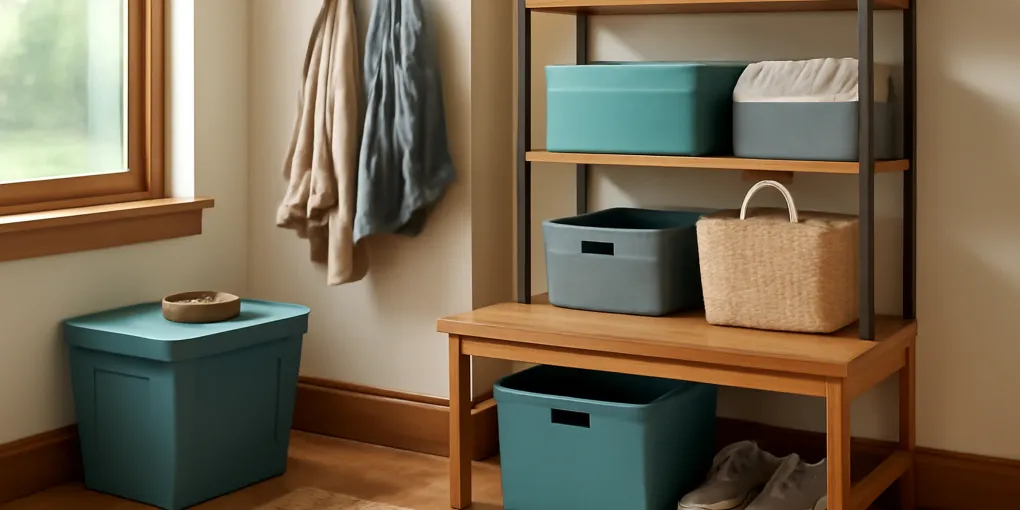
Hallway Drop Zone Protocol: Stop Shoes, Bags, and Cords From Becoming Trip Hazards
ProtocolQuick picks
Low-profile shoe rack
★ Top pick Best first fix- Best For: Shoes that currently land in the walking path
- Caveat: Must fit against the wall without reducing the clear path too much
Wall hook rail with anchors
Best bag control- Best For: Backpacks, dog leashes, light jackets, and tote bags
- Caveat: Use studs or proper anchors; adhesive hooks are not for heavy school bags
Shallow return bin
Best errand staging- Best For: Library books, returns, borrowed items, and outgoing packages
- Caveat: One bin only; overflow means the errand list needs attention
A hallway drop zone fails when it treats the hallway like a storage room. Shoes spread across the floor, backpacks slump into the walking path, packages wait by the door, and charging cords snake from the nearest outlet. The result may look like ordinary clutter, but in a narrow entry it becomes a trip-hazard problem.
The protocol is simple: protect the path before you add storage. A drop zone should catch the items that naturally land near the door without stealing the walking lane. If the organizer makes people step around it, the organizer is part of the clutter.
For a fuller entry setup, see the landing strip entryway protocol. This version focuses on hallways where depth is limited and safety matters more than decorative storage.
Quick picks for a safer hallway drop zone
- Shoes on the floor: Search Amazon for narrow low-profile shoe racks. Choose a rack that holds everyday pairs without jutting into the walking lane.
- Backpacks and leashes: Search Amazon for heavy-duty entryway hook rails. Choose anchored hooks for loaded bags, not tiny adhesive hooks.
- Returns and outgoing items: Search Amazon for shallow return bins. Choose one bin with a hard boundary, not an open-ended pile.
Step 1: Protect the walking path
Stand at the entrance and walk the route people actually take while carrying groceries, a work bag, a child, or a laundry basket. That path is the priority. Do not begin by measuring a cute bench or basket. Begin by identifying what must remain open.
The CDC notes that home falls are a major injury risk, especially for older adults, and recommends reducing trip hazards such as clutter in walking areas. A hallway drop zone should therefore be judged by the floor it keeps clear, not by how much it can hold.
Mark the no-storage strip mentally or with painter’s tape for a day. If the household keeps stepping on shoes, bumping a backpack, or moving sideways around a bin, the storage is too deep for the hall.
Step 2: Put shoes low and narrow
Shoes need a low, obvious parking place because they are the most common entryway spillover. A narrow two-tier rack usually works better than a deep basket for adult shoes. It gives each pair a visible slot and prevents the “just toss them in” pile from sliding into the walkway.
Limit the rack to active shoes only. A hallway that holds every seasonal pair will fail. Keep one or two everyday pairs per person at the door and move dress shoes, boots, and off-season footwear to a closet or bedroom zone.
Shopping option: Search Amazon for low-profile entryway shoe rack. Check the depth against your hallway, not against a staged product photo.
Step 3: Move bags onto the wall
Backpacks, gym bags, tote bags, and dog leashes need vertical storage. The floor is the worst place for them because straps spread, bags slump, and a half-zipped backpack can spill into the path.
Use a hook rail installed into studs or proper wall anchors for heavy bags. Adhesive hooks can be useful for light keys or leashes, but a loaded school bag needs real support. Place hooks where the hanging bag does not hit a door swing or brush against everyone who passes.
Shopping option: Search Amazon for entryway hook rail heavy duty. Look for a published weight rating and mounting hardware details.
Step 4: Create one return bin, not a return corner
Outgoing clutter is sneaky because it feels temporary. Library books, packages, sports forms, dry-cleaning bags, and borrowed containers sit by the door because they are “leaving soon.” Without a hard boundary, the outgoing area expands until the hallway becomes a staging dock.
Use one shallow bin or tray. If the bin is full, do not add a second pile beside it. Empty it into the car, backpack, or errand list. The bin works because it creates a visible limit.
Shopping option: Search Amazon for shallow entryway return bin. Choose a bin low enough that small items do not disappear at the bottom.
Step 5: Route cords away from feet
Entry outlets are tempting charging spots for phones, bike lights, vacuums, and kids’ devices. A cord crossing the hallway is not a storage system. It is a hazard, especially in dim light or when someone is carrying items.
If charging must happen near the door, use a small shelf, wall-mounted station, or table close to the outlet. Route the cable along the wall and keep the device off the floor. The Electrical Safety Foundation International advises avoiding cords placed under rugs or across traffic paths because they can create damage and trip risks.
For larger cable problems, use the cord nests behind desks article as a diagnostic. Hallways need even stricter rules because people move through them quickly.
Step 6: Make the weekly reset visible
The hallway drop zone needs a weekly reset because the categories are active. Shoes change with weather, bags collect papers, and return bins quietly fill.
Use a five-minute Friday or Sunday reset:
- Remove shoes that were not worn this week.
- Empty the return bin into the next errand route.
- Check hook weight and move overloaded bags.
- Pick up loose straps, cords, and small items.
- Photograph the clear walkway if the household needs a visual standard.
The reset is not housekeeping perfection. It is a trip-hazard inspection disguised as organization.
Hallway drop zone FAQ
Is a bench a good hallway organizer?
Only if the hallway is deep enough for someone to pass while another person sits or opens a bag. In narrow halls, a bench often becomes a shelf for packages and coats. A slim shoe rack plus hooks may be safer.
What should stay out of a hallway drop zone?
Bulk paper goods, seasonal shoes, large sports bags, cleaning tools, and charging cords that cross the floor should stay elsewhere. The hallway should hold only items used at the door.
How do I handle kids’ backpacks?
Use lower hooks or a dedicated cubby that a child can reach without dropping the bag in the path. If the bag is too heavy for the hook, move school papers to a desk zone and keep only the packed bag near the exit.
What if there is no wall space?
Use the nearest closet door, a very shallow shoe tray, or a single basket outside the traffic line. If no storage fits without narrowing the path, the correct answer may be less hallway storage, not a more complicated organizer.
Sources
- CDC. Older adult fall prevention: https://www.cdc.gov/falls/prevention/index.html. Supports reducing trip hazards and keeping walking paths clear.
- Electrical Safety Foundation International. Extension cord safety: https://www.esfi.org/extension-cord-safety-tips/. Supports keeping cords out of traffic paths and avoiding damaged or covered cords.
Frequently Asked Questions
- Use the widest clear path your home allows and do not add storage that forces people to turn sideways around shoes, bags, or cords. Building-code details vary, so treat local rules as a floor and household safety as the practical test.
- A basket can work for kids' shoes or slippers, but adult shoes often stack into a pile. A low rack usually keeps pairs more visible and less likely to spill into the walkway.
- Avoid cable runs across a hallway. If devices charge near the entry, keep the charging station on a shelf or table with the cord routed along the wall and away from foot traffic.