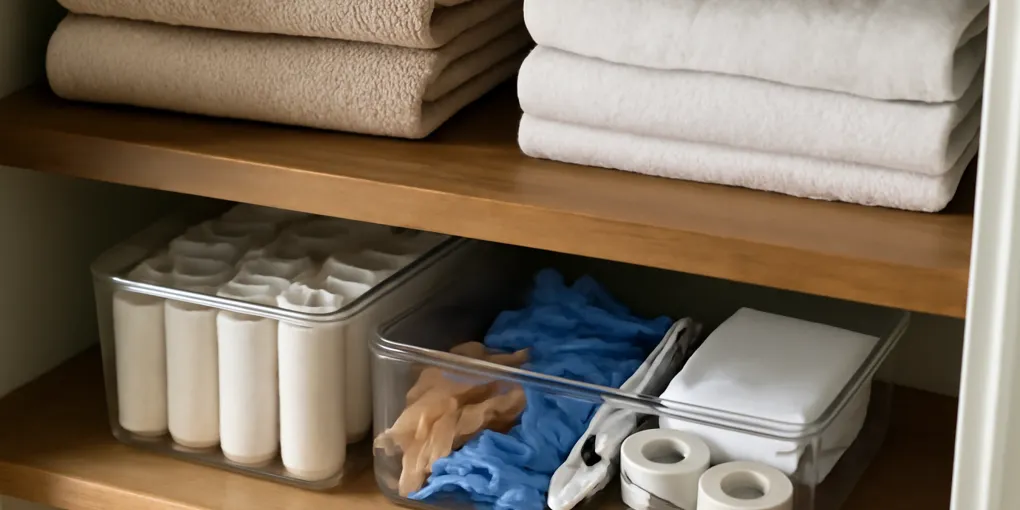
Home First Aid Supplies Protocol: Build a Safer Grab-and-Go Shelf
ProtocolA first aid station fails when it becomes a mystery bin. Someone needs a bandage, opens three boxes, finds expired ointment, and gives up. A linen closet shelf can work better because it is dry, visible, and close to towels without being as humid as many bathrooms.
This protocol is for a household first aid and emergency supply station, not for diagnosing or treating medical conditions. The goal is simple: make basic supplies findable, keep risky items controlled, and prevent the closet from becoming another clutter layer. If your broader closet is overloaded, pair this with a separate reset like our weekly home reset station so restocking has a regular home.
Quick picks
Use current labels, prices, and package details before buying.
- Clear lidded first aid bins: Search Amazon for clear first aid organizer bins. Best for separating wound care, cold supplies, and tools.
- Label maker or waterproof labels: Search Amazon for waterproof label maker tape. Useful because first aid bins are handled in stressful moments.
- Small wall pocket or clipboard: Search Amazon for emergency contact clipboard. Use for medication lists, emergency numbers, and restock notes.
- Compact home first aid kit: Search Amazon for compact home first aid kit. A starter kit can fill gaps, but it still needs labels and expiration checks.
Step 1: pick the safest shelf
Choose one shelf that an adult can reach without a stool. Avoid the floor, deep top shelves, and any spot next to cleaning chemicals. A linen closet works only if the shelf stays dry and is not accessible to young children.
Keep medicines, sharp tools, and choking-size supplies in adult-controlled storage. HealthyChildren’s childproofing guidance emphasizes locking up medicines and household hazards and watching small objects that children may put in their mouths (HealthyChildren childproofing guidance). That matters more than making the shelf beautiful.
Step 2: empty and sort before buying containers
Pull out every bandage box, ointment tube, thermometer, wrap, cold pack, and loose packet. Sort into five piles:
- Keep and label.
- Replace soon.
- Expired or damaged.
- Belongs elsewhere.
- Ask a clinician or pharmacist before keeping.
Do not organize expired medicine into a nicer bin. Disposal rules vary by medicine and location, so follow your pharmacy, local take-back program, or product label instructions.
Step 3: build three core bins
Most homes need three zones, not one large container. Use shallow clear bins roughly shoe-box depth rather than a tall tote: the point is one-hand retrieval, visible packets, and easy monthly restocking. If the shelf is narrow, use three labeled zipper pouches inside one lidded bin, but keep the categories separate.
Wound care bin
Include adhesive bandages in several sizes, sterile gauze, medical tape, antiseptic wipes if appropriate for your household, disposable gloves, and wrap. Store flat packets upright like index cards so the smallest bandages do not sink under gauze rolls. Keep scissors in this bin only if they can be stored safely away from children.
Tools and measurement bin
Store the thermometer, tweezers, small flashlight, instant cold pack, and a simple notepad. If you own multiple thermometers, label which one is oral, forehead, rectal, or general use according to its instructions. Keep batteries or probe covers in a small inner pouch so the tool is usable when retrieved.
Illness and comfort bin
This can hold tissues, electrolyte packets, a clean measuring device for liquid medicine, and other non-prescription supplies your household already uses. Keep actual medicines separated and controlled, ideally in child-resistant packaging and an adult-managed location. Do not mix pet medicine, adult medicine, and children’s medicine in the same unlabeled basket.
Step 4: add a front-facing contact card
The American Red Cross first aid kit list includes practical basics such as bandages, compresses, gloves, scissors, tweezers, and emergency information (Red Cross first aid kit anatomy). Your linen closet station should make those basics visible before anyone starts digging.
Place a card or clipboard at the front with:
- Emergency numbers.
- Pediatrician, primary care, veterinarian if relevant, and poison control contacts.
- Household allergies or critical medical notes if your family chooses to keep them there.
- Restock notes with date checked.
Keep private health details in a location your household is comfortable with. The organizing point is not to expose sensitive information. It is to avoid searching for basics during a stressful moment.
Step 5: label for the person who did not organize it
Labels should be literal:
- Bandages and gauze.
- Thermometer and tools.
- Cold and illness supplies.
- Adult medicine, locked or controlled.
- Kids medicine, locked or controlled.
- Restock soon.
Avoid cute labels such as “ouch” or “wellness” if they slow someone down. First aid storage is not the place for vague categories.
Step 6: keep towels from burying supplies
A linen closet first aid station often fails because towels expand into the shelf. Use a hard boundary: one shelf, one side of a shelf, or one clearly labeled bin stack. Do not let extra sheets, travel toiletries, or guest towels slide in front of first aid supplies.
If space is tight, store bulky towels elsewhere before shrinking the first aid zone. A small, readable station beats a large hidden one.
Step 7: run the three-month check
Put a reminder on the calendar for every three months. During the check:
- Remove expired items.
- Refill bandages and gloves.
- Confirm the thermometer works.
- Update contacts.
- Move unrelated items out.
- Check that containers are clean and dry.
Also check after a household illness, injury, vacation, sports season, or emergency kit use. The right interval is the one that catches missing items before the next need.
First aid station FAQ
Should first aid supplies be kept in the bathroom?
A bathroom is often convenient, but humidity and child access can be problems. A dry linen closet shelf is often better if adults can reach it quickly and risky items are controlled.
Should medicines go in the same bin as bandages?
Usually no. Bandages and tools can be in visible bins. Medicines need clear labeling, expiration checks, and safe storage based on the product and household risks.
What if my home already has a purchased first aid kit?
Keep the kit, but open it and label the surrounding station. Many kits are good for travel or starter supplies but still need restocking, expiration checks, and household-specific items.
Bottom line
A linen closet first aid station should be boring, labeled, and fast to read. Pick one dry adult-controlled shelf, separate supplies by job, add emergency information, and check it every three months.
Frequently Asked Questions
- Choose a dry, reachable, adult-controlled spot such as a linen closet shelf, not a steamy bathroom or a child-accessible floor bin.
- Keep wound-care basics, gloves, small scissors, a thermometer, emergency contacts, and clearly separated medicines or supplies that require adult control.
- Check it every three months and after any illness, injury, travel, or major supply use.