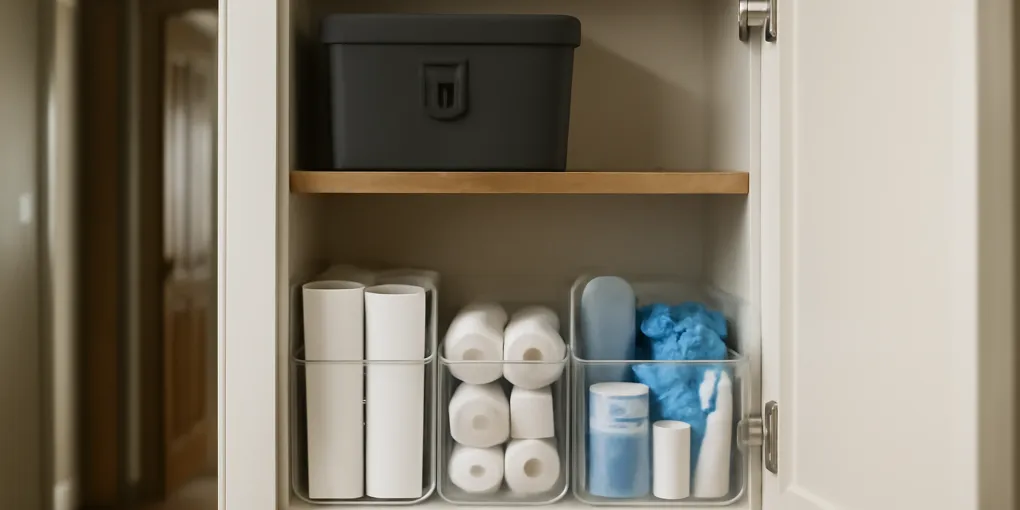
Clear lidded first aid bins
Best for family cabinetsBest For: Bandages, gauze, tape, and ointments sorted by injury type
$18-40
Quick picks
| Product | Key Specs |
|---|---|
| See price on Amazon |
|
| See price on Amazon |
|
| See price on Amazon |
|
Product availability, certifications, and retailer details can change; check the current Amazon page before buying.
A first aid cabinet has a different job than a pretty medicine cabinet. It has to make sterile bandages, gauze, gloves, tape, ointment, a thermometer, and emergency basics easy to find while keeping medicines, sharp tools, and small parts out of the wrong hands. The best organizer is not the one with the most compartments. It is the one that lets a tired adult find the right item quickly without dumping a shelf.
The American Red Cross first aid kit checklist is a useful starting point because it separates actual response supplies from random bathroom extras. If your cabinet also holds prescriptions, pair this buying path with our medication lock box home reset protocol so everyday first aid does not put medicines in a grab-level pile.
Quick picks
- Main family cabinet: Search Amazon for clear lidded first aid organizer bins
- Portable house kit: Search Amazon for tackle style first aid organizer box
- Shallow shelf trays: Search Amazon for stackable first aid drawer trays
- Child-resistant add-on: Search Amazon for locking medicine storage box
What to buy first
Buy the container around the injury categories, not around the shelf. A useful first aid cabinet has five lanes: cuts and scrapes, wraps and support, tools, temperature and comfort, and refill stock. Cuts and scrapes need adhesive bandages, gauze pads, antibiotic ointment if your household uses it, and medical tape. Wraps need elastic bandages, instant cold packs, and larger gauze. Tools need tweezers, small scissors, disposable gloves, and a thermometer.
A clear lidded bin is the safest default for a home cabinet because it is easy to see what is running low. Choose two or three medium bins over one giant tub. A giant tub turns an urgent moment into a rummage. Medium bins can be labeled by job and lifted one at a time. If you use labels, keep them plain: bandages, wraps, tools, refills. This is not the shelf for clever categories.
A tackle-style box works when the kit often moves to a backyard, garage, sports bag, or vacation rental. The tradeoff is access control. If young children can reach the kit, a portable box may be too easy to carry away unless it goes inside a higher or locked cabinet. For homes with children, HealthyChildren’s childproofing guidance is the better lens: medicines, sharp items, and small choking hazards need controlled placement, not just neat compartments.
Size and compartment checks
Before buying, put your current supplies on a towel and sort them by job. Count how many bulky items you actually own: rolled gauze, elastic wraps, instant cold packs, saline, or a digital thermometer case. Those pieces decide the bin height. Bandages can fit almost anywhere, but cold packs and wrap rolls make many drawer trays too shallow.
For a standard bathroom or hallway cabinet, look for bins around shoe-box size with straight sides and a lid that can be opened one-handed. A lid matters because gauze wrappers and bandage boxes collect dust, but a tight latch is not always ideal during a minor emergency. If the bin must be child-resistant, use a separate locking box for medicines and risky tools rather than turning every bandage grab into a puzzle.
Drawer trays are useful inside a shallow medicine cabinet only when the shelf is wide enough to pull the tray forward. If the cabinet door has shelves, measure the door swing so the tray does not catch. Tall bottles should not be forced sideways into a first aid tray. If bottles dominate the cabinet, the problem is mixed medicine storage, not first aid organization.
Safety rules that change the purchase
The Red Cross checklist includes supplies such as gloves, dressings, and a breathing barrier; those items are easy to lose when they share a shelf with toothpaste samples and travel shampoo. Put response supplies in a dedicated zone and keep refill packages behind or above the active kit. A restock zone prevents the common failure where three opened bandage boxes hide the fact that there are no large bandages left.
If your first aid area includes pain relievers, allergy medicine, or prescription products, do not store them loose in the same open bin as bandages. Use a locked medicine box or a high cabinet that matches your household risk. HealthyChildren specifically warns families to keep hazardous household items and medicines out of children’s reach. A neat low bin is still a bad system if it makes tablets easier to access.
Also avoid putting the only first aid kit in a humid bathroom if you have another practical location. Hall closets, kitchen-adjacent cabinets, and laundry-room upper shelves are often easier to reach during cuts, burns, splinters, or yard injuries. The right location is dry, visible to adults, and not buried behind bulk paper goods.
Fit matrix
| Household problem | Best organizer | Why it fits |
|---|---|---|
| Bandage boxes spill across a shelf | Clear lidded bin | Keeps small packages visible and contained |
| Supplies need to move to the injury | Tackle-style box | Carries the whole kit to the kitchen, garage, or yard |
| Cabinet is shallow but wide | Stackable tray | Creates a pull-forward bandage and gauze lane |
| Medicines mix with first aid supplies | Locking medicine box plus open first aid bin | Separates response items from pills and risky products |
| Refills hide behind active supplies | Second clear refill bin | Lets you see unopened backups without crowding the active kit |
What not to buy
Skip tiny compartment boxes if your kit includes real gauze rolls, wraps, gloves, or cold packs. They look organized when empty but force bulky supplies into odd angles. Skip deep opaque bins unless they are only for unopened refills. In a first aid moment, a dark tub is slower than a clear bin.
Avoid wall cabinets with weak magnets or decorative glass if children can reach them or if the door swings into a busy walkway. A first aid cabinet should close securely and survive hurried use. If you want a wall-mounted cabinet, check the mounting hardware, wall type, and whether the shelves can hold heavier bottles without tipping forward.
Do not buy a prefilled kit and assume the cabinet is solved. Prefilled kits can be useful, but they still need a home, an expiration check, and a refill plan. If the supplies stay sealed in a mystery pouch behind shampoo, they will not help when someone needs a large bandage.
Restock and expiration checks
A first aid organizer should make low stock visible before the next scraped knee or kitchen cut. Put the most-used adhesive bandages in one front lane and keep unopened backups behind that lane. If every bandage size is mixed together, people will keep opening new boxes to find the one size they need. That creates three half-empty boxes and no clear restock signal.
Use a small card or phone reminder for a twice-a-year check. Look for dried-out wipes, crushed gauze wrappers, missing gloves, expired thermometer covers, and tape that no longer sticks. If the kit includes emergency contact cards, update them when doctors, schools, or caregivers change. The organizer should reduce decisions during a stressful moment, so stale papers and empty boxes do not belong in the active bin.
For vacation homes or guest suites, keep the visible kit smaller. A compact bandage-and-gauze bin plus clear instructions is better than a crowded cabinet with old medicines from several visitors. Anything medication-related should be owner-controlled rather than left as a shared mystery shelf, especially in rentals with rotating guests and shared bathroom storage.
Setup protocol
- Empty the current first aid and medicine area onto a clean towel.
- Discard expired or damaged supplies according to local rules.
- Separate first aid response items from medicines and personal-care extras.
- Put cuts, wraps, tools, and comfort supplies in separate clear zones.
- Move medicines and sharp tools to a high or locked location when children or guests are a risk.
- Place the active first aid bin at adult chest-to-eye height.
- Put unopened refills behind the active bin, not mixed into it.
- Add a simple restock card for large bandages, gloves, gauze, and tape.
First aid cabinet organizer FAQ
How many bins does a first aid cabinet need?
Most homes need two or three: one active first aid bin, one wraps or bulky-supply bin, and one refill bin. Add a separate locked medicine box if medicines share the cabinet.
Are clear bins better than fabric bins for first aid supplies?
Usually yes. Clear plastic makes it easier to see bandage sizes, sealed gauze, and low stock. Fabric bins can work for unopened refills but are slower for active supplies.
Where should a first aid cabinet go in a small home?
Choose a dry, adult-accessible cabinet near the kitchen, hallway, or laundry area. Avoid a low bathroom drawer if it mixes medicines, razors, and bandages in reach of children.
Sources
Frequently Asked Questions
- Use clear zones for cuts, wraps, medicines, tools, and restock items, then keep anything risky or child-sensitive high or latched.
- A hallway or kitchen-adjacent cabinet is often better because humidity can affect supplies and many injuries happen away from the bathroom.
- Choose a portable box when the kit must travel to the yard, garage, or car. Choose cabinet bins when the main problem is expired supplies hidden behind daily items.