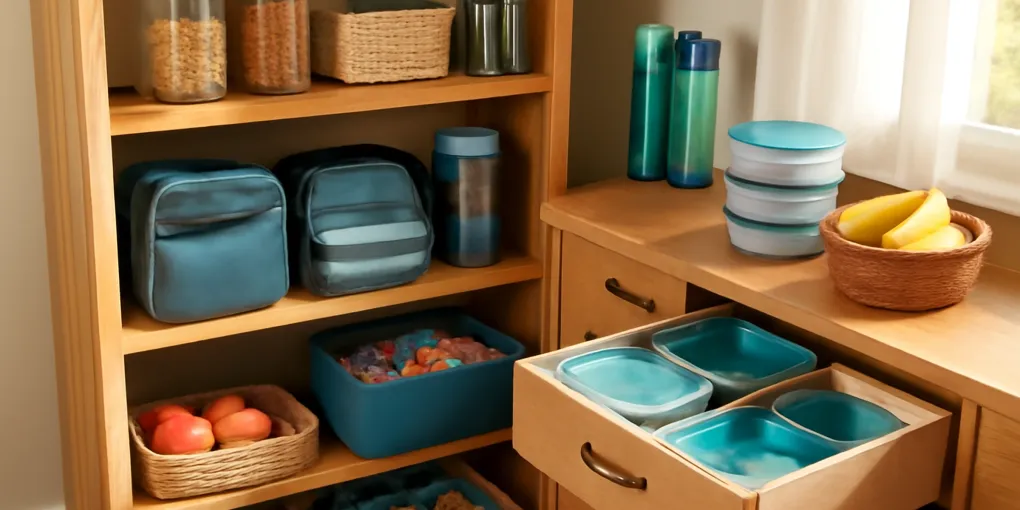
A zone-based guide to lunch boxes, snack bins, containers, and notes so school mornings require fewer decisions. The goal is not a perfect room; it is a repeatable system that lowers decisions on busy days and gives every active item a visible next step.
Quick picks
Use this as a shortcut to the products mentioned below; verify dimensions and mounting limits against your space before buying.
- rolling utility cart: See current price on Amazon
- Clip-on basket labels: See current price on Amazon
- Stackable clear bins: See current price on Amazon
Use this with our weekly home reset station and label maker vs printable labels guides if you need a broader maintenance system.
Why This System Works
Clutter often grows when an object is between decisions: not clean enough to store, not urgent enough to handle, or not assigned to a visible home. A reset system solves that by turning vague piles into a short sequence of actions. Research on visual distraction shows that crowded environments can compete for attention, and household stress research suggests that unfinished home tasks can feel mentally persistent.
For lunch-supply organization, the useful checks are child reach, container count, allergy separation, morning speed, and whether empty wrappers or expired snacks are easy to spot.
| Score Component | Weight | Application in this protocol |
|---|---|---|
| Research | 30% | reduces visible backlog and decision points |
| Evidence Quality | 25% | uses measurable zones, labels, baskets, and time blocks |
| Value | 20% | relies mainly on items most households already own |
| User Signals | 15% | matches common failure points reported in busy homes |
| Transparency | 10% | names tradeoffs and recovery rules |
Supplies That Help
You do not need to buy a full system before testing the routine. If a missing tool is causing real friction, use specific shopping searches and verify dimensions, materials, and current seller terms before buying.
| Shop this option | Useful item | Why it helps |
|---|---|---|
| Search Amazon | Stackable labeled bins | separates active categories without hiding them |
| Search Amazon | Clip-on basket labels | lets a shared system change without replacing bins |
| Search Amazon | Rolling utility cart | moves supplies to the point of use |
| Search Amazon | Dry-erase checklist | makes the reset visible to everyone |
Step-by-Step Protocol
1. Create a lunch launch zone
Pick the counter, cabinet, or drawer where packing already happens. Put lunch boxes, containers, napkins, and notes within one step so morning packing does not scatter across the kitchen.
2. Separate daily containers from backup inventory
Keep only the containers used this week in the main zone. Extra lids, seasonal thermos pieces, and backup boxes can live higher or farther away so the daily shelf stays readable.
3. Build a grab-and-pack snack bin
Use one open bin for approved snacks and refill it after grocery shopping. Kids can choose from the bin without turning the pantry into a search mission.
4. Store bottles and thermos parts by drying status
Wet parts need air before storage. Create a drying tray or rack so lids and straws do not disappear into drawers while damp.
5. Use a weekly restock card
A small card listing fruit, protein, crunchy item, drink, and treat keeps shopping realistic. Restock from the card rather than from memory.
6. Put kid-accessible choices at the right height
Store child-approved choices where kids can reach them safely. Adult-only items, messy backups, and bulk packages can stay outside the launch zone.
Small Product Upgrades to Consider
Only buy after the first test run shows a specific friction point. A rolling utility cart (See current price on Amazon) helps when supplies need to move between rooms. Clip-on basket labels (See current price on Amazon) help when family members share the system. Stackable clear bins (See current price on Amazon) help when inventory is forgotten because it is hidden.
Treat every purchase as a hypothesis. Write down what the product is supposed to fix: faster capture, easier return, lower visual noise, or better restocking. If it does not solve that named problem within two normal weeks, return it or repurpose it before it becomes part of the clutter.
Maintenance Rhythm
A working system needs a reset rhythm, not a one-time makeover. Choose a recurring 10- to 20-minute review when the household already transitions: Sunday evening, after grocery shopping, after school, or before trash pickup. During the reset, remove trash, return strays, restock essentials, and rewrite labels that no longer match reality.
Do not expand capacity automatically. If the zone is always full, first ask whether it contains duplicates, expired items, broken parts, or items that belong to a different season. More storage helps only after the category is right-sized.
Common Failure Modes
A system fails when it is too hidden, too precious, or too broad. Hidden bins become archives. Precious containers make people afraid to use them. Broad labels such as miscellaneous or supplies invite everything. Use action-based labels instead: pack lunches, return library books, fold towels, restock snacks.
The second failure mode is skipping recovery rules. Busy weeks happen. Decide what happens when the system is missed: one catch-up basket, one timed reset, or one temporary overflow shelf. Without a recovery rule, a missed week becomes a new pile.
Troubleshooting the First Week
If the system looks good but does not get used, observe the first missed action instead of blaming motivation. A basket that is two steps too far away, a lid that needs two hands, or a label that only one adult understands can break the routine. Move the tool closer, remove the lid, or rename the category before adding another container.
If the system fills too quickly, separate active items from backup inventory. Active items deserve the easiest access; backup inventory can live higher, lower, or farther away. Mixing the two makes the daily zone feel overfull even when the household owns a reasonable amount.
If the system depends on one person, add a visible checklist or owner label. Shared systems need shared cues. A simple front-edge label, color cue, or dry-erase board is often more effective than a complex app because the cue is visible at the decision point.
When to Rebuild Instead of Reset
Reset when the categories are still right but items have drifted. Rebuild when the household schedule, season, school routine, or storage location has changed. Rebuilding means emptying the zone, naming the new jobs, and removing tools that solved an old problem. That distinction keeps maintenance realistic: not every messy week requires a makeover, but not every old system deserves another reset.
A final useful test is the guest test: could a reasonable person understand where the next item goes without asking you? If not, simplify the label or reduce the number of categories. Good household organization is not private knowledge; it is a visible agreement that survives tired mornings, late evenings, and interrupted chores.
Build the Station Around the Morning Sequence
Start by mapping the five actions that happen on a school morning: choose a container, add the main food, add sides, add a drink or bottle, and return the lunch bag. Put supplies in that order from left to right or top to bottom. This sequencing matters because a lunch station is not just storage; it is a small assembly line used under time pressure. When the action order is visible, children can help without asking where every item lives.
Put the least negotiable items at the easiest reach height. If every lunch needs a water bottle, the bottles should not be behind seasonal party cups. If a child always needs a thermos on soup days, place it near the lids and utensils rather than in a general container drawer. Grouping by morning action works better than grouping by object type when the goal is speed.
Use one open bin for approved sides and one small backstock zone for unopened boxes. The open bin is the daily choice point; the backstock zone is for replenishment. Mixing both together creates the illusion of plenty while making it harder to see when the household is actually low on fruit cups, napkins, or snack-size bags.
Weekly Refill Routine
Choose one refill window, ideally after grocery shopping or Sunday dinner cleanup. During that window, wash bottles, match lids, refill the side bin, put reusable containers back into one drawer, and remove anything expired or crushed. The routine should take less than fifteen minutes. If it takes longer, the station has too many categories or too much backstock in the daily zone.
Use a small checklist for the first month: containers, lids, utensils, napkins, bottle parts, sides, cold packs, lunch bags. Once the household knows the rhythm, the checklist can live inside a cabinet door. A posted list prevents the station from depending on one parent remembering every detail. It also makes it easier for another adult or older child to reset the system when schedules change.
For younger children, pre-label the lunch bag return spot. A hook or low shelf near the entry prevents dirty containers from sitting in backpacks until morning. For older children, create a small “wash and reload” expectation: empty the bag after school, put washable pieces by the sink, and return the bag to the station before bedtime. The organizing product is only half the solution; the return habit keeps the station functional.
Choosing Containers Without Overbuying
Before buying another bento box, count the number of complete lunch sets that survive a normal week. Most households need fewer than they think: enough for school days plus one backup, not a cabinet full of mismatched lids. Buy containers only after identifying the failure. If lids disappear, choose a system with fewer lid sizes. If kids cannot open compartments, prioritize latch design over extra sections. If bags leak, prioritize seals and upright storage.
Use transparent or semi-transparent bins for small consumables so the refill need is visible. Opaque bins can look calmer, but they often hide low inventory until a rushed morning. A compromise is a labeled bin with an open top or front cutout. The child sees the category, and the adult sees whether restocking is needed.
Avoid making the lunch station a display of every possible snack. Too many choices slow the morning and increase negotiation. Two or three side choices, one fruit option, and one reusable container size are usually enough for weekdays. Rotate variety during grocery planning, not during the final five minutes before leaving.
Troubleshooting Common Failure Points
If lids pile up without bases, the container drawer needs a limit: one lid shape per container shape, with damaged pieces removed immediately. If cold packs disappear, store them in a freezer bin labeled for lunch only. If snacks migrate to other cabinets, make the lunch side bin the first place new groceries are unpacked. If children ignore the station, lower the key items and reduce the number of bins they must open.
A good lunch station should make the default behavior easier than the messy behavior. When the lunch bag, bottle, and side bin are all within one small zone, the household spends less time searching and less money rebuying missing parts.
Evidence Notes
- Visual clutter research by McMains and Kastner supports reducing competing stimuli in active work zones.
- Home-environment stress research by Saxbe and Repetti supports the idea that unfinished domestic tasks can carry emotional load for some households.
- Behavioral design principles favor reducing friction at the exact point where a desired action begins.
Bottom Line
Build the smallest system that makes the next action obvious. Put supplies where the behavior starts, label the front edge, leave spare capacity, and schedule the first reset before the system has time to disappear into the background.
Keep this visible.
Frequently Asked Questions
- Store daily containers, snack choices, and packing tools near the counter where lunches are actually assembled.
- Keep enough for the wash cycle plus one backup, then donate or store extras so lids do not become daily clutter.
- Give them one labeled snack bin and one container shelf, with choices limited to what fits in that zone.