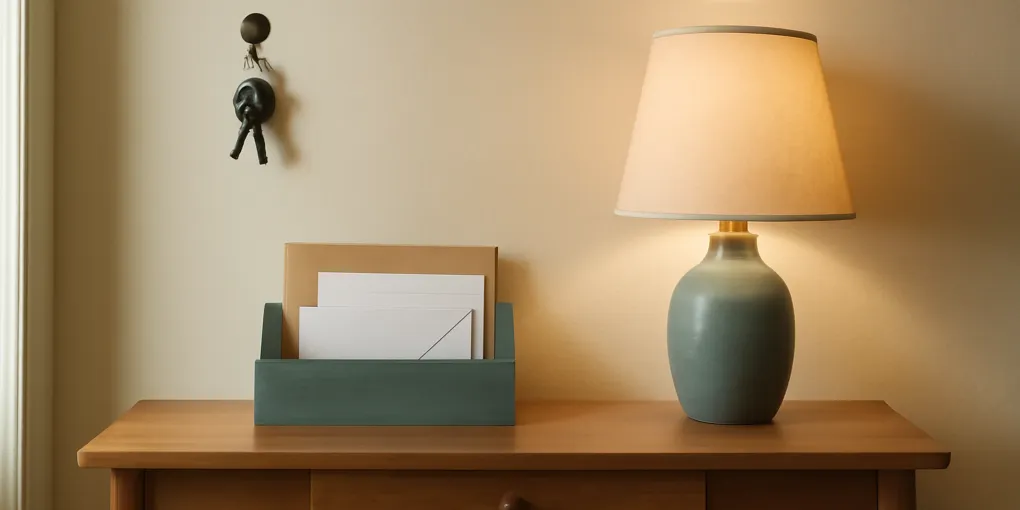
One-Touch Rule for Clutter: A Practical Home Reset Guide
Evidence ExplainerThe one-touch rule can reduce clutter, but only when the item has an obvious destination and the next action is small. For decision-heavy clutter, a strict one-touch rule often fails because the problem is not laziness. It is unresolved information.
Quick picks
Use this as a shortcut to the products mentioned below; verify dimensions and mounting limits against your space before buying.
- entryway wall hooks: See current price on Amazon
- small mail tray: See current price on Amazon
- entryway shoe rack: See current price on Amazon
- slim laundry hamper: See current price on Amazon
Editorial Transparency
ClutterScience uses AI tools during drafting support, outline organization, and source review. Human editors review every article for accuracy, clarity, product-link policy, and source quality. We do not fabricate reviewers, credentials, test results, ASINs, or citations.
What the One-Touch Rule Gets Right
The one-touch rule is useful because it attacks one of the most common clutter patterns: moving an object from place to place without deciding. A coat moves from chair to bed to chair. A glass moves from desk to counter to sink. A receipt moves from pocket to table to drawer.
For simple objects, the rule works because it makes the correct action immediate. If the coat has a hook and the hook is near the door, hanging it once is easier than relocating it three times.
Where the Rule Breaks
The rule breaks when the object represents a decision, not a location.
Examples:
- Mail that might require payment.
- A form that needs a signature.
- A return package that needs a label.
- A sentimental item you are not ready to judge.
- A repair part for a project you have not scheduled.
These items do not need one touch. They need a decision system. If you force an immediate decision every time, you may avoid picking up the item at all.
The Science: Cues, Habits, and Friction
Habit research suggests that repeated behavior becomes easier when stable cues trigger a consistent response. In a home, the cue might be entering the door, finishing dinner, or opening mail. The one-touch rule can work as a cue-response habit: keys go on the hook, dish goes in the dishwasher, shoes go on the rack.
But implementation intention research also shows that plans work best when the situation and response are specific. “Touch everything once” is broad. “When I bring in mail, I recycle junk mail immediately and put bills in the inbox” is specific.
A Better Version: One Touch for Objects, Two Touches for Decisions
Use a split rule:
- One touch for items with obvious homes.
- Two touches for items that need thinking.
The first touch captures the decision item in a visible inbox. The second touch happens during a scheduled processing block. This protects you from endless piles without pretending that every item can be resolved instantly.
Product Fit: What Helps the Rule Work
The one-touch rule does not require a shopping list, but a few tools can make the habit easier:
| Check price | Tool | Best use |
|---|---|---|
| entryway wall hooks (See current price on Amazon) | Wall hooks | Coats, bags, keys, dog leashes |
| small mail tray (See current price on Amazon) | Small mail tray | One visible decision inbox |
| entryway shoe rack (See current price on Amazon) | Shoe rack | Shoes that otherwise land near the door |
| slim laundry hamper (See current price on Amazon) | Slim laundry hamper | Clothes that migrate to chairs |
| home label maker (See current price on Amazon) | Label maker | Shared household homes |
Match the tool type to your doorway, drawer, room dimensions, and reset habit before buying.
Room-by-Room Examples
In the entryway, one touch works for keys, shoes, coats, and bags if the hooks and racks are within reach. It fails for mail unless you have a separate decision tray.
In the kitchen, one touch works for dishes, trash, recycling, and pantry items. It fails for recipes, coupons, school forms, and appliance parts.
In the bedroom, one touch works for laundry if the hamper is close. It fails for clothes that need repair, returns, or seasonal decisions.
In the office, one touch works for pens, chargers, and notebooks. It fails for paperwork that requires a call, payment, scan, or signature.
The Five-Minute Setup
- Pick one room where objects are repeatedly moved.
- List the five most common objects.
- Give each low-decision object a visible home.
- Create one inbox for decision-heavy items.
- Schedule a 15-minute processing block twice a week.
Do not start with the whole house. The rule becomes easier when one high-traffic zone proves it can work.
How This Explainer Is Scored
Composite score breakdown: 30/25/20/15/10. Evidence fit is 30% and weighs whether habit and planning research supports the recommendation without overstating it. Practicality is 25% and favors systems that work when people are tired. Cognitive load is 20% and rewards separating location decisions from judgment decisions. Maintenance is 15% and measures how easy the rule is to repeat. Transparency is 10% and covers limits for ADHD, caregiving load, shared homes, and unpredictable schedules.
The Four Best Places to Use the Rule
Use the one-touch rule where the home is close, obvious, and stable. The entryway is a strong candidate because keys, coats, shoes, and bags have repeated destinations. The kitchen sink area is another because dishes, recycling, and trash have clear next steps. Laundry zones work when the hamper is near the place where clothes come off. Desks work for pens, headphones, and notebooks when the drawer or stand is within arm’s reach.
Do not start with sentimental items, paperwork, or multi-step projects. Those categories are not clutter because they were touched too many times. They are clutter because the next decision is unclear. Start with the easy wins so the rule builds trust.
Use Distance as the Diagnostic
If an item keeps landing in the wrong place, measure the distance to the right place. A coat hook across the house is not a home; it is a storage location. A hamper behind a closet door may be too far for daily use. A mail tray in the office may fail if mail enters through the garage.
The one-touch rule becomes realistic when homes are placed at the point of use. Move the hook before blaming the habit. Move the tray before blaming the mail pile. Good systems reduce moral effort by reducing physical friction.
Adaptations for Neurodivergent or High-Load Homes
Some people need visible reminders. A strict version of the rule can make life harder if every reminder gets hidden immediately. For ADHD, caregiving load, shift work, or chronic stress, the better goal is controlled visibility: one visible tray for active tasks, one hook for tomorrow’s bag, one landing zone for outgoing items.
This is still clutter control. It simply recognizes that hiding a task is not the same as finishing it. If the visible cue prevents missed medication, forgotten forms, or duplicate purchases, it is doing useful work. The key is to bound the cue so it does not spread across every surface.
A Practical Two-Week Test
Pick one category and one cue. For example: “When I enter the house, keys go on the hook.” Track only that behavior for two weeks. Do not add five rules at once. If the behavior sticks, add a second category. If it fails, change the location or container before deciding the rule does not work for you.
At the end of two weeks, ask three questions. Did the pile shrink? Did the action feel easier? Did another pile appear somewhere else? A system that moves clutter from the counter to the stairs has not solved the problem. A system that makes one repeated action automatic is worth keeping.
The Rule for Shared Homes
In shared homes, one-touch rules need visible agreements. Labels, hooks, and trays communicate the rule without repeated reminders. Avoid systems that only one person understands. If the system depends on memory, the person with the best memory becomes the household organizer by default.
A shared rule should be short enough to say out loud: keys on hooks, shoes on rack, mail in tray, dishes in dishwasher. Anything more complex belongs in a checklist or scheduled reset, not in a one-touch expectation.
Buying and Setup Mistakes to Avoid
The most common mistake is buying a container for a habit that has not been placed yet. Match the product to the one-touch failure in front of you: hooks for bags that miss the entryway, a shoe rack for shoes that land in the walking path, a small mail tray for decision-heavy paper, or a hamper where clothes actually come off. If the item does not shorten that specific reach, it will become another place to relocate clutter.
The second mistake is filling every available inch. Empty space is part of the system because it gives your hands room to reset the area quickly. A container that is 100% full on day one is already failing. Aim for about 70% full so new items can enter briefly without destroying the layout.
The third mistake is hiding active tasks too well. Closed bins, opaque boxes, and deep drawers can make a space look calmer while making the next action less visible. Use closed storage for completed categories and visible, bounded storage for tasks that still need action.
Finally, do not judge the setup by the first hour. Judge it after two normal weeks. A good system survives groceries, tired evenings, rushed mornings, and other people using it. If the system fails, adjust distance, label clarity, or category size before buying a larger version of the same problem.
Two-Week Review Questions
After two weeks, review the setup with five questions. Did the pile or tangle shrink? Can someone else understand the categories? Is the next action visible without searching? Are the containers easy to reset when tired? Did the system create a new pile nearby?
If the answer is mostly yes, keep the system and schedule a light monthly reset. If the answer is no, remove one layer of complexity. Most home systems improve when categories become broader, containers become easier to reach, and labels describe actions rather than ideals.
Simple Low-Buy Version
If you are not ready to buy anything, test the system with supplies you already own. Use a shoebox lid, a spare basket, painter’s tape labels, or clean food containers for two weeks. A temporary version reveals the right size and location before money is spent. If the temporary version works, upgrade only the weakest part. If it does not work, the problem is probably placement or category design rather than product quality.
Sources
- Wood, W., & Neal, D. T. “A new look at habits and the habit-goal interface.” Psychological Review. https://doi.org/10.1037/0033-295X.114.4.843
- Gollwitzer, P. M. “Implementation intentions: Strong effects of simple plans.” American Psychologist. https://psycnet.apa.org/record/1999-05760-004
Bottom Line
The one-touch rule works for objects with obvious homes. It backfires when the item is really an unresolved decision. Use one touch for simple clutter and a scheduled second touch for decision clutter.
Frequently Asked Questions
- The one-touch rule says that when you pick something up, you should put it where it belongs instead of moving it to a temporary pile.
- It works best for low-decision items with obvious homes, such as dishes, coats, shoes, and trash. It works poorly for tasks that need information, energy, or a future decision.
- Use a two-touch rule for decision-heavy items: capture the item in a visible inbox, then process that inbox at a scheduled time.