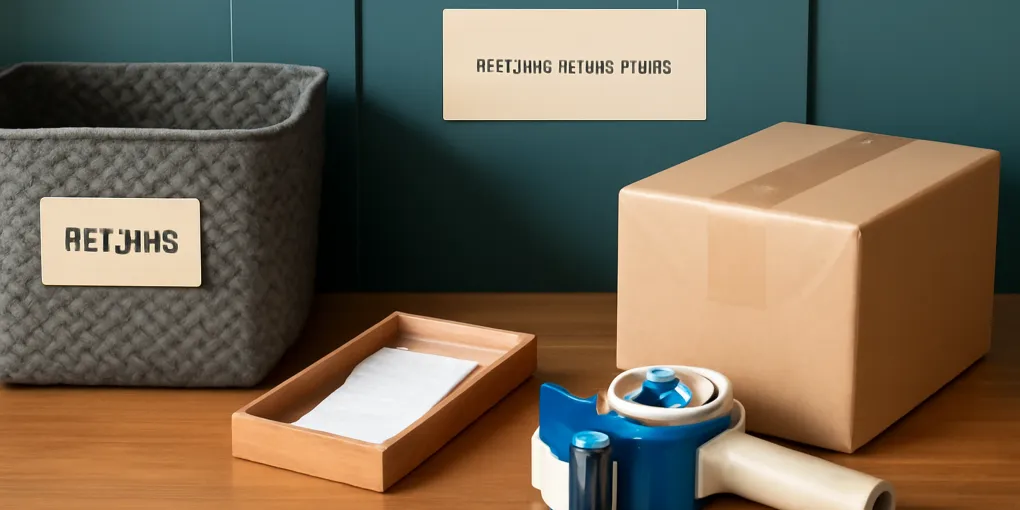
How to Build a Return Station That Does Not Become Clutter
ProtocolA return station is a small, bounded place for items that need to leave your home. It is not a storage bin. It is a launchpad. The difference matters because most return clutter happens when outgoing tasks are treated like ordinary belongings.
Quick picks
Use this as a shortcut to the products mentioned below; verify dimensions and mounting limits against your space before buying.
- open return basket: See current price on Amazon
- wire entryway bin: See current price on Amazon
- collapsible tote for errands: See current price on Amazon
Editorial Transparency
ClutterScience uses AI tools during drafting support, outline organization, and source review. Human editors review every article for accuracy, clarity, product-link policy, and source quality. We do not fabricate reviewers, credentials, test results, ASINs, or citations.
Why Returns Turn Into Household Clutter
A return package is visually small but cognitively loud. It usually contains several decisions at once: print the label, find tape, keep the receipt, remember the deadline, choose the drop-off location, and put the box in the car. When those decisions are split across a counter, inbox, email, closet, and trunk, the task keeps resurfacing.
This is a classic cue-design problem. Research on implementation intentions shows that people are more likely to complete intended actions when the cue and the behavior are linked in a specific plan: if situation X happens, I will do Y. A return station applies that idea physically. The visible basket says, “This leaves on the next errand,” instead of asking you to rediscover the task every time you see the box.
The Return Station Rule
Use one container for active outgoing items and one small flat zone for paperwork. That is it.
The container keeps packages, library books, donation items, and reusable bags from spreading. The paperwork zone keeps receipts, QR codes, labels, and tape from disappearing. If the system needs four containers, it is probably no longer a station. It is a second closet.
Step 1: Pick the Exit, Not the Prettiest Spot
Put the station near the door you actually use for errands. For most homes, that is the garage entry, mudroom, side door, or a shelf beside the main entrance. Avoid the bedroom closet unless you take returns from that closet directly to the car.
A return station works because it interrupts the route out of the house. If you must make a special trip to check it, you will eventually stop checking it.
Step 2: Choose a Bounded Container
The container should be large enough for one normal return cycle, not every possible return. A shallow basket, open crate, sturdy tote, or wire bin works better than a deep lidded box because you need visibility and quick removal.
Useful search links include open return basket (See current price on Amazon), wire entryway bin (See current price on Amazon), and collapsible tote for errands (See current price on Amazon). Compare current listings by size, carry comfort, materials, and recent reviews before buying.
Step 3: Add a Small Tool Kit
Keep the tools beside the station, not scattered in the kitchen drawer. A useful kit includes:
- Packing tape.
- Scissors.
- A marker.
- A small envelope or clip for receipts.
- A charger or phone stand if QR-code returns are common.
- A reusable shopping bag for loose drop-offs.
Do not overbuild. The goal is to remove friction from the next action, not create a shipping department.
Step 4: Separate Returns From Donations
Returns and donations look similar because both are leaving the house. They behave differently. Returns usually have a deadline and a required label or code. Donations usually need a drop-off route and a receipt plan.
If both categories share the same station, use two visible labels: “returns” and “donate.” If you mix them, the urgent item can get buried under the low-urgency item.
Step 5: Give the Station a Departure Rhythm
A station without a rhythm becomes storage. Choose one trigger:
- Every Tuesday errand run.
- The next grocery trip.
- The next commute day.
- When the basket reaches half full.
- When a return deadline is within three days.
The trigger should be concrete enough that another adult in the house can understand it. “Soon” is not a system.
What Not to Store Here
Do not put long-term paperwork, keepsake boxes, off-season gear, random mail, or undecided purchases in the return station. Those categories need their own homes. A return station is only for items with an external destination.
If an item has no destination yet, it belongs in a decision inbox with a review date, not in the outgoing station.
A Ten-Minute Setup Checklist
- Clear the exit surface.
- Place one open basket or bin.
- Add a small tray, envelope, or clip for receipts and labels.
- Add tape, scissors, and marker.
- Label the container “returns / outgoing.”
- Move only active outgoing items into the station.
- Put the next drop-off date on your calendar.
Safety and Practical Limits
Do not block doors, stairs, electrical panels, or heating vents with outgoing packages. The National Fire Protection Association recommends keeping exits clear as part of basic home fire safety. If the return station blocks the exit path, choose a wall shelf, narrow cart, or nearby closet shelf instead.
For homes with toddlers or pets, keep scissors, tape cutters, and small packing materials out of reach. The station should lower friction without creating a new hazard.
How This Protocol Is Scored
Composite score breakdown: fit, evidence, value, owner friction, and clear product limits. Research weighs implementation-intention and cue-design principles. Evidence Quality favors credible planning and safety sources. Value rewards setups that reduce missed deadlines without major purchases. User Signals weighs exit-path friction and household handoff clarity. Transparency covers retailer-policy variation and small-space limits. Friction reduction remains a practical priority and measures how much the setup shortens the path from decision to drop-off. Visibility is 25% and favors open, bounded storage that cues action without creating visual noise. Safety is 20% and penalizes systems that block exits or expose sharp tools. Maintenance load is 20% and rewards weekly rhythms over complex sorting. Transparency is 10% and covers the limit that return policies, drop-off options, and household routes vary.
Design for the Most Common Return Path
Map the path before buying anything. Where does the package enter the house? Where do labels get printed or scanned? Where is tape stored? Which door leads to the drop-off errand? The station should sit on that path. If the package enters through the front door but leaves through the garage, the station may belong near the garage door after the label is attached.
For label-free returns, the station can be smaller: one basket, one receipt clip, and one reminder. For boxed returns, add tape and a flat surface. For households that donate often, add a second outgoing bag but keep it visually separate from returns with deadlines.
The Deadline Problem
Returns are dangerous clutter because they expire. A sweater in the closet can wait. A return window cannot. Put the deadline where you will see it: on the package with a sticky note, in a phone reminder, or on a small card clipped to the basket. If several returns are active, sort by deadline, not by size.
Use a simple rule: anything with a deadline under seven days goes at the front of the station or directly into the car before the next errand. Anything with no label yet stays in the paperwork tray, not buried under boxes.
Make the Station Work for Other People
A return station fails when only one person knows the hidden rules. Label the basket with the action, not just the category. “Returns leaving this week” is better than “misc.” “Donations for Saturday drop-off” is better than “outgoing.” The label should tell the next person what the pile means.
If children or housemates add items, create a small intake card: name, item, deadline, and needed action. That sounds formal, but it prevents mystery boxes. A return with no owner becomes household clutter immediately.
What to Do When the Basket Is Full
A full return station is a signal, not a reason to buy a second basket. First, remove completed returns. Second, check deadlines. Third, decide whether the remaining items are truly returns, donations, or undecided purchases. If the category is undecided, move it to a decision inbox with a review time.
The station should create a bottleneck on purpose. Bottlenecks are useful when they prevent hidden accumulation. If the bin fills every week, the household needs a more frequent errand rhythm or fewer speculative purchases, not a larger bin.
Apartment and Small-Space Adjustments
In a small apartment, use vertical space: a wall hook for a reusable outgoing bag, a narrow shelf above shoes, or a slim rolling cart that parks near the door. Keep the floor clear. A package pile beside the door can become a trip hazard, especially in narrow entries.
If you do not own a printer, keep a note in the station with the nearest print or QR-code return options. The next action should be obvious even if the return process differs by retailer.
Weekly Reset Script
Once a week, ask: What leaves this week? What needs a label? What deadline is closest? What does not belong here? Then take one physical action: print, tape, move to car, schedule pickup, or remove the non-return. The station works because it converts vague clutter into specific movement.
Buying and Setup Mistakes to Avoid
The most common mistake is buying a bigger basket when the return path is still broken. Choose the product for the missing handoff: an open bin if packages need to stay visible, a receipt tray if labels and QR codes disappear, a collapsible tote if errands leave by car, or a wall shelf if floor space near the exit is unsafe. If the item does not move returns closer to drop-off, it is extra storage, not a return station.
The second mistake is filling every available inch. Empty space is part of the system because it gives your hands room to reset the area quickly. A container that is 100% full on day one is already failing. Aim for about 70% full so new items can enter briefly without destroying the layout.
The third mistake is hiding active tasks too well. Closed bins, opaque boxes, and deep drawers can make a space look calmer while making the next action less visible. Use closed storage for completed categories and visible, bounded storage for tasks that still need action.
Finally, do not judge the setup by the first hour. Judge it after two normal weeks. A good system survives groceries, tired evenings, rushed mornings, and other people using it. If the system fails, adjust distance, label clarity, or category size before buying a larger version of the same problem.
Two-Week Review Questions
After two weeks, review the setup with five questions. Did the pile or tangle shrink? Can someone else understand the categories? Is the next action visible without searching? Are the containers easy to reset when tired? Did the system create a new pile nearby?
If the answer is mostly yes, keep the system and schedule a light monthly reset. If the answer is no, remove one layer of complexity. Most home systems improve when categories become broader, containers become easier to reach, and labels describe actions rather than ideals.
Simple Low-Buy Version
If you are not ready to buy anything, test the system with supplies you already own. Use a shoebox lid, a spare basket, painter’s tape labels, or clean food containers for two weeks. A temporary version reveals the right size and location before money is spent. If the temporary version works, upgrade only the weakest part. If it does not work, the problem is probably placement or category design rather than product quality.
Sources
- Gollwitzer, P. M. “Implementation intentions: Strong effects of simple plans.” American Psychologist. https://psycnet.apa.org/record/1999-05760-004
- National Fire Protection Association. “Escape Planning Tips.” https://www.nfpa.org/education-and-research/home-fire-safety/escape-planning
Bottom Line
A return station works when it is visible, bounded, close to the exit, and tied to a departure rhythm. Treat returns as outgoing tasks, not as storage, and the pile stops spreading across the house.
Frequently Asked Questions
- Put it near the exit you use most, not where the package first lands. A return is an outgoing task, so the station should cue the next trip out of the house.
- Only active outgoing items: packages, receipts, labels, tape, reusable shopping bags, donation drop-offs, library books, and errand items that have a deadline.
- Use one bounded container, add a weekly exit deadline, and separate returns from long-term storage. If the container is full, the next action is a drop-off, not a second bin.