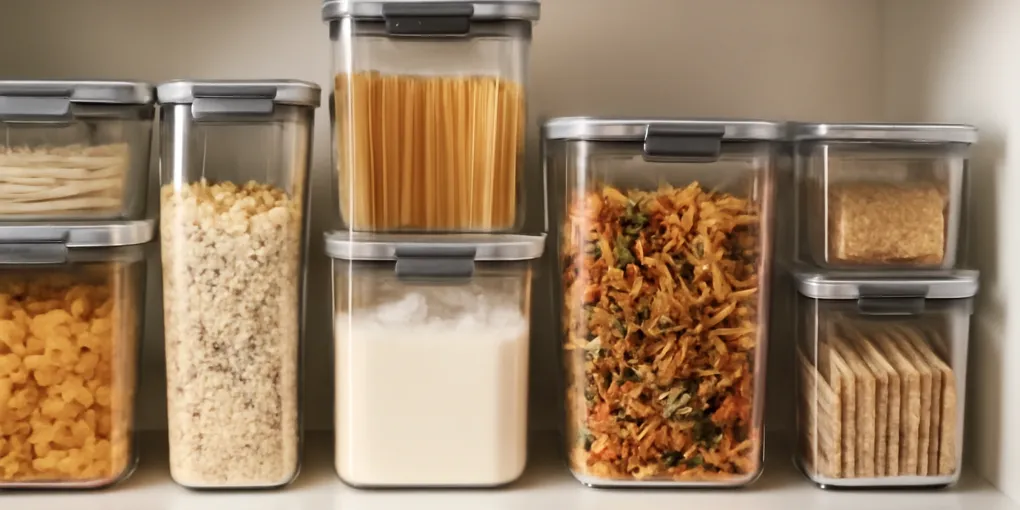
Rubbermaid Brilliance Pantry Container Review: When Clear Airtight Boxes Beat Bags and When They Waste Space
ReviewRubbermaid Brilliance pantry food storage containers
Best clear snap-lid setBest For: Dry goods where visibility, stackability, and lid seal matter
Quick picks
| Product | Key Specs |
|---|---|
| See price on Amazon |
|
| See price on Amazon |
|
| See price on Amazon |
|
Product availability, certifications, and retailer details can change; check the current Amazon page before buying.
Rubbermaid Brilliance pantry containers are useful when the pantry problem is half-open bags, duplicate boxes, and dry goods hidden behind taller packages. They are less useful when the pantry problem is too much inventory, shallow shelves, or a household that will not decant food after shopping.
This review treats the Brilliance set as a storage tool, not a pantry makeover prop. Clear containers can reduce mystery bags, but they can also create a second chore and erase useful package information. For a different clear-container approach, see our OXO POP container review for pantry zones. If freezer inventory is the bigger source of forgotten food, see our freezer inventory bin system guide.
Quick verdict
Rubbermaid Brilliance pantry containers are worth considering for frequently used dry goods that benefit from visibility and a tight snap-lid seal: cereal, crackers, rice, pasta, flour, sugar, oats, granola, and snack refills. They are weaker for tiny amounts, rarely used specialty ingredients, foods with critical cooking instructions, or shelves where every inch of height matters.
- Best fit: high-turnover dry goods in deep pantry shelves.
- Weak fit: shallow cabinets, bulk bags that exceed container volume, and foods with confusing look-alikes.
- Main measurement: shelf depth, shelf height, and how much of a standard package actually fits.
- Best alternative: OXO POP for push-button modularity or Cambro-style square containers for utility storage.
Product starting point
- Main option: Search Amazon for Rubbermaid Brilliance pantry containers
- Premium alternative: Search Amazon for OXO POP pantry containers
- Utility alternative: Search Amazon for Cambro CamSquare containers
Check current dimensions before buying a set. Pantry-container mistakes usually come from buying by photo, not by shelf clearance.
What Brilliance containers do well
The strongest feature is visibility. A clear container lets you see whether the cereal is almost gone, whether the rice bin still has enough for dinner, and whether two snack bags should be combined. That matters because pantry clutter is often a visibility problem. Packages hide behind each other until someone buys a duplicate.
The second strength is squarer storage. Rectangular containers line up better than soft bags and round jars. When the size matches the food, the shelf becomes easier to scan and easier to wipe. Snap lids can also be friendlier than screw lids for one-handed cooking, especially with flour or oats.
The third strength is stackability. A set of matching containers can make a tall pantry shelf useful without creating a tower of unstable boxes. Stack only within reason. If you have to remove three containers to reach pancake mix, the system is too dense.
Where they disappoint
Clear containers disappoint when they are used for everything. Decanting every bag of specialty flour, lentils, sprinkles, tea, and seasonal baking mix can create more decisions than it solves. The original package often contains cooking time, allergen warnings, expiration or best-by information, and lot numbers that matter during recalls.
They also disappoint when the container is smaller than the food package. A half-filled container plus a half-full original bag is worse than the bag alone. Before buying a set, list the exact staples and package sizes you want to decant. A cereal container that cannot hold a normal box of cereal will create overflow.
The lids are another friction point. Any gasket or latch system needs cleaning. If flour dust, sugar grains, or oil residue gets into the seal area, wipe it before storing. Food-storage guidance from FDA and extension sources emphasizes clean containers and appropriate storage conditions; the organizing version is simple: the container should make food easier to use without hiding age, identity, or condition.
Best uses by pantry zone
| Pantry job | Brilliance fit | Watch point |
|---|---|---|
| Cereal and granola | Strong if the container holds a full package | Choose a pour-friendly size and label date if turnover is slow |
| Flour and sugar | Strong for frequent bakers | Keep product type visible and clean lid seals |
| Pasta and rice | Good when shapes fit | Long pasta may need a taller container |
| Crackers and snacks | Good for active lunch-packing shelves | Fragile crackers can break when poured |
| Specialty ingredients | Often weak | Original package may be more useful than a decanted container |
The best use is not a matching wall of containers. It is a smaller set that handles the foods you reach for every week.
Brilliance vs OXO POP vs Cambro-style containers
Choose Rubbermaid Brilliance if you want clear snap-lid containers with a household-friendly look and do not mind latch lids. Choose OXO POP if the push-button lid is easier for your hands or if you want a more modular premium system. Choose Cambro-style square containers if the zone is more utility than display: bulk rice, flour, pet-safe household dry goods, or backup staples on a basement shelf.
Avoid mixing too many container systems in one pantry row. Different lid shapes and footprints can waste the space you were trying to reclaim.
Setup test before committing to a full set
Buy or borrow one container size first if possible. Put it on the actual shelf. Fill it with the exact food you plan to store. Then check four things: whether the whole package fits, whether the lid clears the shelf above, whether the label is readable from the front, and whether the container is easy to remove without knocking over neighbors.
If the test fails, do not solve it by buying more sizes. Keep that food in its original package, use a bin to contain similar bags, or choose a different container shape.
Practical score
| Factor | Weight | What matters |
|---|---|---|
| Food visibility | 30% | The container makes quantity and identity easier to see. |
| Shelf fit | 25% | The shape matches depth, height, and package volume. |
| Seal and cleanup | 20% | Lids close reliably and gasket areas are easy to clean. |
| Information retention | 15% | Directions, dates, and allergen details are not lost. |
| Value | 10% | The set replaces real bag clutter, not just creates a matching display. |
Pantry-container FAQ
Do clear containers prevent pantry pests?
They can help by closing food more securely than an open bag, but they are not a cure for an active pest problem. Discard infested food, clean shelves, and use containers with tight seals for vulnerable dry goods.
Should I write expiration dates on containers?
Write the date when turnover is slow or when the original package will be discarded. For foods with important instructions or lot codes, cut and keep the package panel in a sleeve or tape it to the back.
Are these containers good for refrigerator leftovers?
This article is about pantry dry-goods containers. Rubbermaid sells multiple Brilliance lines, so confirm the exact product type, temperature use, and care instructions before using any container outside its intended storage job.
Sources and product notes
- FDA refrigerator and freezer storage chart for food-storage context: https://www.fda.gov/media/74435/download
- National Center for Home Food Preservation, freezing and storage basics: https://nchfp.uga.edu/how/freeze/general-information-freezing/
Frequently Asked Questions
- They are designed with locking lids and seals for dry food storage, but performance still depends on matching the right size, closing all latches, and keeping gasket areas clean.
- No. Decant staples you use often and can identify easily. Keep original packaging for cooking directions, lot codes, allergen details, and foods that turn over slowly.
- Usually yes for shelves because square and rectangular containers waste less side space than round jars.