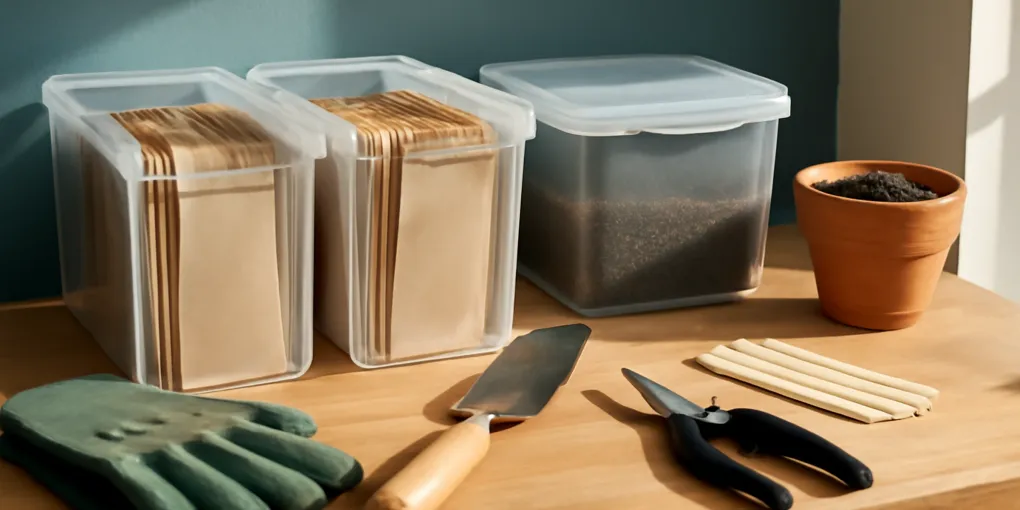
Seed Packet Storage Protocol: Stop Losing Planting Dates and Tiny Envelopes
ProtocolQuick picks
Photo case seed packet organizer
★ Top pick Best for packet sorting- Why consider it: Separates herbs, greens, flowers, and warm-season crops so packets do not become one slippery stack.
Small airtight storage box
Best for garage shelves- Why consider it: Adds a dry outer layer for packets that live near potting soil, fertilizers, or damp tools.
Index card file box
Best low-cost option- Why consider it: Works for gardeners who want simple month dividers and quick packet flipping without a bulky craft case.
Seed packets create a special kind of clutter because they are light, seasonal, and optimistic. A packet of basil slides behind gloves. Lettuce seeds stay in a coat pocket after spring planting. Half-used flower packets live beside twine, plant tags, and mystery hardware. By the time the next season arrives, the household buys duplicates because the old packets are invisible.
The fix is not a giant garden cabinet. It is a packet protocol: one dry container, one planting queue, and one date check before buying more seeds. If the whole garage shelf is chaotic, pair this with the garage sports equipment storage system idea of giving seasonal gear a defined lane.
Quick picks for seed packets
- Best packet sorter: a photo case organizer for separating crop families and flower packets.
- Best dry outer shell: a small airtight storage box if packets live near soil, gloves, or damp tools.
- Best simple version: an index card box with month dividers.
- Skip if: the container is opaque, too deep to flip through, or stored beside leaking liquids.
The protocol
- Gather every seed packet from garage shelves, kitchen drawers, coat pockets, car consoles, and garden totes.
- Discard empty envelopes and any packet that is damp, moldy, torn open, or impossible to identify.
- Separate packets into “plant soon,” “later this season,” and “backup or next year.”
- Put the current planting queue at the front by month or frost window.
- Put backups by crop family: greens, roots, herbs, flowers, warm-season vegetables, and cover crops.
- Store the organizer in a dry, cool spot away from wet tools and fertilizer spills.
- Check the box before buying seeds, then move new packets into the same queue immediately.
This protocol prevents two problems at once: missed planting windows and duplicate buying. It also keeps seed packets from becoming garage confetti.
Choose the right container
A photo case seed packet organizer is useful when you own many packets or garden with children. Search for photo case seed packet organizer (check current options on Amazon) and choose a case with removable inner boxes, enough height for standard packets, and a latch that will not pop open on a shelf.
A small airtight storage box is better when the packets live in a garage, shed, or basement. Search for small airtight storage box seed packets (compare current options on Amazon) and size it for packets plus dividers, not for a whole bag of soil amendments. The goal is dry packet storage, not a mixed gardening junk bin.
An index card file box is the cheapest useful solution. Search for index card file box seed packets (browse current options on Amazon) if you want month dividers and quick flipping. It works best indoors or inside a larger dry bin.
Sort by planting action, not just crop type
Crop type is useful for long-term browsing, but planting action is what prevents missed windows. Keep a front section for packets that need action in the next 30 days. Behind that, use dividers for the next season or crop family.
For example, a spring front section might include lettuce, peas, cilantro, and hardy flowers. Warm-season tomatoes and basil can sit behind a later divider. Backup flower seeds can stay in a separate section so they do not bury urgent vegetable packets.
If your household already uses a weekly reset station, add a five-minute seed check during planting season. The packet box should be easy enough to open that you actually check it before going to the garden center.
Moisture and temperature rule
Seed packets do not belong under wet gloves, beside a hose nozzle, or inside a potting tray with spilled soil. University extension guidance generally emphasizes cool, dry seed storage. That does not mean every home gardener needs laboratory storage. It means the packet box should avoid heat, dampness, and pest access.
If a garage gets very hot, move valuable seeds indoors. If the shed is damp, put the packet organizer inside a dry outer box. If a packet has gotten wet, do not return it to the main box and hope for the best.
Fit matrix
| Gardening pattern | Better storage choice | Avoid |
|---|---|---|
| Many small packets | Photo case organizer | One loose shoebox |
| Few packets by month | Index card file box | Deep basket with no dividers |
| Damp garage shelf | Airtight outer box | Open tray near soil |
| Kids help plant | Color sections by crop group | Mystery envelopes |
| Frequent duplicate buying | Front “buy nothing until checked” queue | Seed packets in multiple rooms |
Seed packet FAQ
Should packets be sorted alphabetically?
Alphabetical sorting helps only if you own many varieties and already know what you are looking for. Most households do better with planting month first, then crop family.
What should happen to half-used packets?
Fold or clip them closed, write the year if it is not clear, and return them to the right section immediately. Loose half-used packets are the ones that spill and disappear.
Can I keep plant tags with the seed packets?
Keep blank plant tags nearby if they help the planting workflow. Do not store dirty used tags or sharp tools in the seed packet box.
Sources
- University of Minnesota Extension seed saving and storage guidance supports keeping seeds dry and tracking crop-specific viability.
- Penn State Extension seed saving basics supports dry seed storage, labeling, and date awareness for home seed collections.
Reader test
A reader can gather packets, discard damp or empty envelopes, choose a photo case or index box, and build a front planting queue today. This article is specific to seed storage because it addresses planting windows, crop-family dividers, half-used packets, garage moisture, and garden-center duplicate buying.
Frequently Asked Questions
- Sort active packets by planting window, keep backups by crop type, and store both in a dry container that can be checked before the next shopping trip.
- They can if the garage shelf is dry, protected from pests, and not exposed to heat swings that shorten seed life. A cooler indoor closet is better for valuable seeds.
- Check the packet date and crop type before discarding. Some seeds remain useful longer than others, but very old or damp packets should not drive next season's plan.