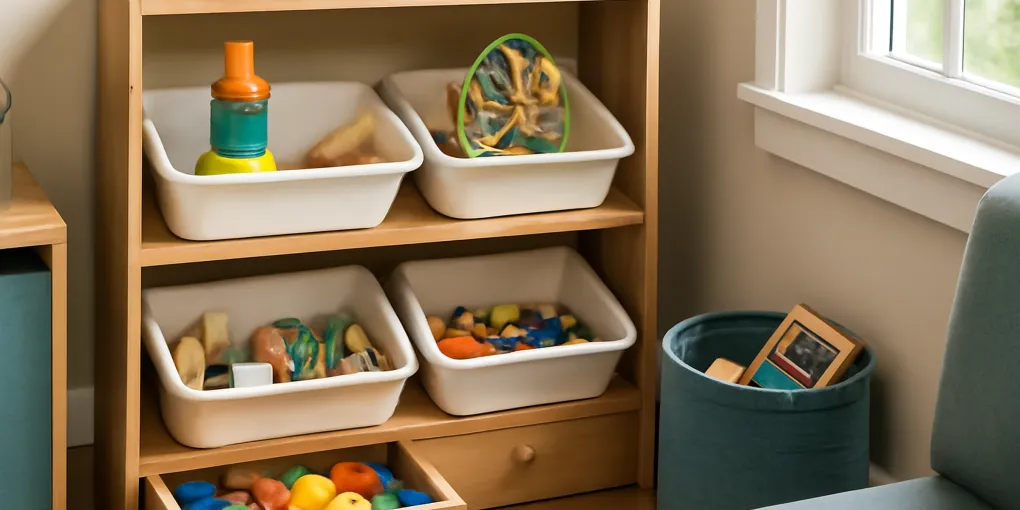
Toy Rotation Bin System for Small Living Rooms
ProtocolA practical protocol for reducing toy spread without turning a shared living room into a storage showroom. This guide uses a small-test approach: make the next action visible, keep capacity honest, and buy only when a specific friction point is proven.
Use this with our weekly home reset station when toys are part of the family-room reset, and read why label systems fail before creating labels that children cannot act on.
G6 Composite Score
For toy rotation in a small living room, prioritize child-reachable active storage, bounded reserve capacity, quick cleanup, and a rotation rhythm that does not turn the couch area into a staging zone.
| Score Component | Weight | How it applies here |
|---|---|---|
| Research | 30% | reduces visual competition and unfinished decisions |
| Evidence Quality | 25% | uses observable behavior, capacity limits, and reset cues |
| Value | 20% | prioritizes inexpensive fixes before specialized products |
| User Signals | 15% | addresses common household failure points |
| Transparency | 10% | names tradeoffs, returns, and maintenance needs |
Quick Picks
Only add bins, labels, or rolling storage after the first room reset shows which toy step repeatedly fails: active play, bedtime cleanup, reserve access, or category swapping.
| Shop this option | Useful item | When it helps |
|---|---|---|
| Search Amazon | Open-front cube bins | children need fast cleanup in a shared room; avoid it if the room needs dust-free long-term storage |
| Search Amazon | Low rolling toy box | toys need to move from rug to closet; avoid it if the wheels mark flooring |
| Search Amazon | Picture label clips | pre-readers help with cleanup; avoid it if labels will be changed daily |
| Search Amazon | Closed reserve storage bins | rotation inventory needs a defined backstock; avoid it if children cannot open them safely |
Define the Active Toy Limit
When toys spread across the sofa, rug, and media stand every evening, use a smaller category.
Count the toys that actually get used in a week. Keep those within child reach and move duplicates, broken pieces, seasonal sets, and rarely used kits to a reserve shelf. The active limit should be physical: when the bins are full, something rotates out before something new rotates in.
Build Zones by Play Behavior
When building toys mix with pretend play and tiny parts disappear under furniture, move the cue closer.
Use broad labels such as build, pretend, vehicles, art, and soft toys. A category that a five-year-old cannot understand will fail during cleanup. Picture labels or color dots work better than clever words.
Choose Containers That Match the Room
When a lidded basket is too annoying to open and close ten times a day, rename the landing spot.
Open-front cubes, shallow fabric bins, and low rolling boxes are easier for children to use than deep trunks. Deep trunks hide pieces and encourage dumping. If the room must look calm after bedtime, use matching bins but keep the labels on the inside lip or a small tag.
Rotation Rhythm
When every toy feels new for two days and then the floor returns to chaos, rename the landing spot.
Swap one category at a time. Full-room resets are tiring and can trigger negotiation over every item. A small Friday swap or Sunday evening refresh keeps novelty without making the system depend on a major cleanout.
Maintenance and Troubleshooting
When children ignore the bins and adults keep rescuing the room after bedtime, rename the landing spot.
If cleanup stalls, remove lids, reduce categories, or shorten the route. If children dump every bin, the active set is too large. If adults dislike the look, reserve storage is too visible or the containers clash with the room. Solve the observed failure rather than buying a larger toy chest.
Room-by-Room Adjustments
In a living room, the biggest constraint is not storage volume; it is visual calm after play. Use the lowest shelf for the active toy category and keep adult items out of that shelf so cleanup has one clear destination. If the sofa area becomes the play zone, place a small return basket beside the sofa rather than across the room. Distance is a hidden tax on children and tired adults.
In a shared family room, avoid storing every toy at child height. Put the current rotation low and the reserve rotation higher or behind a door. This creates a natural pause before the whole inventory comes out. The reserve should still be easy for an adult to access, because a system that is too hard to rotate will not be rotated.
For apartments, choose containers that do double duty without hiding daily items too well. A storage ottoman can hold reserve toys, but the active toys should remain in a bin the child can return independently. If the room has no closet, limit reserve inventory to one lidded bin and rotate less often.
Evening Cleanup Script
Use the same language every night: build toys back to the blue bin, pretend play back to the basket, soft toys to the shelf. Children learn locations faster when the words do not change. If a category needs a long explanation, split it or rename it.
Keep one adult rescue basket for pieces found after bedtime. Empty that basket during the next rotation instead of searching the room every night. This protects the calm of the evening while still preventing loose pieces from becoming permanent clutter.
Caregiver Handoff
The system should be understandable to a babysitter, grandparent, or tired parent who did not design it. Keep the active bin names visible and avoid categories that depend on knowing the toy brand or original set. A helper should be able to say, “cars go here” or “blocks go there” without studying the room.
If two children share the room, separate ownership only when ownership causes arguments. Otherwise organize by play action. Shared pretend-play tools can live together, while prized collections may need a personal box outside the shared rotation. This prevents the common problem where one child empties the whole system to protect a few favorite items.
Seasonal toys need a stricter rule. Outdoor bubbles, summer water toys, holiday puzzles, and travel games should not compete with daily living-room toys all year. Put them in reserve and rotate them in when the season or event arrives.
Capacity Rule Examples
A practical living-room limit is one bin for building toys, one bin for pretend play, one bin for vehicles or figures, and one soft basket for plush toys. If puzzles or board games live in the same room, keep them on a shelf that requires adult help so pieces do not mix into the daily bins. This protects both the toys and the cleanup routine.
The reserve limit should be just as clear. One closet shelf, one lidded bin, or one high cabinet is enough for most small living rooms. When reserve storage grows beyond that boundary, the rotation becomes a hidden collection rather than a working system. Donate, store seasonally, or pass along items before expanding the reserve.
Rotation Calendar
Use a simple monthly note rather than a complex inventory app. Write down which category rotated in, what left the room, and which item caused friction. After two months, the pattern usually becomes obvious: one category is too large, one bin is too hard to reach, or one beloved item should stop rotating and become permanent.
A rotation calendar also prevents accidental overbuying. If a new toy enters, choose the category it replaces before it reaches the living room. This keeps gifts and sale finds from quietly expanding the active set.
Practical Measurement
Photograph the living room before play and after bedtime cleanup. The after-use photo should show whether blocks, vehicles, pretend-play tools, and plush toys returned without an adult sorting every piece.
Leave empty space in each active bin so children can drop toys back without puzzle-fitting the room. If every cube is full on day one, the next birthday gift or half-built set will spill onto the rug.
Purchase Timing
Wait to buy until the same toy-rotation problem repeats twice. If children cannot reach the bin, lower the active category; if they dump every toy, reduce the active set; if adults dislike the look, move reserve storage behind a door before buying more furniture.
Field Test
A toy system needs a cleanup rehearsal. Ask the child to return three common items while you watch silently. If the child hesitates, the label or container is doing too little work. If the child succeeds but the room still looks busy, reduce the active inventory rather than adding more bins.
Example Reset Scenario
Picture the living room after a school day, a sibling visit, and bedtime cleanup, not after a full toy purge. A child should be able to return the current play category in the next minute without opening reserve bins or asking where every brand-specific piece belongs.
The best toy-storage products support that minute of return. Open-front bins, picture labels, and one bounded reserve area beat a beautiful trunk if the trunk invites dumping or hides the active set.
For small living rooms, test the system at bedtime rather than after a weekend cleanout. If a tired adult can point to one active bin, one reserve bin, and one exit spot for broken pieces, the layout is simple enough. If cleanup still requires negotiating every toy, reduce the visible set before buying another container.
Evidence Notes
- Visual attention research such as McMains and Kastner’s work on clutter and attention supports limiting active toy categories in shared rooms.
- Home environment research by Saxbe and Repetti helps explain why an unfinished living-room reset can feel larger than the toy volume itself.
- Implementation-intention research supports tying rotation to a reliable cue such as Friday cleanup or Sunday evening reset.
- Product guidance here is based on child reach, active-bin capacity, reserve boundaries, and cleanup friction, not brand sponsorship.
Bottom Line
A toy rotation system works when the child can return the active set and the adult can keep reserve toys bounded. More bins help only if they make the bedtime reset easier after a real week of play.
Frequently Asked Questions
- Most small living rooms work better with two to four active bins plus one closed reserve zone, because fewer categories make cleanup easier for children.
- Keep daily toys visible enough for children to return them, but use closed or neutral reserve storage for items not in the current rotation.
- If cleanup requires an adult to interpret every category, the system has too many bins, labels, or exceptions.