Quick picks
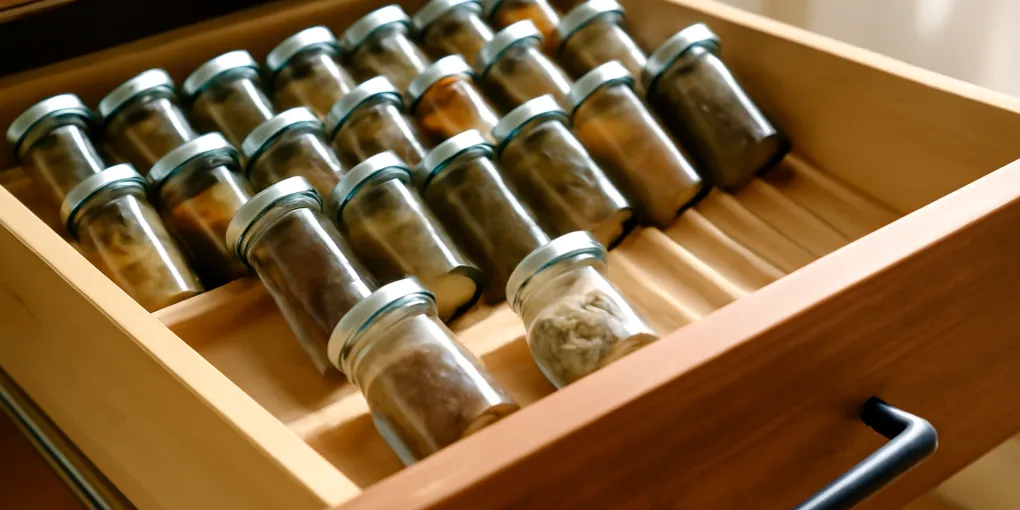
Angled spice drawer insert
★ Top pick Best drawer fix- Note: Use when jars roll because the drawer has a flat bottom and mixed bottle shapes.
Uniform empty spice jars
Best label visibility fix- Note: Use only if decanting will be maintained and allergen or blend information is preserved.
A messy spice drawer is not just a personality problem. It is usually a geometry problem. Round jars sit on a flat drawer bottom, the tallest bottle blocks the smaller one, labels face sideways, and backup containers sneak into the same lane as daily spices. The drawer looks organized for a week, then every cinnamon, cumin, and garlic powder jar rolls toward the front when the drawer closes.
The fix is not automatically matching jars. The first fix is support: angled rows, shallow lanes, fewer duplicates, and labels that can be read from the cooking position. Matching jars can help, but they can also erase dates, blend ingredients, and allergen details if the household treats decanting as a photo project instead of a kitchen system.
If the problem is broader pantry visibility, read our best pantry shelf risers for deep cabinets guide. A spice drawer needs a smaller, more precise reset.
Quick picks for a spice drawer reset
- Rolling jars in a flat drawer: Search Amazon for angled spice drawer inserts.
- Mixed bottle heights: Search Amazon for expandable spice drawer organizer.
- Worn or hidden labels: Search Amazon for spice jar labels waterproof.
- Full decanting reset: Search Amazon for uniform spice jars with labels.
The four reasons spice drawers fail
First, round jars roll. A flat utensil tray can hold spoons because spoons do not behave like cylinders. Spice jars need either an angled insert, a lane with stops, or enough friction that the jar stays put when the drawer moves.
Second, mixed containers break sightlines. A squat tin, a tall glass bottle, a plastic refill bag, and a supermarket jar cannot share one neat row unless the row is wide enough for the largest item. The small jar disappears behind the large one, and the cook buys duplicates.
Third, labels face the wrong direction. A side label is fine on a shelf where you look from the front. In a drawer, the useful label is on the lid or angled upward. If you have to lift every jar to read it, the drawer is not working.
Fourth, backups invade the active zone. The active jar of cumin belongs near the stove. The unopened backup belongs in pantry backstock or a high shelf. When both live in the same drawer, every row fills faster and the daily jar gets buried.
Why label information matters
Spices and blends are food, not just decorative powders. The FDA explains that packaged food labels give information about ingredients and allergens, and that information can matter when products are transferred or stored (FDA food labels). If you decant a seasoning blend, keep the name, brand or blend type, and any important allergen or ingredient information somewhere useful.
For single-ingredient spices, a simple lid label plus date is usually enough for home organization. For blends, rubs, bouillon powders, and seasoning packets, save the ingredient panel until the container is empty. A beautiful jar that turns a complex blend into mystery powder is not an upgrade.
The angled-insert solution
An angled insert is the most reliable drawer fix because it changes the surface under the jar. The jar sits in a shallow trough with the label facing up. The drawer can move without every bottle rolling forward.
Measure drawer height before buying. The insert raises the back row. If the jar plus insert hits the cabinet frame, the drawer will scrape. Also count usable rows, not advertised capacity. A narrow drawer may hold fewer jars than the product photo suggests because your bottles are wider or taller.
Wood, bamboo, plastic, and metal inserts can all work. Choose the material by cleaning habits. If spice dust and oil land in the drawer often, a wipeable plastic insert may be easier than unfinished wood.
When matching jars are useful
Uniform jars help when your drawer contains many bottle shapes and no label system. They make rows predictable, improve lid-label visibility, and reduce the weird gaps created by mixed containers. They are most useful for households that cook often enough to refill and relabel consistently.
They are less useful when the spice collection is small, when people forget dates, or when blends have important ingredient details. Decanting also takes time. If the household will refill three jars and leave the rest in a bag, a better insert for original jars is more realistic.
Fit matrix
| Spice drawer problem | Better fix | Watch out for |
|---|---|---|
| Jars roll to the front | Angled insert or trough tray | Check drawer height with jars loaded |
| Labels are unreadable | Lid labels or angled rows | Do not cover allergen or blend details |
| Mixed bottle sizes waste space | Adjustable organizer or fewer active jars | Uniform jars add refill maintenance |
| Duplicate spices hide | Separate active jar from backstock | Backups do not belong in the daily drawer |
| Spice dust collects | Wipeable insert and fewer loose packets | Paper labels can peel near oil or steam |
A 20-minute spice drawer reset
Empty the drawer completely. Wipe spice dust and oil before putting anything back. Sort jars into four groups: daily spices, occasional spices, unopened backups, and stale or unknown items. Put backups somewhere else. Put packets in a small bin or decant them with label information preserved.
Choose the top 18 to 30 jars that earn drawer space. That number depends on drawer width, but the principle is the same: one visible layer beats two hidden layers. Add lid labels only after the final layout is chosen. Labeling first can trick you into keeping too many jars because the lids look neat.
Arrange cooking-frequency first, alphabet second. Salt-free blends, garlic powder, cumin, chili powder, cinnamon, and everyday herbs should sit where your hand naturally lands. Rare baking spices or holiday blends can live in the back row or a pantry bin.
Spice Drawer FAQ
Is it better to organize spices alphabetically?
Alphabetical order helps only after the drawer has enough structure. First fix rolling, label direction, and duplicates. Then alphabetize within the active group if multiple cooks share the kitchen.
Should spice jars stand upright in a drawer?
Upright jars work in deep drawers with top labels. In shallow drawers, angled horizontal rows are usually easier to read and less likely to tip.
How many spices should stay near the stove?
Keep the spices used weekly or monthly near the stove. Rare holiday spices, unopened backups, and large refill bags can live in pantry backstock so the active drawer stays readable.
What should I do with old spices?
If a spice has no smell, no date, or no identifiable label, it is not helping the drawer. Replace only the ones you actually cook with, and avoid buying large refills until the active jar is nearly empty.
Bottom line
Spice drawers tip over because round jars, mixed sizes, side labels, and backups fight the drawer geometry. Fix the surface with an angled insert or lanes, keep the active set small, preserve important label information, and move backups out. The drawer is working when you can find the cumin or cinnamon without lifting six jars first.
Frequently Asked Questions
- Most spice drawers fail because round jars sit on a flat surface with no angled support, mixed diameters, and too many backup bottles.
- They are worth it when the drawer is deep enough, the jars are similar height, and the labels face up without stacking.
- Decant only if you can keep names, dates, and important ingredient or allergen information. Uniform jars help visibility but add maintenance.