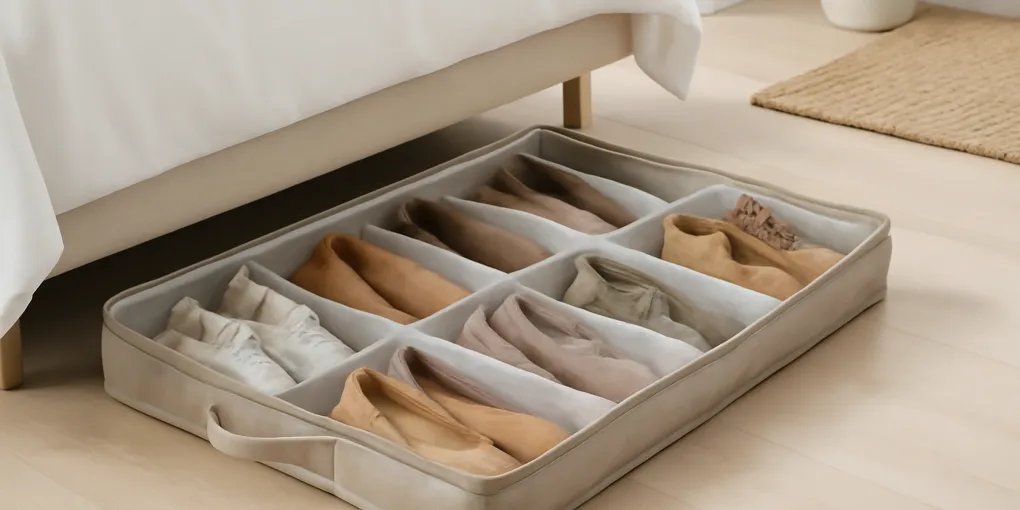
Best Under-Bed Shoe Organizers 2026: Low-Profile Storage That Actually Works
Buyer's GuideAffiliate Disclosure
This article may include Amazon affiliate links using the clutterscience-20 tag. If you buy through those links, ClutterScience may earn a commission at no extra cost to you.
Quick Picks
| Best for | Organizer type | Why it works |
|---|---|---|
| Lowest clearance | Soft fabric shoe bag | Compresses slightly and slides under beds with limited height |
| Frequent access | Rigid rolling drawer | Easier to pull out and return without collapsing |
| Dust protection | Zippered compartment case | Keeps pairs separated and covered |
| Breathability | Fabric or mesh-sided organizer | Reduces trapped moisture and odor risk |
| Heavy shoes | Structured bin with handles | Better for boots, sneakers, and larger sizes |
The best under-bed shoe organizer is not the one with the most slots. It is the one that matches your bed clearance, shoe volume, and access frequency.
How to Choose Under-Bed Shoe Storage
1. Measure the actual clearance
Measure from the floor to the lowest bed-frame obstruction, not just the bottom of the mattress. Many organizers claim to be low-profile but still catch on center supports, rugs, or bed skirts.
Use this rough guide:
- Under 5 inches: soft fabric bag only
- 5 to 7 inches: zippered fabric organizer or shallow rigid bin
- 7 to 9 inches: rolling drawer or structured shoe box system
- 9 inches or more: boots and bulkier shoes become realistic
If your bed clearance is tight, flexible fabric beats hard plastic.
2. Match the organizer to access frequency
Under-bed storage is less convenient than a closet shelf. Use it for shoes you do not need constantly.
Best candidates:
- Seasonal sandals or boots
- Dress shoes
- Special-event shoes
- Backup athletic shoes
- Kids’ next-size shoes
Poor candidates:
- Wet shoes
- Daily sneakers
- Muddy shoes
- Shoes needed every morning
- Anything with odor or moisture
If you need a pair daily, put it in an entryway, closet, or open shoe rack instead.
3. Decide between compartments and open bins
Compartments keep pairs separated and easier to scan. Open bins fit awkward shoes better.
Choose compartments if you store:
- Flats
- Sandals
- Kids’ shoes
- Low-profile sneakers
- Dress shoes
Choose an open bin if you store:
- Boots
- High-top sneakers
- Larger men’s shoes
- Shoe-care supplies with the shoes
- Oddly shaped footwear
A common mistake is buying a 24-slot organizer for shoes that are too bulky for the slots. Count real pair volume, not advertised slot count.
Best Under-Bed Shoe Organizer Types
Soft fabric compartment organizer
Best for most small bedrooms.
A fabric under-bed shoe organizer gives you separated slots, dust protection, and flexibility. It is usually the best first choice for apartments, kids’ rooms, and closets without much shelf space.
Look for:
- Reinforced handles on at least two sides
- Clear or mesh top
- Zipper that opens fully
- Soft dividers that do not waste height
- Stated dimensions, not only slot count
Avoid if you need to store wet shoes or heavy boots.
Rigid rolling under-bed drawer
Best for frequent access.
A rolling under-bed shoe drawer is easier to pull out daily because the bin keeps its shape. Wheels matter most on hard floors. On thick carpet, handles may matter more than wheels.
Look for:
- Low wheel height
- Smooth pull handles
- Rigid base
- Clear top or open design
- Enough height for your largest shoes
Avoid flimsy drawers if you plan to store boots or heavy sneakers.
Zippered dust-cover shoe case
Best for off-season storage.
A zippered under-bed shoe storage case protects occasional shoes from dust and keeps pairs together. It is best for footwear that stays stored for weeks at a time.
Choose breathable fabric or mesh panels when possible. Fully sealed plastic can trap moisture if shoes are not completely dry.
Clear plastic low-profile bin
Best for visibility and pest protection.
A clear under-bed storage bin is useful when you need to see contents quickly. Plastic also adds more structure than fabric.
The tradeoff is breathability. Use plastic for dry, clean shoes only, and avoid sealing in damp athletic shoes.
What We Would Buy First
For most homes, start with one soft fabric compartment organizer for seasonal shoes and one open bin for bulky pairs. That combination solves more problems than buying multiple identical slot-based organizers.
A good starter setup:
- One fabric organizer for flats, sandals, dress shoes, and low sneakers
- One shallow bin for boots or bulky shoes
- One small label on the visible end: “summer,” “dress,” “kids next size,” or “boots”
This prevents the under-bed area from becoming a mystery archive.
Common Mistakes
Buying based on slot count
A 24-slot organizer is only useful if your shoes fit the slots. Measure your bulkiest pair before choosing.
Storing dirty shoes under the bed
Dirt, moisture, and odor do not belong in hidden storage. Clean and dry shoes first.
Making daily shoes too hard to reach
If you use a pair every day, under-bed storage adds unnecessary friction. Reserve it for lower-frequency shoes.
Forgetting retrieval labels
Under-bed organizers disappear visually. Label the pull side so you know what is inside before dragging out three containers.
Under-Bed Shoe Storage Setup Protocol
- Pull out every pair of shoes currently stored in the bedroom.
- Remove damaged, uncomfortable, duplicate, and never-worn pairs.
- Separate daily shoes from occasional shoes.
- Measure bed clearance and largest shoe height.
- Choose fabric, rigid, or open-bin storage based on access frequency.
- Label the visible side.
- Review the organizer once per season.
The seasonal review matters. Under-bed storage is easy to ignore, which is why it can quietly accumulate shoes that no longer fit your life.
Practical Bottom Line
The best under-bed shoe organizer is usually a low-profile fabric compartment case for seasonal and occasional shoes. If you access the shoes often, choose a rigid drawer or rolling bin. If you store boots or bulky sneakers, use an open structured bin instead of forcing them into small slots.
Do not treat under-bed space as overflow for every shoe you own. Treat it as secondary storage for pairs that are clean, dry, and worth keeping.
How We Score Under-Bed Shoe Organizers
ClutterScience uses the same 30/25/20/15/10 composite scoring model across organization guides so a product category is judged by evidence and real household fit, not by slot count alone.
| Factor | Weight | What It Means for This Guide |
|---|---|---|
| Research | 30% | Fit with home-organization principles, storage access behavior, moisture-control basics, and clutter-reduction research |
| Evidence Quality | 25% | Preference for measurable criteria such as dimensions, materials, handles, closures, and clearance requirements over vague marketing claims |
| Value | 20% | Whether the organizer solves a real storage problem without forcing readers into unnecessary multi-pack purchases |
| User Signals | 15% | Common household failure patterns: collapsed sides, weak zippers, slots too small for real shoes, bins that disappear under the bed, and difficult retrieval |
| Transparency | 10% | Clear limitations, no fabricated product testing claims, and no direct ASIN recommendation unless the product identity is verified |
This scoring approach favors organizers that remain usable after the first week. A low-price bag with weak handles can score lower than a slightly more expensive organizer if retrieval is frustrating. A rigid drawer can score lower than a fabric case if it requires more clearance than most beds provide. The purpose is to match the storage method to the behavior: seasonal storage, occasional access, or frequent retrieval.
Room-by-Room Fit Notes
Small apartment bedrooms
In a small apartment, under-bed space often becomes the only realistic overflow zone. Choose the thinnest organizer that still protects the shoes. If the bed is low, fabric compartments usually outperform rigid bins because they flex around bed-frame supports. Keep the visible handle side labeled so you do not have to pull out every case to find one pair.
Kids’ rooms
For children, the best use is next-size shoes, sports shoes, or seasonal pairs. Do not use under-bed storage for the one pair they need every morning. A child-friendly system should be obvious: one organizer for “next size,” one for “sports,” or one for “summer.” If the label is too vague, the organizer becomes a forgotten stash.
Guest rooms
Under-bed shoe organizers can work in a guest room if they are not blocking the guest’s luggage space. Use them for true off-season storage and keep the bed perimeter easy to clean. If the room doubles as household storage, avoid stacking multiple shoe cases so tightly that retrieval requires moving furniture.
Closet overflow
If closet shelves are crowded, under-bed organizers can protect less-used shoes while freeing daily shoe access. The key is to declutter first. Moving every pair under the bed without editing simply relocates the problem.
Maintenance Rule
Review under-bed shoe storage at the start of each season. Pull the organizer out, remove shoes that no longer fit or feel good, clean the pairs that stay, and relabel the case if the contents changed. Hidden storage needs a review rhythm because out-of-sight items are easy to keep by default.
Capacity Planning Before You Buy
Before buying, count pairs by height instead of by total number. Low flats and sandals can share small compartments, but running shoes, high-tops, and ankle boots need more depth. If you own several bulky pairs, choose fewer larger compartments or an open bin. Overfilling small slots makes the organizer harder to use and can deform shoes.
Also decide whether the organizer will be pulled from the long side or short side of the bed. A handle on the wrong side is a small annoyance that becomes a daily reason not to maintain the system.
If two sizes might work, choose the slightly larger compartment layout rather than the highest advertised pair count. Shoes are easier to keep when the system gives you enough room to return them without reshaping the organizer every time.
References and Evidence Base
- Roster, C. A., Ferrari, J. R., & Jurkat, M. P. (2016). The dark side of home: Assessing possession clutter on subjective well-being. Journal of Environmental Psychology. Used for the broader home-clutter and well-being context behind hidden-storage reviews.
- Saxbe, D. E., & Repetti, R. (2010). No Place Like Home: Home Tours Correlate With Daily Patterns of Mood and Cortisol. Personality and Social Psychology Bulletin. Used for the principle that visible home environments can act as stress cues.
- U.S. Environmental Protection Agency. A Brief Guide to Mold, Moisture and Your Home. Used only for the practical moisture-control principle that damp items should not be sealed in hidden storage.
Frequently Asked Questions
Can I store leather shoes under the bed?
Yes, if they are clean, dry, and stored in a breathable organizer. Avoid sealing damp leather in plastic.
Are wheels necessary?
No. Wheels help on hard floors and with heavier bins, but a sturdy handle matters more in low-clearance spaces or on carpet.
How many pairs should go under the bed?
Only as many as you can identify and retrieve without dumping the whole organizer. If you cannot see or label the contents, you have too many pairs in hidden storage.
Frequently Asked Questions
- They are worth it when shoes are seasonal, occasional, or overflow pairs. They are not ideal for wet daily shoes or pairs you need several times a day.
- Fabric compartment bags are best for low-clearance beds and seasonal shoes. Rigid rolling drawers are better when you have enough height and need frequent access.
- Yes for leather, suede, athletic shoes, and anything that may hold moisture or odor. Avoid sealing damp shoes in plastic.