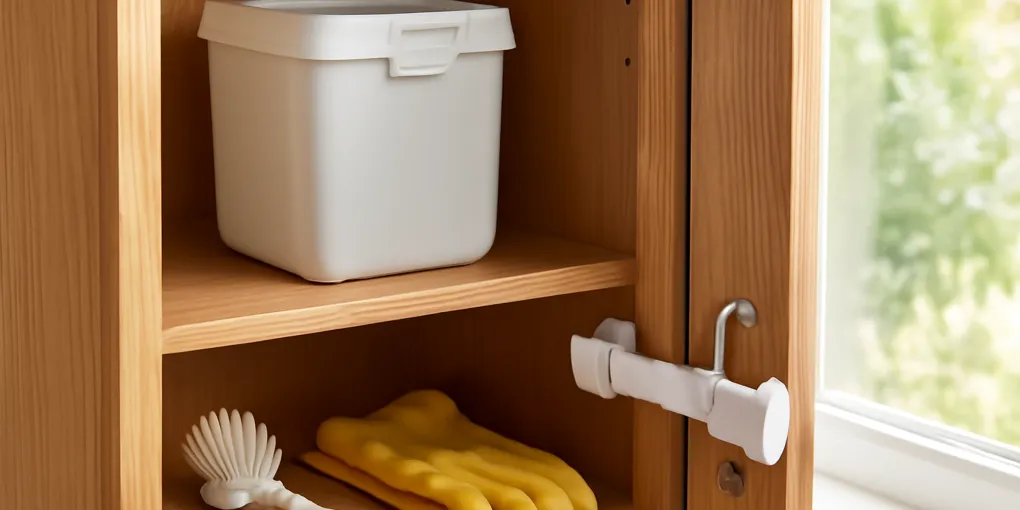
Dishwasher Pod Storage Safety Protocol: Stop the Under-Sink Grab Bag
ProtocolQuick picks
Latchable detergent pod container
★ Top pick Best adult-access storage- Note: Choose a container that closes firmly and fits on a high shelf or adult-controlled cabinet.
Under-sink pull-out caddy
Best separation tool- Note: Use for brushes and ordinary tools, not as open storage for concentrated pods.
Dishwasher pods are convenient because they are small, premeasured, and easy to grab. Those same traits make them a bad match for open under-sink baskets, countertop jars, and mixed cleaning-supply bins. A pod station should make one adult action easy: open, take one pod, close, and return. It should not look like a snack jar, a toy bin, or a general kitchen catchall.
This protocol focuses on dishwasher detergent packets and pods. If your larger problem is chemical crowding under the sink, start with the under-sink cleaning product separation protocol. If laundry packets are the issue, use the stricter laundry pod storage safety protocol.
Quick picks for safer pod storage
- Closed pod storage: Search Amazon for latchable dishwasher pod containers. Prioritize closure and placement over countertop style.
- Adult-controlled cabinet aid: Search Amazon for cabinet door child safety latches. Use hardware that fits your cabinet and household risk.
- Tool separation: Search Amazon for under-sink pull-out caddies. Keep brushes and spray bottles separate from pods.
Why dishwasher pods need their own rule
Poison Control warns that laundry and household cleaning products can injure children when swallowed, inhaled, or exposed to skin or eyes, and that concentrated packet products deserve careful storage (Poison Control laundry products guidance). Safe Kids Worldwide also recommends keeping poisons out of children’s reach and sight and using original containers when possible (Safe Kids poison safety).
The organization lesson is specific: do not optimize pod storage for display. Optimize it for controlled adult access. A beautiful clear jar on the counter may reduce package clutter, but it increases visibility and handling. A low open bin may make unloading the dishwasher faster, but it also places concentrated detergent in the same rummage zone as sponges, trash bags, and pet supplies.
Step 1: remove pods from mixed bins
Pull every dishwasher packet, rinse aid bottle, loose sample pack, and half-empty detergent container out of the cabinet. Put them on a dry counter. Remove unrelated objects from the pod zone: plastic bags, scrub brushes, garbage disposal tools, spare sponges, appliance manuals, plant food, and pet supplies.
Mixed bins fail because people have to dig. Digging turns the pod container into a touch point for everyone who needs a sponge. The safer pattern is separate storage for pods and separate storage for ordinary dish tools.
Step 2: choose the adult-controlled location
The best location depends on your home. In a child-free apartment, a closed high cabinet may be enough. In a home with children, visiting grandchildren, or curious pets, choose a higher cabinet, locked cabinet, or latched under-sink cabinet that matches the risk. Do not treat the dishwasher door as the only factor. The storage zone matters even when the appliance is closed.
Use this placement test:
- Can an adult reach the pods without crouching and rummaging?
- Are the pods out of sight and reach of children?
- Is the container closed between dishwasher loads?
- Are pods separated from food, medicine, pet items, and toys?
- Does the station stay dry and away from leaks?
If the station fails one item, fix placement before buying a prettier container.
Step 3: keep warnings and lot details with the pods
Original detergent packaging preserves product directions, first-aid language, lot information, brand details, and the child-resistant closure the manufacturer designed for that packet. If you use a secondary container, keep the original package information nearby or choose a latchable box large enough to hold the original bag inside. Do not pour blue, green, or gel-filled pods into a candy-style glass jar, especially on a counter, bar cart, or open pantry shelf.
A latchable opaque or semi-opaque container is usually a better fit than a decorative jar. Label the outside as dishwasher detergent in plain adult language, not with cute kitchen wording. The goal is not to showcase the pods. It is to make accidental handling less likely while keeping adult dosing simple.
Step 4: separate the daily dishwashing tools
Sponges, dish brushes, gloves, and dishwasher cleaning tablets should not force people to open the pod container. Give those items a separate caddy or front bin. If you use a pull-out under-sink organizer, make one side ordinary tools and the other side adult-controlled chemicals, with pods closed inside their own package or box.
This separation also reduces wet damage. Pods can break down when exposed to moisture. A closed, dry container away from dripping brushes and sink leaks helps preserve the product and discourages loose packets from sticking to the bottom of the cabinet.
Fit matrix
| Household situation | Better pod station | Avoid |
|---|---|---|
| Toddlers or visiting kids | High or locked cabinet with closed package | Low open under-sink basket |
| Small apartment kitchen | Closed upper shelf near dishwasher | Countertop glass display jar |
| Shared adult house | Labeled closed bin in a dry cabinet | Mixed bin with sponges and bags |
| Leaky under-sink cabinet | Move pods out of the cabinet | Storing packets near damp pipes |
Two-minute reload rule
When the pod supply is low, reload the station fully. Do not leave overflow packets loose on the counter, in a grocery bag, or beside the dishwasher. Put extras in the same adult-controlled location or do not buy the bulk size.
Bulk packaging can save money, but only if the home has a storage zone that stays closed, dry, and out of reach. If the bulk tub has to live on the floor, it is too much product for the available safe storage.
Dishwasher Pod Storage FAQ
Is a child latch enough for under-sink pod storage?
It can help, but it is not a complete system. Pods should still be closed inside their package or container, and the cabinet should not invite children to browse through other interesting items.
Should pods be stored next to rinse aid?
They can share an adult-controlled chemical zone, but do not let bottles, brushes, and packets pile into one bin. Each category should be easy to grab without digging.
What if I already use a countertop jar?
Move the pods to less visible, closed storage. Use the jar for a non-hazard category such as clothespins, reusable produce ties, or another item that does not resemble candy or food.
Sources
- Poison Control, Laundry Products: https://www.poison.org/articles/laundry-products
- Safe Kids Worldwide, Poison Safety: https://www.safekids.org/safetytips/field_risks/poison
Frequently Asked Questions
- Only if that cabinet is adult-controlled and the pods are in a closed container. Open under-sink bins are a poor fit for homes with children or visiting kids.
- Avoid candy-like display storage. Keep pods in original packaging or a firmly closed container that does not invite handling.
- Very little. Keep pods separate from sponges, trash bags, pet items, and tools that make people rummage through the same container.