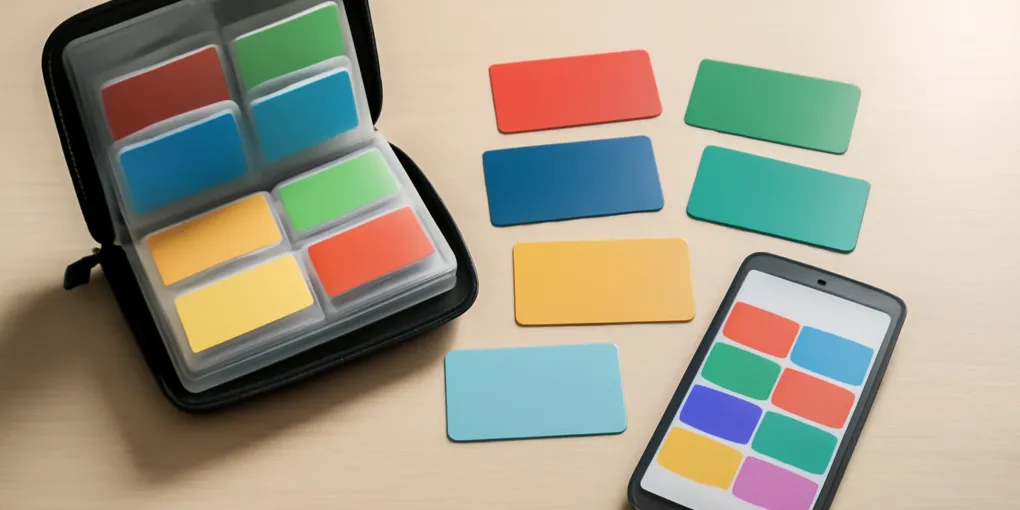
Gift Card Organizer vs Wallet App: Which Stops Cards From Expiring in a Drawer?
ProtocolQuick picks
| Product | Key Specs |
|---|---|
| See price on Amazon | — |
| See price on Amazon | — |
| See price on Amazon | — |
Product availability, certifications, and retailer details can change; check the current Amazon page before buying.
Gift cards become clutter because they look like money but behave like tiny papers. They slide behind drawer trays, separate from activation receipts, and get discovered after the store trip where they would have been useful. The right system depends on where the card is spent: online, in store, or during a return.
This comparison is for store credit, gift cards, and small return receipts. If the larger problem is paper piles, start with the paper inbox protocol. If receipts are for taxes or reimbursements, use receipt organizers for taxes and returns instead.
Quick answer
- Choose a physical organizer if your cards need receipts, activation slips, or in-store swiping: Search Amazon for Smead expanding wallets.
- Choose a slim card case if you actually carry cards to stores: Search Amazon for ACdream card holders.
- Choose a receipt pouch if returns and store credits are mixed together: Search Amazon for EOOUT receipt pouches.
Why gift cards disappear
Gift cards disappear when storage and spending happen in different places. A card stored in a kitchen drawer cannot help at the clothing store. A digital card saved in an app cannot help if the cashier needs a physical swipe or the barcode will not scan. A return card without its receipt creates doubt, so it gets postponed.
The Federal Trade Commission notes that gift cards have rules around fees, expiration, and fraud risk (FTC gift cards). The clutter lesson is simpler: cards need a visible action path before they become forgotten value.
Physical organizer: best for card-plus-paper situations
A mini accordion file works when the household has multiple cards, return receipts, and store credits. Tabs let you sort by store or by person. The file is large enough not to vanish but small enough to live near a wallet station.
Best fit: families, holiday gift-card piles, return-heavy households, and people who need to keep activation slips with cards.
Avoid if: you will bury the organizer inside a desk drawer. A physical organizer only beats a wallet app when it sits where shopping decisions happen.
Wallet app: best for cards used online or scanned often
A wallet app works when the card can be added cleanly, the barcode scans reliably, and the person who shops is the person who controls the phone. It is strongest for cards used online, coffee cards, transit-style stored value, or retailers whose apps show balances.
The weakness is shared access. A household card saved on one phone is not available to the other person at checkout. Screens can crack, batteries die, and some store systems still ask for numbers, PINs, or physical cards.
Use the app for active cards, not as a graveyard for every card you might use someday. If a card sits unused for three months, move it to a monthly shopping list or give it to the person most likely to spend it.
Slim card case: best for the next shopping trip
A slim card case is not the archive. It is the launch pad. Put only cards you intend to use soon in the case, then keep it with the wallet, bag, or car console. This prevents the common failure where cards are neatly organized at home but never leave with the shopper.
Limit the case to five to ten cards. If it becomes a second wallet, people stop checking it. Keep receipts in a separate pouch unless the case has a secure pocket that will not crumple them.
Receipt pouch: best for returns and store credit
A receipt pouch is the better choice when the card is tied to a return window, activation receipt, or merchandise credit. Zippered pouches handle odd paper sizes better than card slots. They also make monthly cleanout easier because everything can be dumped on a table and sorted.
Label the pouch with one rule: active returns only. It should not become the home for old coupons, expired rebates, or random loyalty cards. When a return is complete, remove the paper.
Decision table
| Situation | Better tool | Why |
|---|---|---|
| Several holiday gift cards | Mini accordion file | Keeps cards visible by store or person |
| One card to spend this week | Slim card case | Moves the card to the trip path |
| Digital barcode works reliably | Wallet app | Reduces paper handling |
| Card needs activation receipt | Receipt pouch | Keeps proof with the card |
| Shared household card | Physical organizer | Anyone can take it before shopping |
Hybrid setup for real households
Most households do not need to choose only one system. Use the wallet app for cards that are repeatedly scanned at checkout, such as grocery, coffee, or big-box balances. Use a physical card file for low-frequency cards that arrive with paper receipts, activation slips, or return paperwork. The deciding question is where the card will be used next. If it will be used in person within the next month, put it in the outbound wallet sleeve. If it is for a future birthday, school shopping trip, or home-project errand, file it by store category with the receipt.
A simple three-pocket layout beats a complicated coupon binder: Use this week, Store credit and returns, and Gifts to spend later. Write the balance and last checked date on a sticky note only when the store does not show balances reliably in an app. Do not write full card numbers on labels or leave activation receipts loose in a public entryway bowl. Gift cards are cash-like enough that the organizer should live in a drawer, desk, or command center that guests and children do not browse.
What to buy or do today
If you have fewer than ten cards, buy nothing first. Empty the junk drawer, check each balance, discard fully spent cards, and put active cards in one zip pouch. If you regularly manage returns, rebates, school gift cards, or multiple store credits, step up to a tabbed expanding wallet or small receipt pouch. If the cards mostly belong to one shopper, a slim RFID-style card case in the everyday bag is more useful than a large home binder.
Monthly reset protocol
Once a month, gather all gift cards, store credits, return slips, and card-like coupons. Check balances for cards with uncertain value. Put empty cards in the trash after confirming they are spent. Put this-month cards into the wallet, card case, or shopping list.
Then sort the rest into three groups: spend soon, keep with receipt, and give away. The give-away group matters. A card for a store you never visit is not a future treat; it is value trapped in a drawer.
What not to buy
Do not buy a large binder unless your household truly has many cards. Oversized systems create a paperwork ritual around a small decision. Do not buy a decorative box that lives far from the exit route. It will look tidy while the value remains unused.
Also avoid mixing gift cards into the main junk drawer. Small-card clutter is exactly why drawer dividers stop working when categories are vague. Cards need a money-like home, not a miscellaneous slot.
Gift Card Organizer FAQ
Is a wallet app better than a physical gift-card organizer?
Use a wallet app for cards you can reliably scan at checkout, but keep activation slips and cards that require physical swiping in a small physical file.
Where should gift cards be stored at home?
Store active cards near the wallet, keys, or shopping-list station rather than in a deep junk drawer.
How often should gift cards be checked?
Check balances and receipts monthly, and move cards you plan to use this week into your wallet or bag.
Should I write balances on gift cards?
You can use a removable sticky note or keep balances in a small list, but avoid permanent marks that cover barcodes, PIN areas, or card numbers.
What should I do with low-balance cards?
Move them to the active wallet or shopping list. Low balances are easy to forget because they feel too small for a special trip.
Can I store gift cards in a safe?
Only store high-value cards or long-term cards in a safe. Everyday store cards should live where they can be used.
Sources
- FTC gift cards: https://consumer.ftc.gov/articles/avoiding-and-reporting-gift-card-scams
- Consumer Financial Protection Bureau gift cards: https://www.consumerfinance.gov/ask-cfpb/what-should-i-know-about-gift-cards-en-1081/