Household Supply Reorder Protocol: Stop Buying Duplicates While Essentials Run Out
ProtocolQuick picks
| Product | Key Specs |
|---|---|
| Check 32-quart bin options |
|
| Check reusable bin-tag options |
|
Product availability, certifications, and retailer details can change; check the current Amazon page before buying.
A crowded supply closet can still leave a household without dish soap, batteries, or toilet paper. The problem is not always lack of storage. It is that half-used bottles, reserve packs, and shopping notes are separated across cabinets, cars, and phone apps. A reorder protocol gives common supplies one place to live and one moment when they become a shopping task.
This is not a case for bulk buying every product. The right backup level depends on your household, storage conditions, cash flow, expiration dates, and how quickly you can shop. A five-year stockpile of specialty cleaners is clutter with a different label. The useful system keeps everyday essentials visible and prevents accidental duplicates.
Tools for a reserve that stays visible
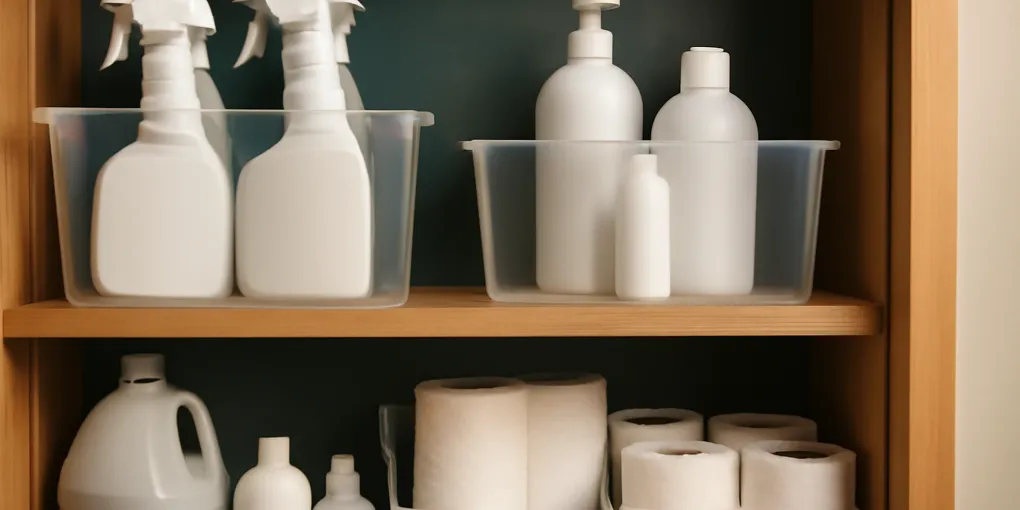
Choose clear latching storage bins in the 32-quart range only after measuring the shelf and checking what a household member can lift. See price on Amazon. They work well for one bounded category such as paper goods or dishwashing backups; a giant bin that mixes five categories recreates the search problem.
Reusable clip-on bin tags are useful when the reserve shelf changes between laundry, paper goods, and cleaning supplies. See price on Amazon. Put the category and the reorder trigger on the outward-facing tag. A tag that names only a brand or hides against the wall will not help the person adding the next item to the list.
Choose the supplies that actually need a system
Start with items that cause disruption when they run out or are bought repeatedly: toilet paper, trash bags, dish soap, dishwasher tablets, laundry detergent, all-purpose cleaner, sponges, paper towels, light bulbs, and pet or baby essentials where relevant. Do not add every hobby product, seasonal item, or rarely used repair chemical to the first list.
Gather the same category from every cabinet before setting a quantity. You may find three partly used glass cleaners and no garbage bags because each person stored purchases where there was room. Check expiration, leaks, damaged containers, and duplicate specialty formulas. Follow product labels and local guidance for disposal; do not pour unknown chemicals together or donate opened cleaners casually.
Build one active zone and one reserve zone
An active zone holds the item currently used: the open dish soap under the sink, the roll on the bathroom holder, the laundry detergent beside the washer. A reserve zone holds unopened backups in one designated shelf, bin, or cabinet. The active zone should be convenient; the reserve zone should be dry, stable, and easy to inspect.
Do not build an attractive wall of decanted cleaners. Original containers retain use and safety information. Keep chemicals away from food, children, pets, heat, and incompatible products. The EPA and product labels are more useful sources than a storage aesthetic when deciding where a product belongs.
Label the storage zone by category, not by a brand you might replace. “Laundry,” “paper goods,” and “dishwashing” survive a product switch. Measure a shelf before adding bins. A bin that hides the last two trash-bag rolls is not an inventory system; it is another opaque container.
Set a reorder point people can see
A reorder point is the quantity that triggers a list entry, not the amount that means you are already out. For example, put toilet paper on the shared list when the reserve pack is opened, add dish soap when the unopened backup becomes the active bottle, and add trash bags when the last roll is moved to the kitchen.
Write the rule where the reserve lives or in the shared shopping list. Keep it specific:
| Supply | Reorder point | Avoid |
|---|---|---|
| Toilet paper | Open the last reserve pack | Waiting until the bathroom roll is gone |
| Dish soap | Move the backup to the sink | Buying a new bottle while two are hidden |
| Trash bags | Start the last roll | Storing loose rolls in several rooms |
| Laundry detergent | One normal load remains in the backup | Stocking multiple scent variants nobody uses |
A household with irregular shopping may use a larger buffer. A small apartment with a nearby store may use one backup. The right number is the smallest quantity that prevents a stressful run-out without taking shelf space from something else.
Use one shared shopping channel
Pick a channel every buyer can access: a shared note, grocery list app, magnetic list, or family message thread. The specific app matters less than the rule that an item is added at its reorder point. Do not make one person the keeper of all household memory.
If two people shop separately, add the size or preferred type only when it matters. “Unscented dishwasher tablets” is helpful. A paragraph explaining why the previous box was terrible is not. Remove the item from the list once it is put into the reserve zone, not when it is added to the cart. That closes the loop and prevents a second shopper from buying it the same day.
Check the reserve zone monthly
A five-minute monthly reset catches duplicate drift. Face containers forward, group like items, move nearly empty active containers to the front, and add missing essentials to the list. Keep only one open container per product type unless different rooms truly need separate active use.
Our utility closet chemical separation protocol explains safe category boundaries for cleaners. Use that protocol for placement and this one for reorder decisions; buying an extra bottle does not solve a storage hazard.
Household supply reorder FAQ
Should I buy in bulk to save money?
Only if you have the space, will use the item before it degrades, and can compare the unit cost without creating excess. A smaller pack that fits the reserve zone may be the better household choice.
What if a supply is used much faster one month?
Treat that as a signal to adjust the reorder point or investigate why usage changed. Do not automatically double every future purchase.
Can I use a pantry inventory app?
Yes, if everyone who buys supplies will update it. For many homes, a visible reserve shelf and shared list are more reliable than scanning every bottle.
Sources
Frequently Asked Questions
- Keep enough for your normal interval between shopping trips, plus a small buffer for the items you use reliably. Storage space and expiry dates should limit the backup.
- No. Set reorder points for frequently used essentials. Infrequently used specialty products usually need a simple check before a project.
- Use one shared list and one defined storage zone, then add an item when the active container reaches its chosen reorder point.