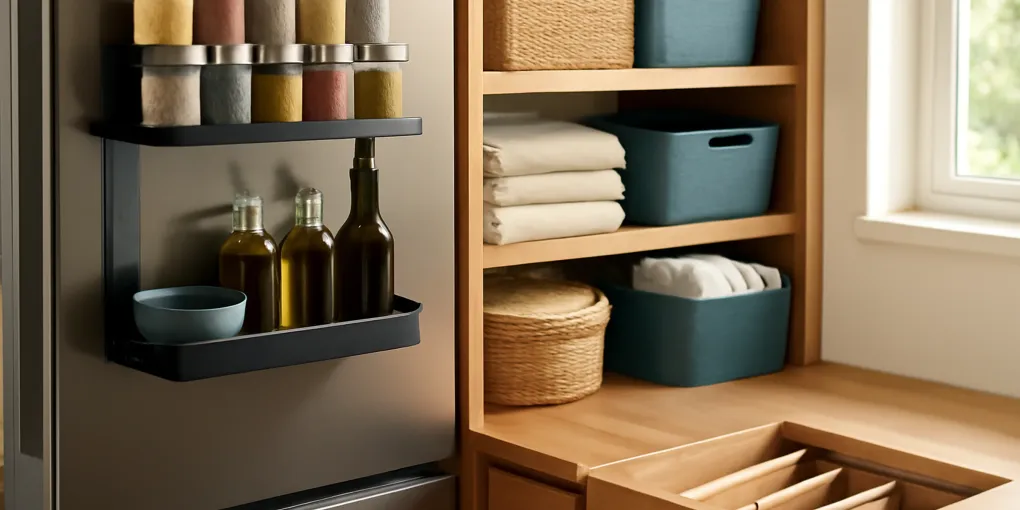
Magnetic Spice Shelf Review: When the Fridge Side Beats a Cabinet Rack
ReviewMagnetic refrigerator spice shelf
Best renter-friendly side storageBest For: Metal refrigerator sides near the prep zone
$18-40
Quick picks
| Product | Key Specs |
|---|---|
| See price on Amazon |
|
| See price on Amazon |
|
| See price on Amazon |
|
Product availability, certifications, and retailer details can change; check the current Amazon page before buying.
A magnetic spice shelf is not just a smaller spice rack. It changes the storage question from “which cabinet can spare a shelf?” to “is the side of the refrigerator a safe, visible, low-friction place for the ten jars we reach for weekly?” That distinction matters in apartments, galley kitchens, and shared rentals where cabinet space is tight and drilling is not allowed.
Our review rating is 4.1 out of 5 for an edited everyday spice set on a clean, flat, magnetic refrigerator side. The score drops if the rack is used as overflow for every jar, mounted where shoulders hit it, or expected to hold tall oils and heavy grinders. If your main problem is jars tipping inside a drawer, start with why spice jars tip over in drawers before moving the entire system to the fridge.
Quick verdict
- Best fit: renters with a magnetic fridge side within arm’s reach of the prep counter.
- Best search path: Search Amazon for magnetic spice shelves.
- Better alternative for owners: Search Amazon for wall-mounted spice rails.
- Skip it if: the only available metal surface faces a narrow walkway, a hot appliance, or a toddler-height traffic lane.
The product works when it shortens the movement from seasoning to cooking. It fails when it turns the fridge side into a public ledge for every duplicate jar in the house.
What a magnetic shelf actually fixes
The strongest use case is counter rescue. Small kitchens often lose prep space to the same salt, pepper, garlic powder, chili flakes, and oil-adjacent seasonings that are used every day. A magnetic shelf can move that small active group off the counter without making the cook open a cabinet with messy hands.
The second use case is cabinet separation. A deep upper cabinet hides short jars behind cans, mugs, or baking supplies. A magnetic shelf keeps the active set at eye level, which reduces duplicate buying because the user can see whether cumin or paprika is already present.
The third use case is rental reversibility. A magnetic shelf requires no screws, anchors, adhesive pads, or landlord conversation. That is its real advantage over many wall-mounted spice systems. It is also why the product should stay modest. If the solution depends on loading twenty jars onto a removable magnet, the kitchen probably needs a different storage zone.
Where it fails
The most common failure is wrong surface selection. Stainless-look refrigerator doors and sides are not always magnetic. Some sides hold magnets strongly; some doors do not; some panels are curved or textured enough to reduce contact. Test with a strong fridge magnet before shopping.
The second failure is shoulder impact. A shelf that looks tidy in a product photo can become a bruise point in a narrow kitchen. Stand where you normally open the fridge, unload groceries, and turn from the sink. If your elbow crosses the proposed shelf path, a drawer insert is safer.
The third failure is load creep. A shelf that starts with six jars can slowly collect oils, grinders, sauce bottles, vitamins, tape, and keys. Magnets are good at vertical hold when the load is within spec; they are not a substitute for a pantry shelf. Keep heavy glass and spill-prone liquids in a cabinet.
Fit checklist before buying
Measure the available magnetic panel width, height, and clearance from nearby door swings. Check whether the shelf has a front lip tall enough to stop round jars from sliding during a fridge-door slam. If the rack will hold metal tins, confirm the tins will not scrape paint when removed.
The shelf should sit close enough to the prep zone that the cook can use it without walking, but far enough from direct heat and steam that jars are not warmed during every cooking session. USDA and FDA food-storage guidance focuses on temperature control for perishable foods, but dry spices also keep better when protected from heat, light, and moisture. A fridge side beside the stove is convenient, but convenience should not mean constant heat exposure.
Better alternatives by kitchen layout
Use a wall-mounted rail when the fridge side is not magnetic or not near the prep area. A rail is less reversible, but it can be placed at the correct height and anchored for the expected load. Search option: Search Amazon for wall-mounted spice rails.
Use a drawer insert when you have a wide shallow drawer near the stove. Drawer inserts keep labels visible without adding visual noise to the room. Search option: Search Amazon for drawer spice inserts.
Use a narrow cabinet turntable when the spice set is small but the fridge side is in a collision path. It is less visible than a magnetic shelf, but it keeps jars contained and avoids exterior clutter.
Setup protocol
- Empty the current spice zone and discard empty jars or duplicates that no one uses.
- Choose no more than ten everyday jars for the magnetic shelf.
- Clean and dry the refrigerator side so grit is not trapped under the magnets.
- Place the empty shelf first, then load jars from heaviest to lightest.
- Open and close the refrigerator several times while watching for movement.
- Walk the kitchen path with a laundry basket or grocery bag to test shoulder clearance.
- Recheck after one week and remove any item that was added only because the shelf had space.
Magnetic spice shelf FAQ
Can I put oils on a magnetic spice shelf?
Usually no. Oils are heavier, spill-prone, and more sensitive to heat and light than small spice jars. Keep them in a cabinet or on a stable counter tray away from the stove.
Is the side of the refrigerator too warm for spices?
It depends on location. A side panel near a range or dishwasher can get more heat and steam than a pantry shelf. If the shelf would sit beside cooking heat, choose a drawer or cabinet insert instead.
Do magnetic spice shelves work on stainless steel?
Some stainless-looking appliances are magnetic and some are not. Test the exact side panel with a strong magnet before ordering.
What should I buy first?
Buy the smallest shelf that holds the active set after editing. A bigger magnetic shelf invites overflow and makes the outside of the fridge look busy.
Sources
- U.S. Environmental Protection Agency, Reducing Waste: What You Can Do: https://www.epa.gov/recycle/reducing-waste-what-you-can-do
- FDA refrigerator and freezer storage chart: https://www.fda.gov/media/74435/download
Frequently Asked Questions
- They can be worth it when the refrigerator side is near the prep area and the shelf holds only frequently used jars. They are a poor fix for large backstock spice collections.
- A clean magnet usually avoids drilling damage, but grit trapped behind the magnet can scratch paint. Wipe the surface and avoid dragging loaded shelves.
- Use the product's stated weight limit, then leave margin. Heavy glass jars, oils, and oversized grinders belong elsewhere.
- A drawer insert or wall rail is better when the fridge side is not close to prep, the household bumps that path, or the spice set is large.