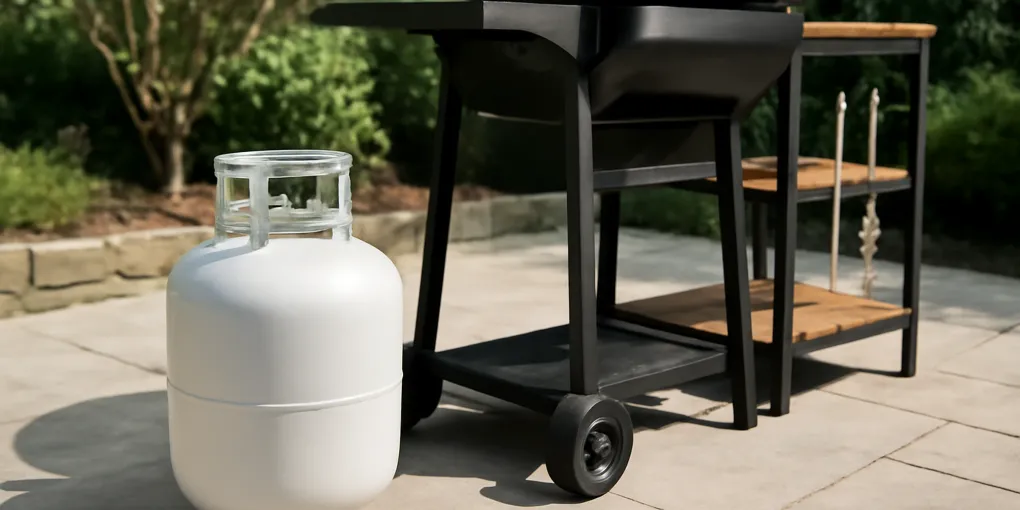
Propane Cylinder Storage Reset Protocol: Keep Grill Tanks Out of Clutter Closets
ProtocolQuick picks
Outdoor propane tank stabilizer base
★ Top pick Best for upright storage- Note: Use outdoors to help a 20 lb grill cylinder stay upright on a stable surface.
Grill-side outdoor utility shelf
Best for accessories, not cylinders- Note: Keeps tools, covers, and gauges separate so the cylinder area stays inspectable.
A spare grill cylinder should not become just another garage object. Propane is useful because it is portable fuel. That same portability makes it tempting to tuck the tank into a utility closet, shed shelf, basement corner, or crowded garage bay when the patio looks messy.
This protocol is a storage reset for 20 lb grill cylinders and similar household propane tanks. It does not cover large fixed tanks or commercial storage. It is for the common home problem: an extra cylinder, grill cover, lighter, hose, and tools all competing for one messy corner. For extension cords in the same garage zone, use the garage extension cord storage safety protocol. For paint cans, use the garage paint can storage protocol.
Quick picks for the outdoor reset
- Upright support: Search Amazon for propane tank stabilizer bases. Use only as an outdoor stability aid, not permission to store indoors.
- Grill accessory separation: Search Amazon for outdoor grill accessory shelves. Store tools and covers away from the cylinder valve and hose.
- Weather-safe status tag: Search Amazon for weatherproof luggage tags. Use a simple full/empty/in-service tag so spare tanks do not multiply.
The non-negotiable storage rule
Propane cylinders belong outdoors, upright, and away from ignition sources. The National Fire Protection Association advises that propane cylinders should be stored outdoors and away from ignition sources, and its grilling guidance emphasizes checking gas-grill connections before use (NFPA grilling safety).
That means this is not a decluttering puzzle where a clever bin solves everything. The first move is removing the cylinder from indoor clutter zones. The second move is keeping the valve, collar, and hose connection visible enough that a leak check or exchange decision is not hidden by patio gear.
Step 1: separate fuel from grill clutter
Make three piles: the cylinder, grill accessories, and unrelated outdoor clutter. Accessories include grill brushes, covers, lighters, thermometers, drip pans, and spare hoses. Unrelated clutter includes garden tools, pool toys, sports balls, and car supplies.
Only the cylinder needs the propane storage spot. Accessories can go on an outdoor shelf, in a deck box, or on a garage shelf if they are not fuel containers. Separating the categories keeps the cylinder valve visible and reduces the urge to bury the tank behind tools.
Step 2: choose the outdoor cylinder location
Pick a location outdoors with ventilation, shade when practical, and a stable surface. The cylinder should stand upright, out of the main walking path, away from doors where children run, and away from heat or ignition sources. Do not place it under a pile of covers or inside an enclosed storage bench.
If the patio is tiny, the answer is not indoor storage. It is reducing to one in-service cylinder, exchanging empties promptly, or choosing a smaller outdoor spot that still follows safety guidance.
Step 3: make upright storage harder to ignore
A tank stabilizer base can help on a flat patio or deck, especially if the cylinder is not connected to the grill. It is not a safety certification by itself. Use it to reduce rolling and tipping, then keep the valve area clear.
Do not hang cords, hoses, gloves, or grill brushes from the cylinder. They hide the collar and valve. They also make the tank look like a general-purpose rack, which is exactly the habit this reset is trying to stop.
Step 4: tag status, not dates you will never update
Most households need one simple status marker: full, empty, or in service. A weather-safe tag or clip prevents the common pattern where one questionable spare becomes two new spares because nobody remembers which tank is usable.
Keep the tag short. Do not wrap paper labels around the valve. Do not tape over warning labels, collar markings, or inspection information.
Fit checklist for the cylinder zone
| Check | Pass condition |
|---|---|
| Location | Outdoors, ventilated, and away from ignition sources |
| Position | Upright on a stable surface |
| Access | Valve and hose area visible for inspection |
| Clutter boundary | Tools, covers, and brushes stored separately |
| Traffic | Not in the step path from door to grill |
What not to buy
Do not buy an indoor cabinet, fabric cover, or enclosed bench to hide a propane cylinder inside the house, garage, or shed. Do not buy a decorative container that prevents inspection or ventilation. Do not solve patio appearance by moving fuel into a hidden indoor corner.
If the visual problem bothers you, use a better outdoor placement and store non-fuel accessories neatly nearby. The tank itself should remain recognizable and inspectable.
Propane storage FAQ
Can I keep a spare grill tank in the garage for one night?
Do not use the garage as the storage plan. Propane safety guidance tells consumers to store cylinders outdoors, not in garages, basements, sheds, or living areas.
Should I cover the propane tank?
A grill cover can protect the grill, but do not bury a spare cylinder under loose fabric or block inspection of the valve. Follow the cylinder and grill manufacturer’s instructions.
What if I have two half-full tanks?
Tag them, use one as the in-service tank, and exchange or refill the empty promptly. The storage problem grows when unknown tanks accumulate.
Bottom line
A propane cylinder reset is successful when the tank is upright outdoors, easy to inspect, and not disguised as garage clutter. Buy a stabilizer or outdoor shelf only to support that rule, not to make indoor storage feel organized.
Frequently Asked Questions
- No. Follow propane safety guidance: cylinders should be stored outdoors, upright, away from ignition sources, and never inside living areas, garages, sheds, or closets.
- Very little. Keep the cylinder upright and inspectable; store grill tools, covers, and spare parts separately so they do not hide the valve or hose.
- Create an outdoor, upright, shaded, ventilated spot that is out of the walking path and away from heat, then label the tank status with a weather-safe tag.