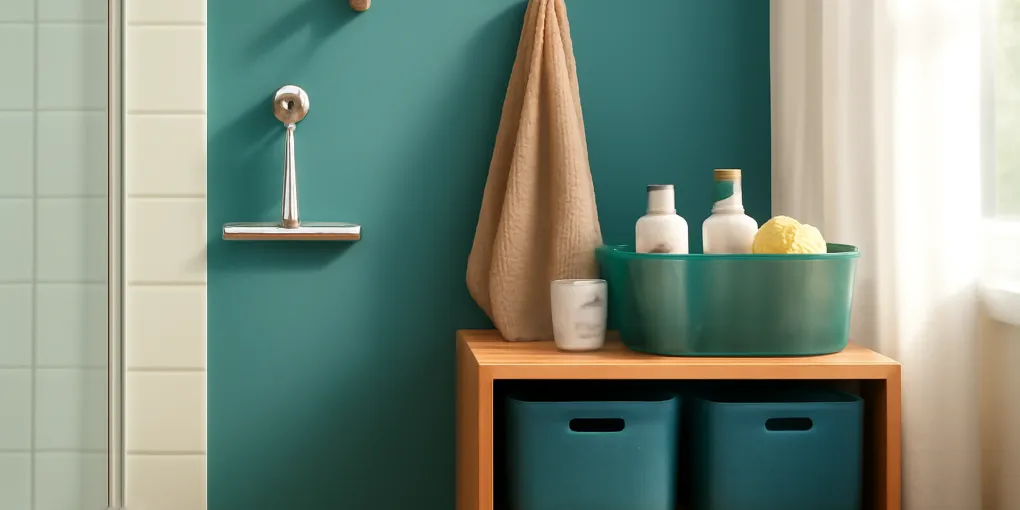
Shower Squeegee Storage Protocol: Keep the Tool Dry, Visible, and Out of the Tub Pile
ProtocolQuick picks
| Product | Key Specs |
|---|---|
| See price on Amazon | — |
| See price on Amazon | — |
Product availability, certifications, and retailer details can change; check the current Amazon page before buying.
A shower squeegee only helps if it is easier to put back than to abandon on the tub ledge. The storage problem is small but specific: the tool is wet, it has a flexible blade, and it must be visible at the exact moment someone finishes showering. A basket under the sink is too far away. A tub ledge is too wet and cluttered. A hook in the right place is usually the whole system.
If the rest of the bathroom counter is the bigger problem, start with best bathroom counter organizers. If products pile on the tub edge, pair this with how to declutter bathroom.
Quick picks
- Smooth tile or glass: Search Amazon for Command Bath squeegee hooks. Install only on a clean, dry surface.
- Renter trial: Search Amazon for iDesign suction squeegee holders. Treat it as a test and check grip often.
- Door storage: Search Amazon for over shower door squeegee holders. Check door clearance and metal finish before buying.
Step 1: put storage at the end of the action
The best location is not where the squeegee looks nicest. It is where the hand naturally goes after the final pass on the glass, wall, or tile. Stand in the shower, pretend to squeegee the last surface, and mark the closest dryable hanging spot. If the hook is outside that reach, the tool will land on the faucet, ledge, or floor.
CDC mold guidance emphasizes moisture control and drying wet materials as part of preventing indoor mold problems (CDC mold basics). A squeegee is a small tool, but the storage lesson matches: let wet items drain and dry rather than trapping them in a pile.
Step 2: choose the hook by surface
Adhesive hooks work best on smooth tile, glass, or sealed surfaces that can be cleaned and dried before installation. They are a poor fit for rough stone, grout lines, dusty painted walls, or surfaces that stay wet all day. Suction holders are useful for testing placement, but a holder that falls twice has failed. Replace it before the household learns the ledge habit again.
Over-door holders work when a shower has a rigid door with enough clearance. They are less useful on curtains, curved rods, or doors where the hanging tool hits knees or towels.
Step 3: separate the squeegee from bottles
Do not store the squeegee in the same caddy as shampoo, razors, soap, and bath toys. The blade gets bent, the handle gets slimy, and people have to move bottles to retrieve it. The squeegee should have one single-purpose parking spot.
If the shower has children or shared users, choose a low-risk spot where the tool is visible but not a toy. Keep it away from the tub floor and do not hang it where it can fall onto bare feet.
Step 4: make drying visible
A good storage position lets the blade hang vertically or at a slight angle. It should not lie flat on a shelf. It should not sit blade-down in a cup. It should not be trapped behind a curtain fold. After installation, run the shower, hang the squeegee, and check whether water drips onto a normal wet zone rather than a wood floor, bath mat, or cabinet.
If the shower has poor airflow, do not crowd the hook with loofahs or washcloths. CDC home cleaning guidance separates routine cleaning from disinfecting and reinforces matching cleaning actions to the surface and risk (CDC cleaning your home). The organizing version is simple: keep wet cleaning tools separated enough that they dry.
Step 5: assign the habit
The protocol is one sentence: last person squeegees, rinses the blade, hangs it back. Do not make the squeegee the job of whoever cleans the bathroom weekly. It works only when it is part of the shower exit routine.
For shared bathrooms, put the squeegee where the tallest and shortest regular users can reach it. If one person cannot reach the hook, that person will create a second storage location.
Placement mistakes
Run one real shower test before calling the setup finished. If the user has to step out of the shower to reach the holder, if the blade drips onto a bath mat, or if the handle blocks the shampoo bottle used every day, move it now. Small placement errors become permanent because nobody wants to troubleshoot storage while wet.
Avoid the tub ledge because bottles push the blade sideways. Avoid the floor because hair and soap residue collect there. Avoid inside a vanity because the tool is wet and out of sight. Avoid a hook directly under the shower stream unless the holder is designed for constant wetting.
Also avoid buying a premium squeegee before choosing the home. A modest tool that hangs in the right place beats a heavy tool that falls off the wall.
Shower Squeegee Storage FAQ
Can a squeegee hang from the shower head?
It can, but it often gets in the way and may drip onto the wrong area. A wall, glass, or door hook usually creates a cleaner habit.
How often should I clean the squeegee holder?
Wipe it during the regular bathroom cleaning cycle and anytime the blade or hook feels slimy. Replace cracked blades that skip or drag.
What if the hook keeps falling?
Change the mounting method or location. Reinstalling the same weak hook teaches everyone that the ledge is the real home.
Sources
- CDC mold basics: https://www.cdc.gov/mold-health/about/
- CDC cleaning your home: https://www.cdc.gov/hygiene/cleaning/cleaning-your-home.html
Frequently Asked Questions
- Store it hanging where the last person can reach it before leaving the shower, with the blade able to drip dry.
- It can be good enough for renters or smooth tile, but it should be checked often because a falling holder trains people to leave the squeegee on the ledge.
- Inside works when it can dry and stay visible. Outside works when the shower is tiny or the wall surface will not hold a hook.