Simplehuman Grocery Bag Holder Review: Worth It for Bag Clutter?
Reviewsimplehuman KT1166 Wall Mount Grocery Bag Dispenser
Best fixed wall dispenserBest fit: Households that reuse a small number of plastic bags for liners or pet cleanup
$15-30
Quick picks
| Product | Key Specs |
|---|---|
| See price on Amazon |
|
| See price on Amazon |
|
| See price on Amazon |
|
Product availability, certifications, and retailer details can change; check the current Amazon page before buying.
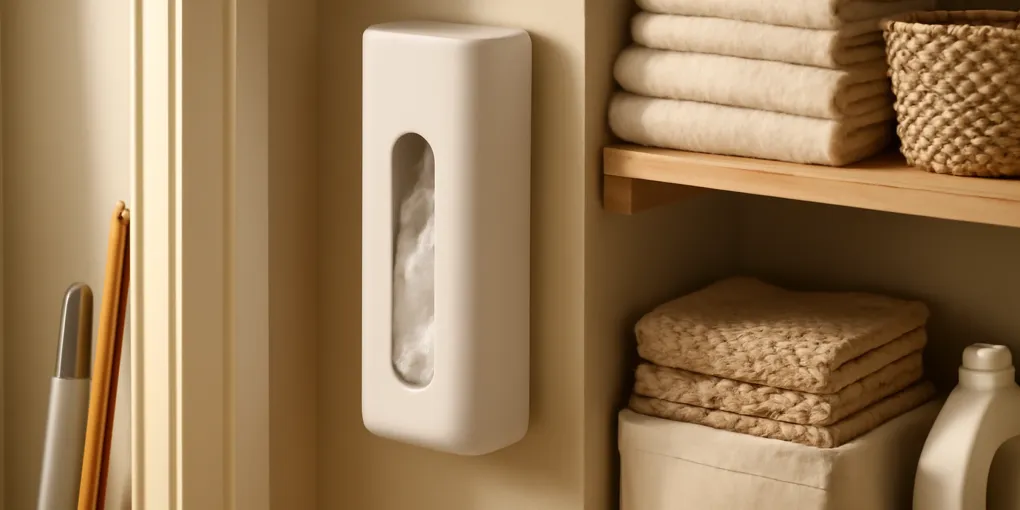
The Simplehuman wall mount grocery bag dispenser is useful for a narrow problem: a household reuses thin plastic grocery bags but lets them spread under the sink, in a closet, or by the back door. It turns loose bags into one visible dispenser and makes the excess obvious.
It is not a sustainability solution by itself. If too many bags enter the home every week, a dispenser can simply make the pile look more intentional. Our practical rating is 4.1 out of 5 for homes that reuse a limited bag supply for trash liners, pet cleanup, or muddy-shoe containment.
If the problem is reusable totes piling at the doorway, read why reusable shopping bags become a doorway pile. If the problem is a messy under-sink zone, pair this review with under sink cleaning product separation protocol.
Quick verdict
- Best fit: thin plastic bags that are genuinely reused within a few weeks.
- Best location: utility closet, pantry side wall, garage entry, or inside a cabinet door with clearance.
- Best alternative for renters: Search Amazon for mDesign over-cabinet bag holders.
- Skip it if: the household needs a reusable-tote system, not a plastic-bag dispenser.
What works well
The strongest feature is compression. Thin plastic bags take up strange amounts of space when tossed into a loose bin. A wall dispenser compresses them into a vertical column and gives the household one obvious capacity limit. When the holder is full, extra bags need to leave.
The second advantage is one-handed retrieval. Pulling one bag from a lower slot is easier than digging through an under-sink pile while holding trash or pet waste.
The third advantage is location discipline. If the dispenser sits where bags are used, the bag has a job. If it sits wherever empty wall space happens to exist, it becomes another forgotten container.
What does not work as well
The product does not reduce incoming bag volume. If every grocery trip produces more plastic bags than the household reuses, the dispenser fills quickly and overflow returns.
It also does not work well for bulky reusable bags. Canvas totes, insulated bags, and structured shopping bags need a different system, usually a bin near the exit or a return-to-car habit.
Mounting is the other risk. A dispenser attached to a weak cabinet panel or a cramped under-sink door may interfere with cleaning bottles, plumbing, hinges, or trash bags.
Before you buy: measure and decide the job
Measure the wall or door surface where the holder will mount. Check door swing, hinge clearance, and whether the loaded holder will hit shelf contents. Under-sink doors are especially tricky because plumbing and cleaners already fight for space.
Decide the bag job before mounting. Is the holder for small trash-can liners? Cat litter? Dog walks? Wet umbrellas? If the answer is “just in case,” the holder will probably store too many bags.
Shopping path: Search Amazon for simplehuman KT1166 grocery bag dispensers.
The capacity rule
A grocery bag holder should hold a working supply, not every bag that entered the home. For many households, that means 10 to 25 thin bags. If the dispenser requires force to stuff bags into the top, the system has already failed.
Keep a separate exit path for surplus bags. Many grocery stores and community programs accept specific clean plastic bags and film, but rules vary by location. Check the local program before mixing bags, wrappers, and contaminated plastic.
Alternatives that may fit better
Use an over-cabinet holder when drilling is not allowed or when the best spot is a cabinet door. Confirm the door still closes and the holder does not collide with plumbing or shelf contents.
Use a small bin for reusable totes. A tote bin should sit near the door or in the car, not deep inside the kitchen. The return path matters more than the container.
Use no holder at all if the household is ready to reduce incoming plastic bags. A visible limit, such as one small bin, may work better than a mounted dispenser that invites refilling.
Practical score
The Simplehuman-style dispenser scores 82/100 when used as a capped working supply.
| Factor | Weight | Score | Rationale |
|---|---|---|---|
| Research | 30% | 24/30 | The product addresses a concrete retrieval and capacity problem. |
| Evidence Quality | 25% | 19/25 | Success depends on household bag flow and mounting location more than product complexity. |
| Value | 20% | 17/20 | It is inexpensive if it prevents recurring under-sink sprawl. |
| User Signals | 15% | 13/15 | Common complaints are predictable: wrong mounting spot, too many bags, or the wrong bag type. |
| Transparency | 10% | 9/10 | The review clearly separates bag storage from bag reduction. |
Setup protocol
- Empty the current bag pile.
- Remove torn, dirty, wet, or unusable bags.
- Count a realistic working supply.
- Choose a location next to the actual reuse task.
- Measure the mounted holder with door swing and nearby items in mind.
- Load only the working supply.
- Put surplus bags in the local recycling or drop-off path if accepted.
- Recheck after two grocery trips.
FAQ
Can I mount the holder under the sink?
Yes, if it does not interfere with plumbing, cleaners, trash bags, or door swing. Avoid creating a crowded chemical-and-bag jumble under the sink.
Is stainless steel better than plastic?
Stainless steel can look cleaner and resist flexing, but mounting location and capacity discipline matter more than material. A plastic holder in the right place beats a stainless holder in the wrong cabinet.
What if my city bans or limits plastic grocery bags?
Then a thin-bag dispenser may not be useful. Choose a tote bin, car organizer, or doorway return system instead.
Should I fold bags before loading them?
Only if folding is easy enough that the household will repeat it. Most people maintain a loose-stuff dispenser more reliably than a perfect folding routine.
Sources
- U.S. Environmental Protection Agency, Reducing Waste: What You Can Do: https://www.epa.gov/recycle/reducing-waste-what-you-can-do
- U.S. Environmental Protection Agency, How Do I Recycle Common Recyclables: https://www.epa.gov/recycle/how-do-i-recycle-common-recyclables
- Trex, Recycling Programs and Store Drop-Off Guidance: https://nextrex.com/view/programs