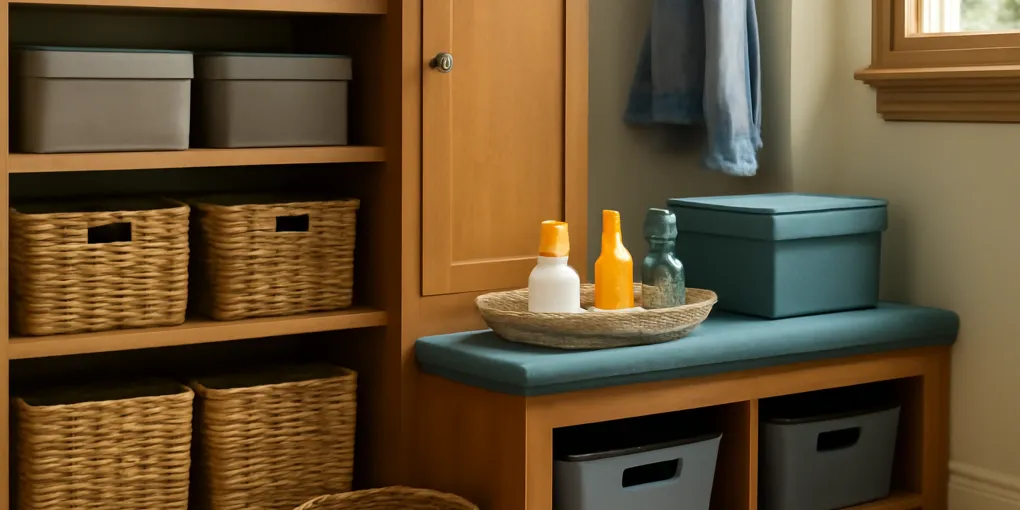
Sunscreen and Bug Spray Entry Cabinet Protocol: A Summer Grab-and-Go Shelf That Does Not Turn Sticky
ProtocolQuick picks
| Product | Key Specs |
|---|---|
| See price on Amazon |
|
| See price on Amazon |
|
| See price on Amazon |
|
Product availability, certifications, and retailer details can change; check the current Amazon page before buying.
A summer entry shelf fails when it tries to be a beach bag, medicine cabinet, junk drawer, and lost-and-found bin at the same time. Sunscreen, insect repellent, sunglasses, after-sun lotion, hair ties, wipes, and pool passes all seem like they belong near the door. Without a boundary, the shelf turns into sticky bottles, expired products, and last year’s leaking travel tube.
This protocol builds one adult-managed grab-and-go zone. It works best beside a mudroom cabinet, entry closet, laundry-room exit, or garage-house door. For related chemical-storage resets, see our laundry pod storage safety protocol and utility closet chemical separation protocol.
Product starting point
- Main container: Search Amazon for handled outdoor essentials caddy
- Shelf divider: Search Amazon for clear divided sunscreen storage bins
- Higher adult zone: Search Amazon for wall mounted entryway baskets
Choose the container after measuring shelf depth and door swing. A pretty bin that scrapes the cabinet door will stay half-open, and a tall handled caddy that cannot slide out one-handed will become a dumping tray.
Step 1: Separate daily sun items from occasional outdoor chemicals
Sunscreen often needs frequent access. Insect repellent may need more deliberate adult handling, especially in homes with children. Do not combine every summer product into one open basket if small children can reach the shelf. The Environmental Protection Agency tells consumers to read and follow insect repellent label directions and avoid over-application. The FDA’s sunscreen guidance emphasizes using sunscreen as directed and checking the product label.
Use two zones:
- Daily sun zone: sunscreen, lip balm with SPF, sunglasses, and a small towel or wipe cloth.
- Adult-managed repellent zone: insect repellent, tick-removal card or tweezers if your household uses them, and after-bite products that need label review.
If the entry cabinet is low, move repellent to a higher wall basket or locked household-supply area and keep only a reminder card or empty travel pouch in the grab zone.
Step 2: Make the caddy washable, not decorative
The container should survive leaked lotion. A handled plastic caddy, clear divided bin, or smooth metal basket is easier to reset than woven seagrass, fabric, or cardboard. Add a thin washable liner only if it can be removed and cleaned. Do not use paper labels on the floor of the bin because they will absorb sunscreen and turn into clutter.
The best layout is simple:
- Tall bottles in the rear or side channel.
- Small lip balms and face sticks in a cup or front pocket.
- Sunglasses in a separate soft pouch or tray so lotion does not coat the lenses.
- Repellent either in an adult zone or clearly separated from sunscreen.
- One wipe cloth or washable liner for leaks.
Do not add open baskets for every sport or outing. A swim lesson pouch, camp pouch, or dog-walk pouch can sit beside the caddy, but it should not absorb the chemical products. The sunscreen zone works because bottles return to the same washable base every time.
Step 3: Use a summer capacity limit
The shelf does not need every backup bottle. Keep the current-use products in the caddy and store unopened backups separately in a cool, stable place according to package directions. Heat, open caps, and mixed old bottles are what make the entry zone unpleasant.
Set a hard limit: one face sunscreen, one body sunscreen per active user group, one lip product, one repellent if appropriate, and one after-sun product if your household uses it. Duplicates live in backstock or leave.
Step 4: Check expiration and label directions
Sunscreen and repellent are not decorative summer props. They are products with directions, active ingredients, and storage limits. During the reset, check expiration dates, unreadable labels, cracked caps, clogged sprays, and bottles that have been stored in a hot car or garage for too long.
If a bottle leaks once, wipe it and stand it upright. If it leaks again, discard it according to product directions and local rules. A leaky bottle teaches everyone to avoid the shelf.
Step 5: Build the leaving routine
The caddy should be easy to grab before a walk, camp pickup, pool trip, or yard project. Put it near the door only if it is safe there. If not, put a small reminder card at the door and keep the actual products high or locked.
After an outing, return products to the same positions. Wet towels, pool toys, snacks, mail, and receipts do not enter the caddy. A summer shelf works when it has a narrow job.
Product fit matrix
| Product | Best use | Failure mode |
|---|---|---|
| Handled caddy | One movable grab-and-go kit | Too tall for the shelf or too tempting as a junk bin |
| Clear divided bin | Bottle separation on a shelf | Hard to clean if compartments are too narrow |
| Wall basket | Adult-visible high zone | Poorly anchored or reachable by young children |
| Small pouch | Camp or pool trip subset | Stays packed with old products after the trip |
How we evaluate the protocol
| Factor | Weight | What matters |
|---|---|---|
| Safety | 35% | Products are stored with child access, heat, and label directions in mind. |
| Usability | 25% | Adults can grab the right items quickly before leaving. |
| Cleanability | 20% | The system handles leaks and sticky bottles. |
| Value | 10% | The first purchase is a washable container, not a decorative overhaul. |
| Transparency | 10% | Sunscreen, repellent, and outing clutter are separated. |
FAQ
Should sunscreen be stored in the garage?
Usually not as the default. Garages can get hot, and heat may be a poor fit for many personal-care products. Follow the product label and choose a cooler indoor location when possible.
What if my kids need to apply sunscreen independently?
Create an age-appropriate routine with adult guidance and product directions. Keep chemical products stored according to household safety needs, not simply wherever the morning rush is fastest.
How do I keep the shelf from becoming a lost-and-found bin?
Give outing extras their own small pouch or hook. The caddy holds only application products and tiny accessories that support those products. Everything else leaves during the weekly reset.
Sources
- EPA insect repellent safety guidance: https://www.epa.gov/insect-repellents/using-insect-repellents-safely-and-effectively
- FDA sunscreen guidance: https://www.fda.gov/drugs/understanding-over-counter-medicines/sunscreen-how-help-protect-your-skin-sun