Best Adhesive Label Pockets for Storage Bins: When Stickers Need to Change
Buyer's GuideClear Adhesive Label Pockets
Best overallBest For: Plastic totes, pantry bins, garage shelves, and seasonal storage
$8-16 per pack
Quick picks
| Product | Key Specs |
|---|---|
| See price on Amazon |
|
| See price on Amazon |
|
| See price on Amazon |
|
Product availability, certifications, and retailer details can change; check the current Amazon page before buying.
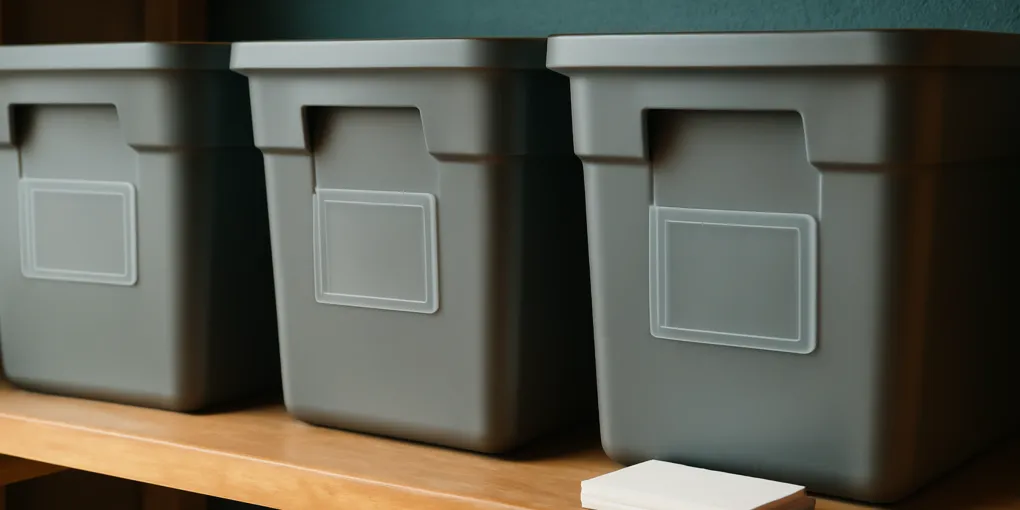
Storage labels fail for a predictable reason: the category changes before the adhesive does. A sticker that says winter hats is fine until the same tote becomes pool towels, gift wrap, or spare extension cords. Adhesive label pockets solve that problem by separating the holder from the words. The sleeve stays on the bin, and the insert card changes as the storage job changes.
Use this best adhesive label pockets for storage bins product comparison as the shopping shortlist, then check the measurements, mounting limits, cleaning friction, and return terms against the room or cabinet described below.
The best adhesive label pockets for storage bins are clear sleeves with a side or top opening, a strong full-back adhesive, and enough room for a readable card. Choose them for smooth plastic totes and pantry bins. Use magnetic label holders on metal shelves, and use clip-on label holders for fabric cubes or woven baskets where adhesive will not hold.
If your shelf categories are still unsettled, start with the lower-commitment method in our how to label storage containers guide before labeling every bin in the house.
Quick picks for bin labels that can change
- Best overall: Search Amazon for clear adhesive label pockets. Choose these for smooth plastic totes, pantry bins, and seasonal storage that changes once or twice a year.
- Best for metal shelves: Search Amazon for magnetic shelf label holders. Choose these when the label belongs on the shelf edge instead of the bin.
- Best for soft bins: Search Amazon for clip-on bin label holders. Choose these for fabric cubes, rope baskets, or bins with a thick front lip.
Do not buy a label pocket until you know where the eye lands when someone returns the item. A label on the lid is useful for stacked totes. A label on the front is better for shelves. A label on the shelf edge is better when multiple small bins rotate in the same position.
Clear adhesive label pockets
Clear adhesive pockets are the default pick for smooth storage bins because they make the label replaceable without making the whole system temporary. The pocket protects the card from finger oils, garage dust, and light pantry spills. A white or pale card inside the clear sleeve also creates better contrast than writing directly on a dark tote.
Look for a pocket opening that matches how the bin is handled. A top-loading pocket is easy to change when the bin front stays upright. A side-loading pocket can be safer on bins that tilt forward because the card is less likely to slide out. Avoid pockets with tiny insert cards if the bin sits below knee height or above shoulder height.
Shopping option: Search Amazon for clear adhesive label pockets.
Where adhesive pockets work best
Adhesive pockets work best on smooth plastic, painted metal, finished wood, and laminated shelf fronts. Clean the surface first, let it dry, and press the full pocket surface from the center outward. Cold garages can make adhesive less reliable, so apply labels indoors or during a warm part of the day when possible.
They work poorly on dusty totes, rough wicker, raw wood, fabric cubes, and pebbled plastic. On those surfaces, use a clip, tie-on tag, or shelf-edge label. The failure mode is not just falling off; a half-loose pocket curls, catches on hands, and makes the bin look worse than no label.
What to check before buying adhesive label pockets
Size is the first filter. A pocket that fits a business card may look neat up close, but it can be unreadable on a garage shelf or high closet bin. For deep shelves, choose a card height that lets you write two or three large words, not a sentence. If the label needs a paragraph, the bin category is probably too broad.
Opening direction matters more than most listings admit. Top-loading pockets are convenient on upright bin fronts and pantry bins because the insert drops in from above. Side-loading pockets are safer on bins that tilt forward, slide off shelves, or get carried by the front lip. If children pull bins toward themselves, avoid an opening that lets the card fall out every time the bin tips.
Adhesive coverage is the third check. Full-back adhesive usually resists corner curl better than a narrow adhesive strip. Rounded pocket corners are also helpful in garages and kids’ closets because sharp corners catch sleeves, gloves, and bin handles. If the listing does not show the back of the pocket, assume you may need to test one before labeling an entire storage wall.
Match the label holder to the storage surface
For smooth lidded plastic totes, clear adhesive pockets are the cleanest solution because the label travels with the tote. Put the pocket on the short end if totes sit like drawers on shelves, and put it on the long side if they sit side by side. For stacked holiday or camping totes, a lid label can help, but front labels are still easier to read before lifting anything.
For metal shelving, magnetic label holders often beat adhesive pockets. The shelf position is the thing that stays stable, while the bin may rotate. Magnetic holders also let you relabel a whole garage bay without scraping adhesive from metal. They are a poor choice for plastic totes because they need a magnetic surface to do any useful work.
For fabric cubes, rope baskets, and woven bins, clip-on holders are usually the better buy. Adhesive pockets peel from textured fabric and leave lint on the glue. A clip-on frame also keeps the label visible when the fabric flexes. Check the bin lip thickness before ordering because some clips are designed for thin file boxes, not chunky woven baskets.
Pantry, garage, and seasonal-storage examples
In a pantry, label pockets work best on bins that hold categories such as baking extras, lunch-box snacks, tea, or backup condiments. Use a wipeable card or replaceable paper insert, because pantry categories change with school schedules and grocery habits. Keep labels on the front face where a hand naturally pulls the bin.
In a garage, use larger cards and stronger contrast. A label that looks readable in the kitchen may disappear in a dim utility shelf. For heavy categories such as extension cords, paint supplies, and tool batteries, label the bin but also avoid storing the heaviest bins above shoulder height. The label should make retrieval safer, not encourage overfilled upper shelves.
For seasonal storage, label pockets help when the same tote changes from winter accessories to pool gear or from gift wrap to party supplies. Keep a few blank insert cards near the storage zone so renaming happens during the reset, not months later when nobody remembers what moved.
When a different label system is better
Choose printed sticker labels for permanent categories such as tax records, spare filters, or archived photos where the name is unlikely to change. Choose painter’s tape or removable freezer tape for short experiments that may last only a week. Choose tie-on tags for baskets with handles or open bins that need a label but have no flat surface.
The strongest signal that adhesive pockets are the wrong purchase is repeated surface failure. If one test pocket peels from a bin after a few days, do not solve that by applying twenty more. Switch to a clip, shelf-edge holder, or tag before the labeling system becomes its own clutter.
Fit checks that matter
Compare label holders using the reader-fit model: fit, evidence, value, owner friction, and clear product limits.
For adhesive label pockets, Research rewards whether the format solves a real category-change problem rather than just decorating bins. Evidence Quality focuses on observable traits: sleeve size, opening direction, adhesive coverage, card contrast, and surface compatibility. Value considers how many readable labels a pack provides for the price. User Signals focus on curling, card slippage, and whether other household members can read the label from the shelf distance. Transparency rewards listings that show dimensions and compatible surfaces clearly.
Setup protocol
- Empty one shelf or one storage zone, not the whole room.
- Group contents into categories that fit the actual bins.
- Write short card names such as batteries, dog gear, winter gloves, or cake tools.
- Clean and dry the label surface.
- Apply one pocket per bin in the same position.
- Load the card after the pocket is pressed flat.
- Recheck after one week and rename any category that confused someone.
The one-week check matters because the best label is not the prettiest label. It is the label that makes the next return obvious.
Label pocket buying questions
Should label pockets go on the bin or the shelf?
Put the label on the bin when the bin moves between rooms or shelves. Put the label on the shelf edge when the bin position matters more than the container, such as a pantry row or garage hardware shelf.
Can I print the insert cards?
Yes. Printed cards are easier to read from a distance, especially in a garage or closet. Use large plain text and avoid script fonts for categories that several people use.
What if the pocket starts peeling?
Remove it before it collects dust under the edge. Clean the surface, switch to a larger full-back adhesive pocket, or use a clip-on holder if the bin texture is the problem.
Are chalk labels a better choice?
Chalk labels are useful for decorative baskets and temporary categories, but they smudge more easily. Use label pockets when the category should stay legible through repeated handling.
Sources
- McMains, S. A., and Kastner, S. (2011). Interactions of top-down and bottom-up mechanisms in human visual cortex. DOI: 10.1523/JNEUROSCI.3766-10.2011.
- American Academy of Pediatrics. Preventing furniture and TV tip-overs: https://www.healthychildren.org/English/safety-prevention/at-home/Pages/Preventing-Furniture-and-TV-Tip-Overs.aspx. Labeling should not encourage overloading upper shelves or unstable furniture.
Frequently Asked Questions
- They are better when bin categories change because the sleeve stays in place and only the insert card changes. Stickers are better for permanent categories.
- Usually, if the tote is smooth, clean, dry, and room temperature during application. They are less reliable on pebbled plastic, dusty garage bins, or cold outdoor storage.
- Choose a pocket large enough for a two- or three-word category readable from the normal shelf distance. Many households do better with fewer large labels than many tiny labels.
- Yes, but place them where hands do not rub the edge each time the bin is pulled. For frequently washed containers, use removable inserts in a bin clip instead.