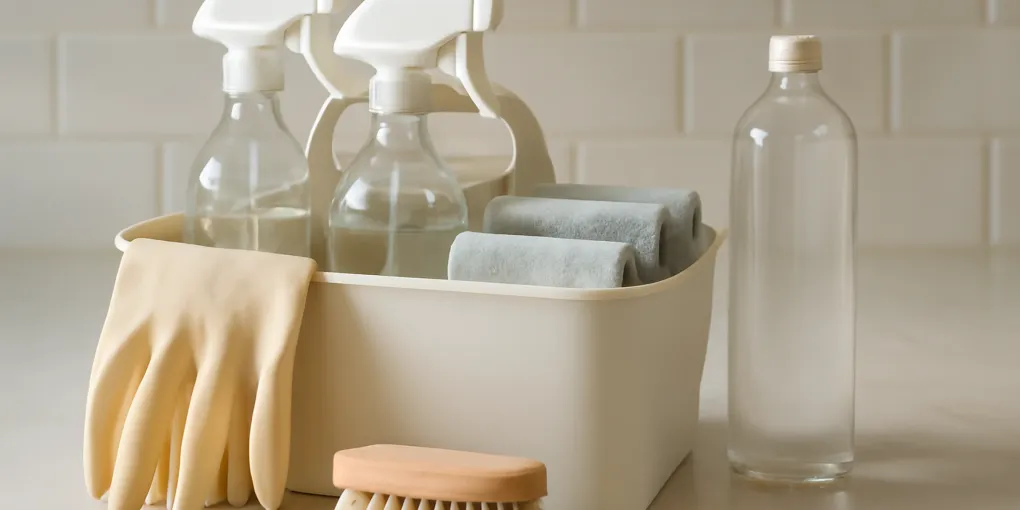
Best Cleaning Caddy Systems for a 15-Minute Weekly Reset
Buyer's GuideRubbermaid Deluxe Carry Caddy
Best sturdy open caddyBest For: Households that want one durable tote for sprays, cloths, gloves, and brushes
Quick picks
| Product | Key Specs |
|---|---|
| See price on Amazon |
|
| See price on Amazon |
|
| See price on Amazon |
|
| See price on Amazon |
|
Product availability, certifications, and retailer details can change; check the current Amazon page before buying.
A good cleaning caddy does one job: it makes the next 15-minute reset easier to start. It should not hold every chemical in the house. The best setup keeps the high-frequency items together, separates damp cloths, and gives you a quick inventory check before the weekend reset begins.
This guide focuses on portable systems for kitchens, bathrooms, entries, and small apartments. If your issue is damp cloth odor under the sink, read why damp cleaning cloths smell under the sink. If laundry is the reset bottleneck, use the weekend laundry reset system.
Quick picks
- Sturdy open tote: Search Amazon for Rubbermaid Deluxe Carry Caddy if you want one durable reset kit.
- Lightweight caddy: Search Amazon for Casabella Infuse Storage Caddy if you need a simple portable tote.
- Detail-brush add-on: Search Amazon for OXO Good Grips Deep Clean Brush Set for faucet edges, lid grooves, and grout touch-ups.
- Cloth refill: Search Amazon for MR.SIGA microfiber cleaning cloth packs if clean cloths are the missing step.
Compare current dimensions, handle strength, bottle height, seller terms, and return policy before buying. The right caddy should fit its storage shelf while loaded, not just look tidy in a product photo.
What a reset caddy should hold
The weekly caddy should hold the supplies used in the first 15 minutes of a reset, not the supplies used for rare deep cleaning. Start with:
- One all-purpose cleaner appropriate for the surfaces you actually wipe.
- One bathroom cleaner or disinfecting product if that is part of your routine.
- Four to eight microfiber cloths.
- One pair of reusable gloves.
- One small scrub brush or detail brush.
- A few small trash bags or liner bags.
- A folded checklist or refill card kept dry in a sleeve or clipped outside the caddy.
The EPA Safer Choice program is a useful reference when comparing cleaning-product labels and safer-chemistry claims (EPA Safer Choice). Product labels still matter. Follow contact times, surface warnings, ventilation instructions, and child-safety storage directions.
How to choose the caddy
Open tote
An open plastic tote is best for most homes because bottles are visible and easy to remove. Choose a handle that feels solid when loaded. Check that your tallest spray bottle clears the shelf where the caddy will live. If the tote is too wide to store near the action, it will stop being used.
Divided caddy
A divided caddy helps keep clean cloths away from brushes and gloves. It is useful when different people do the reset because the layout teaches the routine. The downside is that molded dividers may not fit oversized bottles.
Rolling cart
A rolling cart is helpful for larger homes, mobility constraints, or apartments where the cleaning kit moves between rooms. It is not ideal for tight bathrooms or homes with stairs. If you choose a cart, keep the top shelf as the active caddy and the lower shelves for refills.
Under-sink bin
An under-sink bin can work when space is limited, but it needs a moisture check. Avoid trapping damp cloths or leaky bottles in a closed bin. If the cabinet has plumbing leaks, pest activity, or child-access concerns, use a different location.
Practical score
| Factor | Weight | What matters |
|---|---|---|
| Start speed | 30% | The caddy can be grabbed and used without searching for cloths or gloves. |
| Product fit | 25% | Bottles stand upright and the handle remains comfortable when loaded. |
| Damp-item control | 20% | Used cloths and wet brushes have an exit path after cleaning. |
| Safety storage | 15% | Products stay away from children, pets, heat, and food-contact clutter. |
| Refill visibility | 10% | Low supplies are noticed before the next reset. |
The strongest caddy is usually boring: open, washable, easy to carry, and small enough that it does not become chemical storage.
Build a 15-minute reset kit
- Put only weekly-use products in the caddy.
- Add clean cloths in one color for general surfaces and a different color for bathroom tasks.
- Clip gloves to the handle so they dry before storage.
- Put small brushes in a cup or side compartment so bristles do not sit in liquid.
- Add a tiny refill card with checkboxes for cloths, spray, gloves, and trash bags.
- Store refills separately from the active caddy.
After the reset, remove damp cloths immediately. A sealed caddy full of wet cloths creates odor and makes the next reset unpleasant.
What not to put in the weekly caddy
Do not store bleach, ammonia, specialty solvents, drain cleaners, bug sprays, and rarely used chemicals in the weekly tote by default. They increase risk and weight without making the reset faster. Keep specialty products in a safer, labeled storage area according to product instructions.
Do not mix products in unlabeled spray bottles. If you use refillable bottles, label contents clearly and keep the original product directions accessible. Never combine cleaning products unless the label specifically says to do so.
Best caddy by household type
Small apartment or dorm
Choose the smallest open tote that holds one spray bottle, one cloth stack, gloves, and a detail brush. A compact Casabella-style caddy or similar lightweight tote is usually enough. Store refills somewhere else so the active kit can fit under a sink, on a laundry shelf, or in a closet without rearranging the whole space.
The key apartment test is noise and travel distance. If the caddy has to cross the unit for every task, it should be light enough to carry with one hand and stable enough that bottles do not tip in a hallway.
Family kitchen and bath reset
Use a sturdier Rubbermaid-style open caddy with a central handle and enough floor space for upright bottles. Families tend to need more cloth separation because bathroom, kitchen, pet, and food-prep areas should not share dirty cloths. Add a small washable bag or separate bin for used cloths so they leave the caddy immediately after the reset.
This is where color-coded microfiber cloths help. The color system does not have to be perfect. It just needs to stop the same cloth from moving from toilet exterior to counter to table.
Detail-cleaning kit
If your weekly reset often stalls on faucet bases, lid grooves, appliance handles, and sticky edges, add a small detail brush set instead of more spray bottles. OXO-style small brushes are useful because they solve friction points that a cloth misses. Let brushes dry before storing them so the caddy does not develop odor.
Mobility or whole-house reset
A rolling cart can make sense when carrying a loaded caddy is physically difficult or when the reset covers several rooms on one level. Keep the top shelf as the active kit and lower shelves for dry refills. Avoid using the cart as a general storage wagon. Once paper towels, tools, laundry, and mail join the cart, it stops functioning as a cleaning system.
Setup mistakes that make a caddy fail
The first mistake is buying a caddy before choosing the reset route. Walk the route first: kitchen counter, sink, stove front, table, bathroom sink, mirror, entry floor, trash. The caddy should support that route. If you mostly wipe counters and sinks, you do not need a giant mop bucket. If you mostly clean glass and dust shelves, cloth capacity matters more than bottle capacity.
The second mistake is storing wet items in the active kit. Used microfiber cloths, wet gloves, and damp brushes need a drying or laundry path. Put a small laundry bag near the caddy location or carry used cloths directly to the hamper after the reset. This one habit prevents most caddy odor.
The third mistake is duplicate products. Three half-used sprays make the kit heavy and slow. Keep one active bottle, one refill area, and one shopping note. When the active bottle is low, move the refill into the caddy and add the product to the next shopping list.
The fourth mistake is ignoring where the caddy dries. A weekly kit that lives on a wood shelf, under a slow plumbing drip, or inside a closed cabinet with wet gloves will age badly. Put a washable tray, boot mat, or spare towel under the storage spot if bottles sometimes sweat or drip. If the caddy must live under a sink, check that cabinet during the reset before returning supplies.
Cleaning caddy FAQ
Is a bigger caddy better?
Usually no. A bigger caddy invites duplicate bottles and rare products. Choose the smallest tote that holds the weekly kit upright and leaves room for your hand to lift bottles without knocking over cloths.
Where should the caddy live?
Store it near the first reset zone, often the kitchen, laundry area, or utility closet. The best location is safe, dry, and close enough that starting takes less than a minute during normal weekly use.
How many microfiber cloths do I need?
Four to eight is enough for many weekly resets. Use more only if you separate bathroom, glass, kitchen, and dusting tasks by color or room.
Sources
Frequently Asked Questions
- Keep one general cleaner, one bathroom-safe product if needed, microfiber cloths, gloves, a small brush, trash bags, and one refill reminder. Do not overload it with rarely used chemicals.
- Only if they are safe, used often, and kept away from children or pets. A portable caddy can reduce duplicate bottles and make inventory easier.
- Empty used cloths after every reset, wipe the base weekly, and remove expired, leaking, or duplicate products.