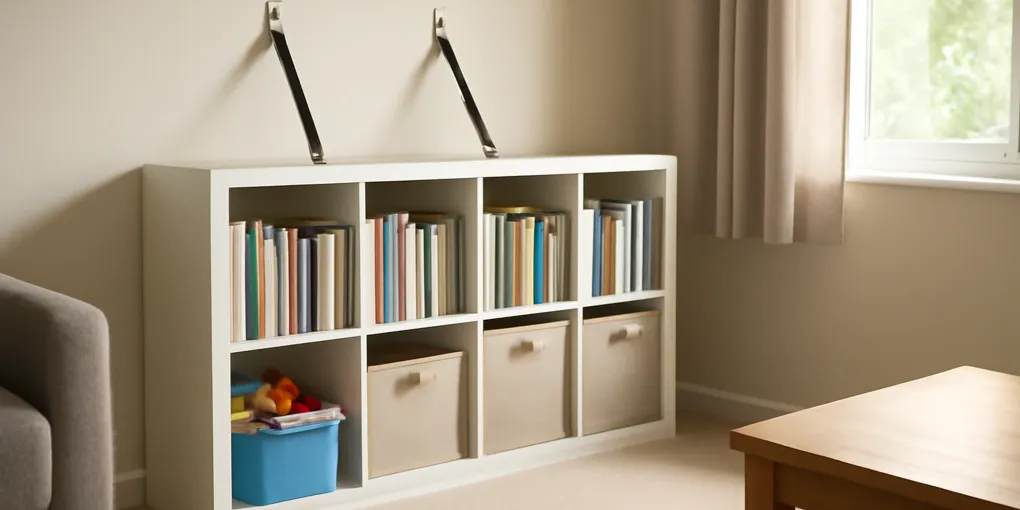
Best Furniture Anchor Kits for Dressers and Bookcases: Safer Storage That Still Looks Tidy
Buyer's GuideHangman Products TK400 furniture anti-tip kit
Quick picks
| Product | Key Specs |
|---|---|
| See price on Amazon | — |
| See price on Amazon | — |
| See price on Amazon | — |
Product availability, certifications, and retailer details can change; check the current Amazon page before buying.
Furniture anchor kits are not decorative organizing accessories. They are small pieces of safety hardware that keep storage furniture from becoming a climbable hazard. If a dresser, bookcase, cube shelf, or toy unit is heavy enough to hurt someone, it deserves a different buying standard than a basket or label clip.
This guide is for homes where storage furniture is already part of the clutter system: toy cubes in a living room, a dresser in a child room, a hallway bookcase, or a media cabinet that collects games and remotes. If the entryway floor is the problem, start with the hallway drop zone protocol. If small parts are hiding in toy bins, use the toy small-parts quarantine bin protocol first.
Quick picks
- Best low-profile option: Search Amazon for Hangman anti-tip kits. Use this search when a cable-style or metal-bracket kit would be easier to tighten behind a dresser.
- Best multi-piece reset: Search Amazon for QuakeHOLD furniture straps. Use this for several shelves or dressers that need a same-weekend anchoring pass.
- Best nursery/kids-room search: Search Amazon for Safety 1st furniture straps. Use this when you want child-safety packaging and simple strap hardware.
What an anchor kit has to solve
A useful furniture anchor kit solves one job: it connects furniture to the wall strongly enough that normal storage use, drawer opening, and child climbing risk are reduced. Safe Kids Worldwide warns that furniture and TV tip-overs can injure children and recommends securing furniture and televisions to the wall (Safe Kids furniture tip-over prevention). Treat that as a hardware requirement, not a styling preference: a tidy cube shelf still needs restraint if it can climb, tip, or shed heavy bins.
That evidence changes the buying question. The best kit is not the one with the cleanest product photo. It is the one you can install correctly into your wall type and furniture material.
Best for dressers: cable or strap kits with real fasteners
Dressers are a priority because drawers create leverage. When several drawers are opened or a child climbs on the fronts, the center of weight shifts forward. A tidy dresser top does not fix that physics.
Choose a kit with screws for the furniture side and a wall-side fastener that can reach a stud or an approved wall anchor. Cable-style kits can be easier to tighten in a narrow gap behind the dresser. Strap-style kits can be simpler to understand. Either can work if installed according to the instructions.
Avoid adhesive-only fixes for heavy furniture. Adhesive pads may help route cords or hold light accessories, but a dresser anchor needs mechanical attachment.
Best for bookcases and cube shelves: multi-pack straps
Bookcases, cube organizers, and toy shelves often look stable because they are wide. The risk increases when heavy books, baskets, or bins are stored high, or when a child treats the lower shelves like steps.
A multi-pack strap kit makes sense if several storage pieces are in the same room. Anchor the tallest and heaviest unit first, then move to shelves that hold toys or attractive objects. When possible, put heavier bins low and lighter items high. The anchor is the safety layer; the loading pattern reduces the temptation and leverage that make the anchor work harder.
What to check before buying
| Check | Why it matters |
|---|---|
| Wall type | Studs, masonry, and hollow drywall need different fasteners |
| Furniture back | Thin fiberboard backs may not hold screws; use structural rails or solid panels |
| Gap behind furniture | Cable kits need room to tighten; straps need a clean route |
| Removal needs | Renters may need repairable screw holes and landlord approval |
| Quantity | Count every dresser, bookcase, cube shelf, and media unit before ordering |
Installation mistakes that create false confidence
The most common mistake is anchoring only to thin backing board. Many flat-pack shelves have a decorative back that is not meant to carry restraint load. Attach the furniture side to a solid top rail, side rail, or manufacturer-recommended point.
The second common mistake is installing a strap at an extreme angle because the furniture is not centered on a stud. A slight angle may be allowed by a specific kit, but a stretched diagonal strap can loosen or twist when the furniture moves. If the stud location is awkward, move the furniture a few inches, use a manufacturer-approved hollow-wall solution, or choose a different restraint style rather than forcing the hardware into a bad line.
The third mistake is anchoring after the room is fully styled and then refusing to move anything. Pull the unit out, work with light, inspect the back rail, and vacuum behind it before installation. A rushed blind install behind a loaded dresser is how screws miss structure and straps end up decorative.
Another mistake is missing the stud without using a proper wall anchor. A screw in drywall can feel tight at first and fail later. Use a stud finder, verify the location, and follow the kit directions for your wall.
A final mistake is installing the anchor while the furniture is still overloaded. Empty the top shelves and drawers first. Anchor the unit. Then reload with heavy items low and daily-use items at reachable height.
How to make anchored storage work better
Anchoring is not a license to store everything anywhere. Put heavy books, bins of blocks, toolboxes, and files on the lowest shelves. Use open bins for toys that children access often. Keep attractive climb targets, such as candy, remotes, tablets, and special toys, off the top of tall furniture.
For toy rooms, pair anchors with a low rotation bin. The toy rotation bin protocol reduces the number of visible toys on the shelf, which also reduces dumping and climbing pressure.
Room-by-room buying notes
In a nursery or child’s bedroom, start with dressers, changing tables, bookcases, and any storage unit that holds toys on high shelves. A child-access room is not the place to test a minimalist bracket with vague hardware. Choose a kit with clear instructions, enough screw length for the furniture side, and a wall-side connection you can verify.
In a living room, the common risk is a bookcase or media unit that slowly becomes heavier as games, baskets, books, and electronics accumulate. If the unit also holds a television, follow the TV and furniture manufacturer’s restraint guidance instead of assuming one furniture strap covers both jobs.
In a home office, file cabinets and tall bookcases deserve attention. Paper is heavy, and a shelf that looks half full can still carry a lot of weight. Anchor the furniture, then put files and printer paper low so the upper shelves hold lighter supplies.
What to buy with the anchor kit
A stud finder is often the missing tool. If you cannot locate structure reliably, the best strap kit will sit in a drawer. A small level helps keep paired brackets aligned. A pencil, drill bits, and the correct screwdriver bit reduce the temptation to improvise with the wrong fastener.
Do not buy decorative bins as a substitute for restraint hardware. Bins can improve loading and reduce climb targets, but they do not connect the unit to the wall. If the budget is tight, buy fewer decorative containers and anchor the risky furniture first.
When to replace an old anchor
Replace a strap or cable if it is frayed, cracked, missing screws, painted over, or no longer tight. Replace it after moving the furniture, because the old wall hole or angle may no longer match the new position. Recheck anchors after a room reset, a move, or a season when children start climbing, pulling drawers open, or using shelves differently.
Also replace hardware if the furniture use changes. A light display shelf that becomes board-game storage has a different load. A nursery dresser that becomes a toddler dresser has a different access pattern. The anchor is not a one-time checkbox; it should match the current room.
Furniture anchor FAQ
Do all dressers need to be anchored?
Prioritize any dresser in a child-accessible room, any tall dresser, and any unit with drawers that can be opened together. In practice, most dressers are worth anchoring because the cost and visual impact are small compared with the risk.
Can I anchor furniture without drilling?
For heavy furniture, no-drill promises should be treated cautiously. Meaningful anti-tip restraint usually requires screws into furniture plus a secure wall connection. If drilling is not allowed, ask the property owner or choose lower, less climbable furniture while you resolve permission.
Should the anchor be visible?
It can be slightly visible and still be the right choice. A hidden but poorly installed strap is worse than a visible, correctly installed one. Choose a low-profile kit only after confirming that it fits the wall and furniture.
Bottom line
Buy the furniture anchor kit you can install correctly, not the one that disappears best in photos. For dressers, bookcases, toy shelves, and media cabinets, the practical order is simple: count the risky pieces, buy enough mechanical anchor kits, install into solid structure, then reload heavy items low.
Frequently Asked Questions
- Anchor tall, heavy, climbable, or drawer-front furniture first: dressers, bookcases, cube shelves, media units, and storage pieces near toys.
- Some are easier to remove than others, but meaningful anti-tip restraint usually requires screws into furniture and a stud or approved wall anchor. Ask before installing in a rental.
- No. Bins can reduce climbing temptation and drawer overload, but they do not restrain a dresser or bookcase if it tips.