Command Large Utility Hook Review: Best Uses, Limits, and Failure Points
ReviewFTC disclosure: This article contains affiliate links. If you buy through Amazon links, ClutterScience may earn a commission at no extra cost to you.
Review Summary
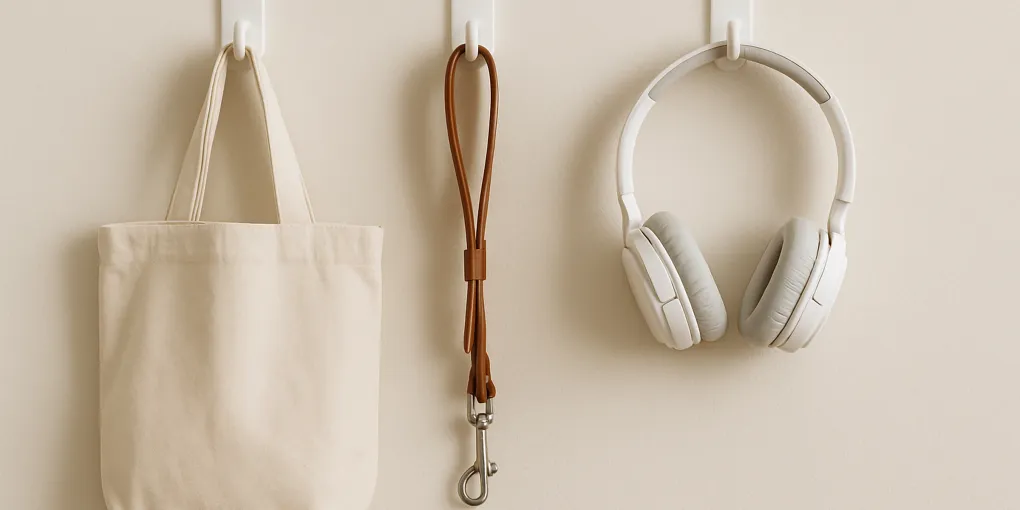
Command Large Utility Hooks are useful when you need a fast, renter-friendly place to hang light household items without drilling. They are best for temporary or low-risk organization: entryway accessories, dog leashes, lightweight bags, closet extras, office headphones, and seasonal decorations.
They are not structural hardware. If the item is heavy, valuable, breakable, or could hurt someone if it falls, use a properly mounted hook anchored to a stud or appropriate wall anchor.
Search for Command Large Utility HooksAffiliate link: we may earn a commission. This does not affect scoring., adhesive utility hooksAffiliate link: we may earn a commission. This does not affect scoring., or renter friendly wall hooksAffiliate link: we may earn a commission. This does not affect scoring.. These are Amazon search links rather than direct ASIN links because no live ASIN verification was performed during drafting.
Overall rating: 4.1 out of 5 for light, low-risk, renter-friendly organization.
Best for: renters, dorm rooms, temporary entry setups, closets, offices, and low-weight accessories.
Not best for: heavy backpacks, coats loaded with items, framed glass, shelves, tools, mirrors, humid bathrooms, textured walls, or anything safety critical.
What Command Large Utility Hooks Are Trying to Solve
Most clutter collects where a home lacks a quick hanging point. Dog leashes end up on counters. Headphones sit on desks. Reusable bags pile on the floor. Coats land on chairs. A utility hook solves that micro-problem by adding a visible, reachable home for one category.
The appeal of Command-style adhesive hooks is low commitment. You do not need a drill, stud finder, wall anchor, or landlord approval. Installation takes minutes, and removal is designed to be cleaner than screw holes when instructions are followed.
From an organization-science perspective, the hook works because it reduces friction. A visible hook is easier than opening a closet, finding a hanger, or clearing a shelf. When the intended behavior is faster than the clutter behavior, the system has a chance.
What Works Well
1. Low-friction storage
Hooks are among the fastest storage tools. They require one motion: hang the item. That makes them useful for categories people handle while tired, rushed, or carrying other things.
Good categories:
- Dog leashes.
- Lightweight tote bags.
- Baseball caps.
- Aprons.
- Headphones.
- Keys on a small ring.
- Light scarves.
- Measuring spoons or small kitchen tools.
- Seasonal decorations.
2. Renter-friendly testing
Adhesive hooks are excellent for testing a location before committing to permanent hardware. If you are not sure where bags should hang in an entryway, use adhesive hooks for two weeks. If the location works, upgrade to permanent hooks later.
3. Small-space flexibility
Apartments and dorms often lack mudrooms, utility closets, and built-in storage. Adhesive hooks can turn unused vertical surfaces into micro-storage without consuming floor space.
4. Clear visual cue
A hook communicates exactly what belongs there. This is an affordance advantage: the object shape suggests the action. Norman’s design work on affordances helps explain why hooks are easier to maintain than hidden storage for daily-use items.
What Does Not Work as Well
1. Adhesive failure is real
All adhesive hooks depend on surface prep, wall texture, paint quality, humidity, load, and time. A hook can be rated for a certain weight and still fail if installed on dust, textured paint, damp tile, or weak paint layers.
Follow the package instructions exactly. Clean the surface. Let it dry. Press for the required time. Wait the recommended curing period before hanging weight.
2. Weight ratings are not permission to max out
A manufacturer rating is not the same as real-world safety margin. A bag may weigh more after someone adds a laptop, water bottle, and books. A damp towel is heavier than a dry one. A child may tug on a hanging item.
Use adhesive hooks below their maximum rating, especially in high-traffic areas.
3. Not all surfaces are equal
Adhesive hooks are less reliable on:
- Textured drywall.
- Brick.
- Unfinished wood.
- Peeling or weak paint.
- Fresh paint.
- Damp bathrooms.
- Areas exposed to heat or steam.
For these surfaces, use permanent hardware or a freestanding organizer.
4. Removal can still damage walls
The damage-free claim depends on correct removal and suitable surfaces. Pulling outward instead of stretching the strip downward can tear paint. Old paint, poor prep, or fragile surfaces increase risk.
Best Use Cases by Room
Entryway
Use adhesive hooks for dog leashes, reusable bags, hats, and lightweight jackets. Avoid heavy backpacks unless the product rating and surface are appropriate, and even then use caution.
For heavier family entry systems, search for wall mounted coat hooksAffiliate link: we may earn a commission. This does not affect scoring. and mount them properly.
Closet
Use hooks inside closet walls or doors for belts, hats, lightweight bags, jewelry organizers, and outfit planning. Closet interiors are a strong use case because visual appearance matters less and the items are usually light.
Home office
Use hooks for headphones, cables, lanyards, and small bags. Keep them near the point of use. A hook behind the desk is useful only if you can reach it without crawling under furniture.
Kitchen
Use hooks for aprons, measuring spoons, potholders, or lightweight utensils. Avoid heavy pans, knives, glass items, or anything that could become a hazard if it falls.
Bathroom
Use only bathroom-rated adhesive products and assume a shorter reliability window. Humidity, steam, and wet textiles are hard on adhesive. For towels, a mounted towel bar or over-door rack is usually safer.
Installation Checklist
Before installing:
- Confirm the surface is allowed by the product instructions.
- Clean and dry the surface.
- Check that paint is cured, not fresh.
- Choose a spot where the item will not be bumped constantly.
- Confirm the item weight under real use.
During installation:
- Press firmly for the required time.
- Wait the recommended curing time before hanging items.
- Use one hook per item.
- Do not bridge one item across multiple adhesive hooks unless the manufacturer allows it.
After installation:
- Inspect the hook after the first day.
- Remove weight if the hook shifts.
- Reassess in humid or high-traffic areas.
Alternatives to Consider
Choose a different product when adhesive risk is too high.
- For heavy coats: wall mounted coat rackAffiliate link: we may earn a commission. This does not affect scoring..
- For doors: over door hooksAffiliate link: we may earn a commission. This does not affect scoring..
- For bathrooms: over door towel rackAffiliate link: we may earn a commission. This does not affect scoring..
- For garages: garage utility hooksAffiliate link: we may earn a commission. This does not affect scoring..
- For rentals with no wall mounting: freestanding coat rackAffiliate link: we may earn a commission. This does not affect scoring..
Verdict
Command Large Utility Hooks are worth using when the job is light, low-risk, and location-specific. They shine as quick behavior-design tools: add a hook exactly where clutter lands, and the intended behavior becomes easier.
They are not worth using when failure would matter. Do not use adhesive hooks for heavy bags, glass frames, mirrors, shelves, tools, or safety-critical items. In those cases, permanent hardware is the more honest solution.
For renters and small spaces, the best approach is to use adhesive hooks as a test system. If a hook location proves useful, keep it for light duty or upgrade to mounted hardware for heavier daily use.
How We Score Adhesive Hooks
ClutterScience uses a 30/25/20/15/10 weighted framework for product reviews:
| Factor | Weight | What we assess |
|---|---|---|
| Research | 30% | Whether the use case follows known behavior-design and household-organization principles |
| Evidence Quality | 25% | Whether manufacturer constraints, installation requirements, and real surface limitations are treated honestly |
| Value | 20% | Whether the product solves a specific clutter point without requiring permanent hardware |
| User Signals | 15% | Whether the product is likely to survive normal handling, traffic, humidity, and household variation |
| Transparency | 10% | Whether limits, failure risks, and affiliate-link assumptions are clearly stated |
Command Large Utility Hooks score well for low-risk, light-duty organization because they make the desired behavior easy. They lose points for surface sensitivity and failure consequences. Adhesive convenience is useful, but it should never be confused with structural reliability.
Hands-On Use Case Evaluation
Best use: leash and lightweight bag station
A hook near the door can stop small daily items from landing on counters. This is the highest-value use case because the hook sits at the moment of transition. The item is light, the action is fast, and failure is unlikely to cause serious damage.
Good use: closet accessory overflow
Inside closets, adhesive hooks work well for belts, hats, scarves, and tote bags. The items are light, the wall is usually protected from bumps, and a failed hook is less likely to damage something fragile.
Moderate use: home-office headphones
Headphones are usually light enough, and the hook can free desk space. The risk is placement. A hook mounted where knees, chair backs, or cables hit it repeatedly may fail sooner.
Weak use: loaded backpacks
A backpack may look light when empty, but real backpacks accumulate laptops, water bottles, chargers, and books. The dynamic load from grabbing and tugging also matters. For backpacks, mounted hooks or a freestanding rack are safer.
Poor use: bathroom towels
Wet towels are heavy, and bathrooms add humidity. Unless the product is specifically bath-rated and installed on a suitable surface, this is a weak use case. Even then, towel bars or over-door racks usually provide a wider safety margin.
Failure-Prevention Rules
Use adhesive hooks as a convenience product, not a trust product. Follow these rules:
- Keep the actual load well below the stated maximum.
- Do not hang glass, framed art, mirrors, knives, tools, or electronics that could break.
- Avoid surfaces with texture, dust, moisture, or weak paint.
- Wait the full curing time before adding weight.
- Use multiple hooks only if the product instructions allow the load pattern.
- Replace strips after removal rather than reusing adhesive.
The most common mistake is treating a weight rating as a guarantee. It is better to reserve adhesive hooks for items where a fall would be inconvenient, not costly.
Buyer Guidance
Buy adhesive hooks when:
- You rent or cannot drill.
- You need a temporary test location.
- The item is light and non-breakable.
- The surface is smooth and allowed by the instructions.
- You want to reduce clutter at a specific point of use.
Skip adhesive hooks when:
- The item is heavy, valuable, fragile, or sharp.
- The room is humid.
- The wall is textured or peeling.
- The hook will be bumped constantly.
- A child may pull on the hanging item.
Long-Term Verdict
The best way to think about Command Large Utility Hooks is as a low-commitment behavior test. If a hook fixes a clutter point for light items, keep using it. If that location becomes essential or starts holding heavier objects, upgrade to screwed-in hardware. This protects both the wall and the belongings.
Sources
- Norman, D. A. (2013). The Design of Everyday Things. Basic Books. Used here for affordance and friction principles in daily-use storage.
- Gollwitzer, P. M. (1999). Implementation intentions: Strong effects of simple plans. American Psychologist. DOI: 10.1037/0003-066X.54.7.493.
- 3M Command product instructions and surface-preparation guidance. Always follow current package instructions for weight ratings, surfaces, installation, and removal.
Frequently Asked Questions
- They are worth it for light, low-risk items in rentals, dorms, offices, and temporary organization setups. They are not a substitute for screwed-in hooks when items are heavy, valuable, fragile, or safety critical.
- Weight ratings vary by product size and surface. Follow the current manufacturer packaging for the exact rating, and build in a safety margin. Do not hang items near the stated maximum if failure would damage the item or injure someone.
- They work best on clean, smooth, painted drywall, tile, metal, finished wood, and glass when installed according to instructions. They are less reliable on textured walls, damp areas, dusty surfaces, brick, unfinished wood, and recently painted surfaces.
- Use caution. Humidity, steam, and wet towels increase load and reduce adhesive reliability. For bathrooms, choose products specifically rated for bath or water-resistant use and avoid hanging anything breakable.
- This draft uses Amazon search links because no live ASIN verification was performed during drafting. ClutterScience does not fabricate ASINs.