Hand-Me-Down Clothing Rotation Protocol: Sort by Size, Season, and Safety
ProtocolQuick picks
| Product | Key Specs |
|---|---|
| See price on Amazon |
|
| See price on Amazon |
|
Product availability, certifications, and retailer details can change; check the current Amazon page before buying.
A bag marked “kids clothes” hides too many decisions. It may contain three sizes, two seasons, stained playwear, sentimental pieces, recalled products, and clothes intended for a child who will not reach that size for years. The bag is not inventory; it is postponed sorting.
A workable hand-me-down rotation has four gates: safe, usable, likely to fit the next wearer, and small enough to fit the household’s storage limit. Clothing that fails a gate leaves through donation, textile recycling, or disposal as appropriate.
The U.S. Consumer Product Safety Commission’s reseller guide explains that recalled products cannot legally be sold and gives secondhand sellers a product-screening process (CPSC Resellers Guide to Selling Safer Products). The same check is useful before donating or handing down children’s goods: identify the product, search for safety notices, and follow any recall remedy instead of passing the item along.
Start with four destinations
Set out four clearly separated destinations before opening old bags:
- Keep for a named child.
- Give to a named family or friend.
- Donate if accepted and usable.
- Textile recycle or discard.
Add a fifth, small sentimental container only if you genuinely keep clothing as a keepsake. A hospital outfit or handmade sweater should not force a whole bin of ordinary pajamas to become archival storage.
Step 1: screen for safety before sentiment
Check current CPSC safety notices when an item has a brand and model or distinctive product name, especially for:
- Children’s outerwear with neck or waist drawstrings.
- Heated, light-up, or battery-equipped garments and accessories.
- Sleepwear with missing or unreadable care and safety information.
- Clothing with loose snaps, magnets, decorative pieces, or broken fasteners.
- Wearable carriers, costumes, flotation products, or protective equipment mixed into clothing bags.
Do not donate a recalled item. Follow the recall remedy or disposal instructions. Do not assume a thrift store will catch it later.
Also reject items with mold, pest evidence, strong unremovable odor, deteriorated elastic, sharp hardware, broken zippers, or cords that create an obvious hazard. Used underwear, socks, and heavily worn shoes often have little hand-me-down value even when they look tidy in a bag.
Step 2: sort by next wearer, not original owner
Make a pile for each named recipient. “Maybe somebody” is not a recipient. If there is no likely wearer within a reasonable period, move usable pieces to the give or donate route.
Ask:
- Will the child reach this size in the matching season?
- Does the recipient’s household actually want this category?
- Is the fabric, closure, and care demand practical for them?
- Is the item better than what they already own?
A winter coat that fits by age but will be too small by winter is not a keeper. Neither is a dry-clean-only party outfit passed to a family that asked for washable play clothes.
Step 3: use one size and one season per block
Sort keepers into blocks such as:
- 3T warm weather.
- 3T cold weather.
- 4T pajamas and base layers.
- Youth small school basics.
Do not rely only on the manufacturer’s size. Children’s brands vary. For uncertain pieces, compare the garment with one current well-fitting item or record a simple chest width and inseam. Remove anything that clearly duplicates five other pieces.
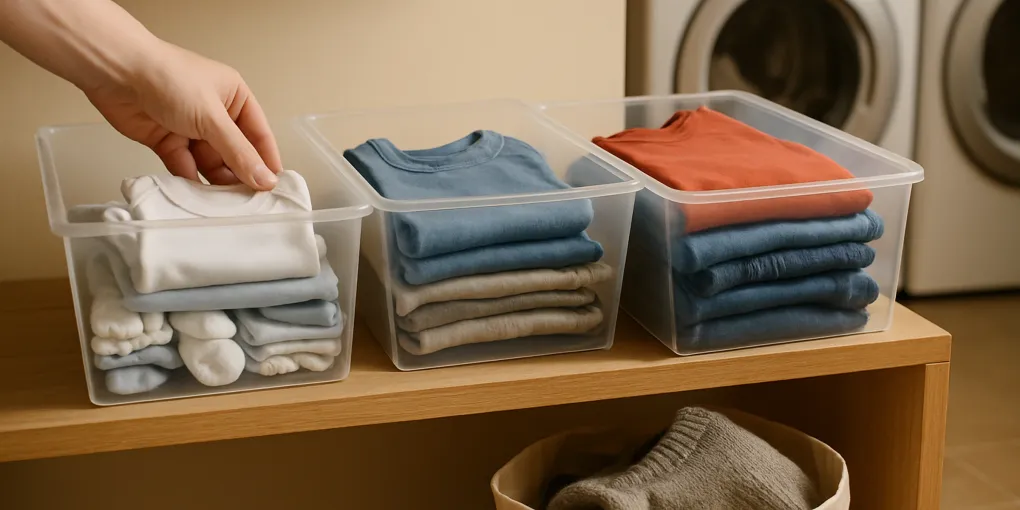
Check clear latching storage bins 32 quart on Amazon. Use one bin for one bounded block. Measure the shelf first. A giant tote encourages mixing and becomes awkward to retrieve.
Step 4: wash, dry, and inspect before storage
Store only clean, fully dry clothing. Treat stains before packing because heat and time can make them harder to address later. Check pockets, close hooks that could snag fabric, and make sure no damp swimwear or bib is hiding in the pile.
Avoid adding fragranced dryer sheets or pest products without considering sensitivities and product directions. Do not seal clothing with visible moisture. A clear bin helps with contents, but it does not prevent mildew caused by damp fabric or a humid storage location.
Step 5: tag the bin for retrieval
A useful bin tag includes:
- Size.
- Season.
- Main contents.
- Intended wearer.
- Date packed.
- Next review month.
Check clip on storage bin tags reusable on Amazon. They work well when bins change jobs. Put the tag on the aisle-facing edge. A beautiful tag facing the wall does not help during a growth spurt.
Example: “4T, cold weather, tops and pants, for Maya, packed July 2026, review January 2027.”
Step 6: create a live outgrown basket
Place one small basket near the child’s dresser or laundry area. When a garment becomes too small, put it there after laundering instead of returning it to the drawer. The basket is a short queue, not storage.
Process it when full or once a month:
- Inspect condition.
- Check whether it has a named next wearer.
- Add it to the correct existing size-season bin.
- Give, donate, recycle, or discard everything else.
Do not start a new storage bin for two shirts. Wait until a coherent block exists, or pass them along promptly.
Step 7: make giving easier for the recipient
Before handing over clothes, ask what sizes and categories are wanted. Give a bounded bag with an honest contents note and a pickup deadline. Do not transfer a mixed household purge and call it a gift.
A useful handoff might say: “One bag of 4T summer shirts and shorts, washed, no shoes or pajamas. Please take what works and pass on the rest.”
For mailed hand-me-downs, compare shipping cost with the value and availability of the clothes. Bulky low-value basics may be more useful donated locally.
Storage limits that prevent a clothing archive
Choose a limit based on the actual shelf, not an imagined future need. Examples:
- One bin per upcoming size-season block.
- No more than two future sizes per child.
- One sentimental clothing box for the whole family.
- One-month limit for promised pickup bags.
Review every six months and before each season change. If a younger child has already passed a size, that bin should not remain in rotation.
Keep, pass, or remove checklist
Keep only when all are true:
- No known recall or unresolved safety concern.
- Clean, dry, and in wearable condition.
- Correct likely size and season.
- Named recipient wants or needs it.
- Fits the storage limit.
- Bin can be found without opening several others.
Hand-me-down organization succeeds when the next child receives useful clothing at the right time. It fails when the storage system preserves every possibility but serves no actual wearer.
Sources
- U.S. Consumer Product Safety Commission, Resellers Guide to Selling Safer Products: https://www.cpsc.gov/s3fs-public/ResellersGuide.pdf
Frequently Asked Questions
- Keep them only when there is a named likely wearer, the size and season align, the item is in usable condition, and storage has a fixed limit. Review each bin every six months.
- Yes. Check recalls for garments or accessories with safety features, cords, fasteners, batteries, sleepwear requirements, or other potential hazards, and discard recalled items as directed.
- Sort first by destination, then store keepers in one-size and one-season blocks. Put the size, season, contents, date packed, and intended wearer on the bin tag.