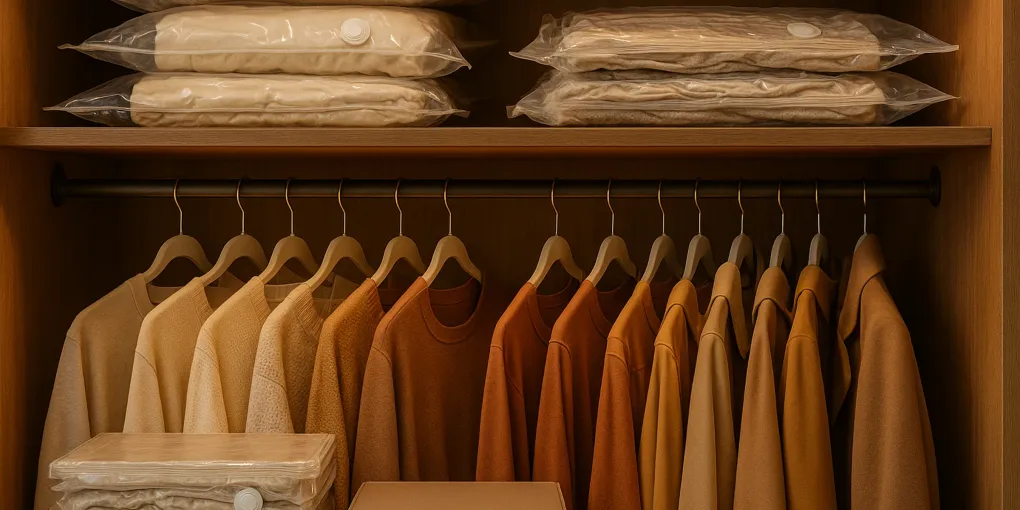
IKEA SKUBB Storage Case
Best seasonal fabric caseBest for: Sweaters, scarves, and off-season clothes under a bed or shelf
Quick picks
| Product | Key Specs | Pros / Cons |
|---|---|---|
| See price on Amazon |
|
|
| See price on Amazon |
|
|
| See price on Amazon |
|
|
Product availability, certifications, and retailer details can change; check the current Amazon page before buying.
Quick product shortlist
Use this shortlist to choose a product style before you measure. The links are named product or brand searches so you can compare current dimensions, finishes, prices, and return terms before buying.
- Best seasonal fabric case: IKEA SKUBB Storage Case (Search Amazon for IKEA SKUBB storage case) for sweaters, scarves, and off-season clothes under a bed or shelf. Watch-out: soft cases need dry storage.
- Best moisture-resistant tote: Sterilite Gasket Box (Search Amazon for Sterilite gasket box seasonal clothes) for basement or garage-adjacent clothing storage where dust is a concern. Watch-out: avoid damp storage and overpacking.
- Best hanging rotation: Whitmor Garment Bag (Search Amazon for Whitmor garment bag clothes storage) for coats, dresses, and formal clothing that should stay hanging. Watch-out: needs closet rod space.
Why Seasonal Wardrobe Rotation Is a Habit Worth Building
Quick picks
These are the products referenced in the guide; check dimensions, material, and installation limits before ordering.
- Space Saver Vacuum Storage Bags (8-Pack, Jumbo + Large): See current price on Amazon
- IRIS USA Clear Storage Box with Buckle Down Lid (6-Pack, 19 Qt): See current price on Amazon
- Household Essentials Cedar Hang-Up Balls (20-Pack): See current price on Amazon A seasonal wardrobe rotation — systematically moving current-season clothing to accessible locations and storing off-season clothing — is one of the highest-return organizational practices available to households with limited closet space.
The average American owns significantly more clothing than they have closet space to organize comfortably. When both summer and winter wardrobes share a single closet year-round, the closet operates at maximum density for twelve months — making everything harder to access, harder to see, and harder to maintain. Seasonal rotation reduces the active closet to half its total wardrobe, creating the breathing room that allows each piece to be visible, accessible, and regularly worn.
Behavioral research on decision-making (Iyengar & Lepper, 2000) demonstrates that having too many options degrades choice quality — the “paradox of choice.” Applied to clothing, a closet containing 200 items produces worse daily outfit decisions and lower satisfaction than a closet containing the 100 items relevant to the current season. Seasonal rotation creates the reduced-choice environment that makes daily wardrobe decisions faster and more satisfying.
This guide provides a complete seasonal wardrobe rotation system for 2026, including timing, process, storage solutions, and maintenance.
Before You Rotate: The Seasonal Assessment
Each seasonal rotation is an opportunity for a keep/donate assessment of the outgoing season’s clothing. This assessment, performed at rotation time rather than during a separate dedicated declutter session, makes the keep/donate process significantly easier because you have direct behavioral data: you just completed a full season and know which items you actually wore.
The outgoing season assessment:
As you remove each item from the active closet for storage, ask: “Did I wear this during the season that just ended?”
- Worn regularly: Clean and store for next year
- Worn occasionally: Clean and store, noting that it’s a borderline item
- Not worn at all: Direct donation candidate — one full season of non-use is strong evidence that the item doesn’t fit your actual wardrobe
This assessment, performed at rotation time, requires no additional dedicated declutter session and uses the most reliable data available: your actual behavior over the past several months.
The incoming season assessment:
As you retrieve items from off-season storage, apply a quick filter: does this still fit? Is it still in good condition? Would I buy this today if I saw it in a store? Items that fail any criterion donate rather than return to the active closet.
Step 1: Gather Your Supplies
A smooth seasonal rotation requires having the right storage materials ready. Attempting to rotate without appropriate storage tools leads to improvised solutions (garbage bags, random boxes) that damage clothing and create disorganized storage.
Recommended supplies:
- Vacuum storage bags (for bulky knits, sweaters, down coats)
- Breathable cotton or non-woven fabric storage bags (for structured garments, suits, dresses)
- Clear lidded bins or cedar chest (for folded items)
- Cedar blocks or lavender sachets (for moth deterrence in non-airtight storage)
- Labels or a label maker (for identifying bin contents)
- Garment steamer or iron (for de-wrinkling items before storage and after retrieval)
Step 2: Wash Everything Before Storage
Every item going into off-season storage must be clean. This is the single rule most commonly violated in seasonal wardrobe rotation — and the violation most commonly results in damaged clothing.
Why washing before storage matters:
Body oils, perspiration, and food residue invisible to the eye degrade fabric over months of storage. These residues also attract textile-eating moths and other pests. A lightly worn shirt that “seems fine” will emerge from six months of storage with set stains and potentially with moth damage if stored without washing.
Dry-clean items: Items requiring dry cleaning should be cleaned professionally before storage. Storing dry-clean-only items without professional cleaning concentrates soil and risks permanent fabric damage.
Shoes: Wipe down or brush shoes before storage. Leather shoes benefit from conditioning before extended storage. Store in their original boxes or fabric shoe bags, not in airtight sealed containers (leather needs to breathe).
Step 3: Sort Into Storage Categories
Before packing, sort the cleaned items into storage categories that will determine the storage method:
Category 1 — Bulky compressibles: Heavy sweaters, knit tops, down and puffer coats, fleece items. These benefit most from vacuum storage bags, which reduce their volume dramatically.
Category 2 — Delicate or structured items: Blazers, suits, structured dresses, formal wear. These should hang in breathable garment bags rather than being folded or compressed. Compression deforms structured garments.
Category 3 — Everyday folded items: Casual shirts, t-shirts, jeans, shorts, casual dresses that are not structured. These can be folded and stored in lidded bins or standard vacuum bags.
Category 4 — Accessories: Scarves, belts, seasonal hats, gloves. These can share bin space with folded clothing or be stored in a smaller dedicated bin.
Step 4: Pack for Storage
Vacuum bags for bulky items:
Load vacuum bags according to category, not overcrowding. Overfilling vacuum bags stresses the seams and reduces seal durability. Roll, don’t fold, items before placing in the bag — rolling removes air more completely than folding and reduces stress on fabric. Seal and vacuum according to the bag’s instructions. Label each bag with contents and storage year.
Bins for folded items:
Use the vertical filing method for bins as well as drawers — items folded and stood upright allow you to see everything in the bin at a glance when you open it, rather than having to dig through a flat stack. Label bins on the side (visible when stacked) and the top (visible when shelved). Include a cedar block inside each bin to deter moths.
Garment bags for structured items:
Hang structured items in breathable garment bags — not plastic dry-cleaning bags, which trap moisture and accelerate fabric degradation. Cedar blocks placed inside the garment bag provide moth protection.
Step 5: Choose and Prepare Storage Locations
Off-season clothing storage requires a location with:
- Stable temperature: Avoid garages (temperature extremes), attics in summer heat (extreme heat degrades fabrics), and damp basements (moisture causes mildew)
- Low humidity: Above-ground closets and spare bedrooms are ideal; below-grade spaces require a dehumidifier
- Darkness: Prolonged light exposure fades fabric colors
- Protection from pests: Cedar, lavender, or mothballs deter textile-eating insects
Ideal locations (in order of preference):
- Hall closet or guest room closet
- Under-bed storage in flat bins with lids
- Bedroom closet upper shelf (out-of-season items in clearly labeled bins)
- Dedicated chest (cedar chest is traditional and excellent for knitwear)
Avoid: Attic in warm climates (extreme heat), damp basement without dehumidifier, garage (temperature extremes and pests)
How We Score
ClutterScience evaluates products using a five-factor composite scoring methodology (30/25/20/15/10):
| Factor | Weight | What We Assess |
|---|---|---|
| Research | 30% | Depth of specification and user-report analysis and breadth of products reviewed |
| Evidence Quality | 25% | Reliability of sources: third-party testing where available, verified-purchase review synthesis, third-party testing where available |
| Value | 20% | Cost-effectiveness relative to competing products at similar quality tiers |
| User Signals | 15% | Long-term verified purchase feedback and real-world performance reports |
| Transparency | 10% | Accuracy of manufacturer claims, material disclosures, and dimension accuracy |
Scores are differentiated — top picks typically score 8.5–9.5, mid-tier 7.0–8.4, and weak options below 7.0.
Recommended Products
Space Saver Vacuum Storage Bags (8-Pack, Jumbo + Large)
Vacuum storage bags are the primary tool that makes seasonal rotation feasible in closets with limited space. A standard jumbo bag compresses a queen-size comforter or four to six heavy sweaters to approximately 25% of their uncompressed volume. This 8-pack provides enough bags for a complete two-season wardrobe swap including bedding.
| Criterion | Weight | Score |
|---|---|---|
| Capacity & Dimensions | 30% | 9.4/10 |
| Material Quality | 25% | 8.5/10 |
| Ease of Assembly & Use | 20% | 8.8/10 |
| Long-Term Value | 25% | 8.7/10 |
| Composite Score | 8.9/10 |
Consistently among the highest-rated seasonal storage products on Amazon. Verified purchasers regularly note the dramatic space savings — multiple reviewers report fitting an entire season’s worth of heavy clothing into a single under-bed storage container after vacuum compression. The mixed pack of sizes handles both bulky (jumbo) and standard (large) items.
IRIS USA Clear Storage Box with Buckle Down Lid (6-Pack, 19 Qt)
For folded seasonal items that don’t benefit from vacuum compression (casual clothing, accessories, lightweight layers), clear lidded bins provide organized, visible storage that stacks without risk of lid collapse. The clear sides allow visual inventory without opening — you can read the label AND see the contents at a glance. The snap-down lid seals securely for stacking while remaining easily openable.
| Criterion | Weight | Score |
|---|---|---|
| Capacity & Dimensions | 30% | 8.8/10 |
| Material Quality | 25% | 8.5/10 |
| Ease of Assembly & Use | 20% | 9.2/10 |
| Long-Term Value | 25% | 9.0/10 |
| Composite Score | 8.9/10 |
The six-pack provides enough containers for a complete two-adult household seasonal rotation with room for accessories. The clear sides and white lids create a visually consistent storage system that works in closets, under beds, and on garage shelving. Label each lid with season and category using a label maker.
Household Essentials Cedar Hang-Up Balls (20-Pack)
Cedar provides natural moth deterrence for stored clothing — a critical protection for wool, cashmere, silk, and other natural fibers stored for months at a time. Cedar hang-up balls work with hangers in garment bags and can be placed inside storage bins as additional protection. Cedar effectiveness is maintained by light sanding when the scent fades; these balls last for multiple seasons with simple maintenance.
| Criterion | Weight | Score |
|---|---|---|
| Capacity & Dimensions | 30% | 7.8/10 |
| Material Quality | 25% | 9.0/10 |
| Ease of Assembly & Use | 20% | 9.8/10 |
| Long-Term Value | 25% | 9.2/10 |
| Composite Score | 8.9/10 |
Capacity score reflects that cedar balls are small items, not storage solutions themselves. Their value is in protection — a relatively low-cost insurance against moth damage to high-value knitwear and tailored clothing during off-season storage. Most cost-effective when paired with clean clothing and appropriate storage containers.
Step 6: Retrieve and Refresh Incoming Season Clothing
When retrieving off-season clothing at the next rotation, follow this sequence:
Open and assess: As each item comes out of storage, give it a quick assessment — does it still fit? Is it in good condition? Do I still like it? Items that fail the assessment donate rather than return to the active closet.
Air and de-wrinkle: Even well-stored clothing can emerge with light storage wrinkles. Hang items for a few hours in fresh air before wearing or returning to the closet. A garment steamer removes storage wrinkles quickly without the risk of heat damage from ironing.
Refresh cedar protection: Replace cedar blocks and sachets in the storage containers before packing with the outgoing season.
Building the Rotation into a Calendar Habit
The seasonal rotation is most successfully implemented as a scheduled event — a specific Saturday or Sunday on the calendar, not a vague intention to do it “when the weather changes.”
Recommended schedule:
- Spring rotation: First weekend of April (adjust ±2 weeks for climate)
- Fall rotation: First weekend of October (adjust ±2 weeks for climate)
Add these to your annual calendar now. When the date arrives, the closet rotation is already scheduled — it removes the “I should do this” guilt and replaces it with an actual appointment.
For complete closet organization guidance beyond the rotation itself, see our guide to best closet organization systems.
The Rotation as a Wardrobe Audit
The most organized households use the seasonal rotation as a complete wardrobe audit — a bi-annual opportunity to assess the entire wardrobe, apply the one-in-one-out rule, and maintain the closet at a curated volume.
At each rotation, aim to donate a minimum of five to ten items from the outgoing season. This prevents gradual accumulation even in households following a loose one-in-one-out rule throughout the year. Over time, the twice-yearly audit maintains a wardrobe of items you actually wear, in sizes that actually fit, in styles you actually like — a result that produces significantly more daily satisfaction with fewer total items.
Summary
A seasonal wardrobe rotation takes two to four hours twice per year and produces twelve months of improved daily closet function: better visibility, better accessibility, better outfit decisions, and significantly more available closet space. The investment per rotation is modest; the daily return extends across the entire season.
The system: clean everything before storage, sort by storage category, use vacuum bags for bulky items, store in stable-temperature clean spaces with cedar protection, and schedule the rotation as a calendar appointment rather than a vague intention. Execute twice per year with a keep/donate assessment at each rotation, and the wardrobe will improve gradually over time.
Frequently Asked Questions
- Most households benefit from two wardrobe rotations per year: spring/summer clothing forward in March or April (when average temperatures consistently exceed 55°F), and fall/winter clothing forward in September or October. The exact timing depends on your climate — households in northern states may rotate earlier in fall and later in spring; households in warmer climates may have less dramatic rotations. A useful trigger: when you find yourself reaching for off-season items three days in a row, it's time to rotate.
- Off-season clothing should be clean before storage (body oils and food residue attract moths and accelerate fabric degradation), stored in breathable or vacuum-sealed containers (not plastic garbage bags, which trap moisture), and kept in a stable-temperature environment away from direct sunlight. Cedar blocks or lavender sachets deter moths in non-airtight containers. Vacuum storage bags are excellent for bulky items like sweaters and down coats, reducing volume by 50 to 75%. Avoid storing leather or structured garments in vacuum bags — compression damages their form.
- Any item from the outgoing season that wasn't worn during the season is a strong candidate for donation. Apply the test: if it sat unworn through an entire season of appropriate weather, the probability that you'll wear it next year is low. The seasonal rotation is the ideal moment to apply the keep/donate assessment — the just-completed season provides direct behavioral data about what you actually wear, rather than relying on memory or prediction. For a complete declutter approach before your first seasonal rotation, see our guide to [how to declutter your bedroom](/blog/how-to-declutter-bedroom/).
- Vacuum storage bags are beneficial but not essential. They're most valuable for households with limited storage space — reducing the volume of off-season clothing by 50 to 75% can make the difference between off-season clothing fitting in an available closet shelf vs. requiring additional storage. For households with adequate storage space, breathable cotton storage bags or lidded bins provide sufficient protection without the volume reduction. Always use vacuum bags for down and synthetic fill items (coats, duvets) where volume reduction is most dramatic.