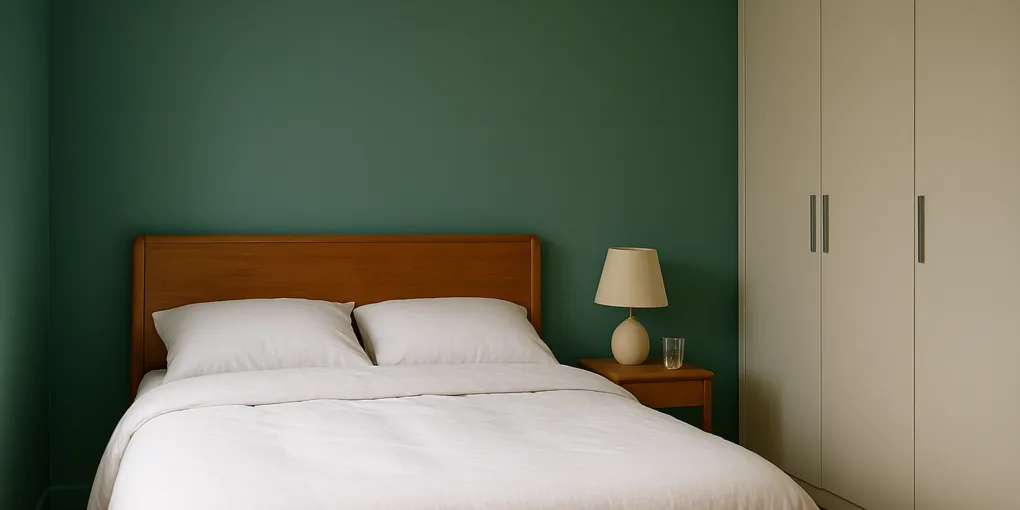
How Bedroom Clutter Affects Sleep — What the Research Shows
Evidence ExplainerHow We Evaluate Research on Bedroom Clutter and Sleep
ClutterScience reviews behavioral science and environmental psychology evidence using a five-factor composite approach:
| Factor | Weight | What It Measures |
|---|---|---|
| Research Quality | 30% | Study design rigor; peer-reviewed publication and replication |
| Evidence Depth | 25% | Mechanistic grounding; how directly the evidence links clutter to sleep |
| Practical Utility | 20% | Actionability of the findings for real bedroom organization decisions |
| Population Coverage | 15% | Whether findings replicate across diverse household types and demographics |
| Transparency | 10% | Honest characterization of causal limitations and individual variation |
The Connection Between Bedroom Clutter and Sleep
Most people who have tried to fall asleep in a visibly chaotic bedroom know the intuition: something about the disorder feels activating, not restful. The question is whether that intuition reflects a real mechanism — or is it simply the anxiety of knowing a mess needs to be addressed?
The research, drawn from neuroscience, environmental psychology, and behavioral sleep medicine, supports the intuition with a specific mechanistic explanation. Bedroom clutter doesn’t directly cause insomnia in the clinical sense, but it sustains two well-documented enemies of good sleep: visual cortex processing load and pre-sleep cognitive arousal. Both are established mediators of sleep onset difficulty and nighttime waking.
This article reviews what the evidence actually shows — the mechanisms, the research limitations, and what behavioral science suggests are the most effective bedroom changes for improving sleep quality.
The Visual Processing Mechanism
The most foundational piece of evidence for understanding why clutter affects sleep comes from neuroscience research on visual competition.
Princeton Neuroscience Institute researchers McMains and Kastner published fMRI evidence in 2011 (PMID: 21228167) on how visual stimuli compete for neural representation. When multiple objects are present in the visual field simultaneously — even when you are not consciously attending to them — they compete for representation in visual cortex. This competition suppresses each item’s individual neural representation and draws on the same attentional resources used for directed cognitive work.
In a bedroom context, this means that stacks of books, a chair draped with clothing, papers on the nightstand, and items scattered on the floor each contribute to a continuous background neural processing demand — even when the room is dark enough to make these items only partially visible. The visual system does not fully disengage from ambient stimuli even with eyes closed initially; the background processing continues until the sleep-onset transition occurs.
The practical implication:
A bedroom with fewer visible objects near the sleeper presents fewer competing stimuli for the visual cortex to process during the pre-sleep period. This doesn’t eliminate the neural processing load entirely — the brain continues processing sensory information throughout the night — but it reduces the ambient input that sustains wakefulness during the critical sleep-onset window.
The Pre-Sleep Arousal Mechanism
The second mechanism is cognitive rather than visual. It is also the more powerful of the two.
Psychologist Allison Harvey’s (2002) cognitive model of insomnia (PMID: 12445640), published in Behaviour Research and Therapy, identified pre-sleep cognitive arousal — worry, rumination, and mental activation before sleep — as a primary driver of sleep onset difficulty and sleep maintenance problems. The model is well-supported and forms part of the evidence base for cognitive-behavioral therapy for insomnia (CBT-I), the first-line clinical treatment for chronic insomnia.
Where clutter enters the picture:
Clutter functions as an environmental source of cognitive arousal triggers. A pile of papers represents an unfinished task. A laundry chair represents pending obligations. Items accumulating on surfaces are visual signals of unresolved decisions. When these cues are visible from the bed during the pre-sleep period, they can activate the task-oriented thinking that Harvey’s model identifies as a primary mechanism sustaining wakefulness.
This is consistent with the Zeigarnik effect — the cognitive science finding that incomplete tasks sustain more intrusive, spontaneous thinking than completed ones. A visible to-do pile activates this intrusion reliably. In the bedroom, the consequence of that intrusion is pre-sleep rumination rather than sleep onset.
The research on clutter and perceived control (Roster, Ferrari & Jurkat, 2016, PMID: 27018749) adds another dimension: people who feel their environment is unmanaged experience reduced sense of agency, which is associated with greater psychological distress including anxiety. Bedroom clutter that triggers this reduced-control response contributes to the anxious pre-sleep arousal that Harvey’s model identifies as the proximate driver of sleep difficulty.
The Cortisol Evidence
Saxbe and Repetti’s 2010 study (Personality and Social Psychology Bulletin, PMID: 19934011) found that women who described their home environments in high-clutter terms had significantly flatter diurnal cortisol slopes compared to women who described restorative home environments.
A flat diurnal cortisol slope — where cortisol does not appropriately decline from morning peak to evening — is a physiological stress marker associated with chronic stress exposure. Cortisol is also directly relevant to sleep: appropriate cortisol decline in the evening is a prerequisite for melatonin rise and the physiological transition to sleep readiness.
While the Saxbe and Repetti study examined home environment broadly rather than bedroom environment specifically, the directional implication is clear: living with high-clutter environments is associated with a cortisol pattern that is less conducive to sleep onset. A bedroom that sustains the high-clutter signal through the evening extends this cortisol suppression into the critical pre-sleep window.
The causal limitation:
The Saxbe and Repetti study is correlational. It cannot rule out the possibility that chronically stressed people both produce more clutter and have flatter cortisol slopes for independent reasons. This limitation should be acknowledged: the evidence supports the association strongly, but a controlled experiment testing bedroom decluttering as an intervention on cortisol levels and sleep was not located in the literature. The mechanism is well-grounded; the intervention evidence remains limited.
What Behavioral Sleep Medicine Recommends
Cognitive-behavioral therapy for insomnia (CBT-I), the evidence-based clinical treatment for chronic insomnia, includes a component called stimulus control therapy. The core principle: the bedroom should function exclusively as a sleep environment. When the bedroom is associated with a wide range of activities — work, screens, eating, unresolved tasks — the brain learns to associate the bedroom environment with wakefulness rather than sleep.
Visible clutter in the bedroom — particularly work-related materials, pending obligations, or items requiring decisions — extends the non-sleep associations of the bedroom environment. Each visible task cue reinforces the association between the bedroom context and cognitive activity rather than sleep.
Standard CBT-I stimulus control recommendations include:
- Remove work materials from the bedroom entirely
- Keep screens out of the sleep environment (or at minimum out of sight)
- Minimize visible sources of task-related arousal
- Reserve the bed exclusively for sleep and sex
Clearing bedroom clutter is not an explicit CBT-I protocol step, but it is entirely consistent with the stimulus-control principle: reducing the bedroom’s association with wakefulness-producing stimuli. The National Sleep Foundation includes a clutter-free sleep environment in its bedroom recommendations alongside darkness, cool temperature (approximately 65–68°F), and quiet.
What the Research Doesn’t Show
The evidence linking bedroom clutter to sleep quality has real limitations worth stating clearly.
No controlled decluttering trials were located. The research reviewed supports the mechanisms (visual competition, pre-sleep arousal, cortisol associations) — but no controlled experiment testing bedroom decluttering specifically as an intervention on polysomnographic sleep outcomes was found. The practical recommendations are well-grounded mechanistically; the intervention evidence remains inferred rather than directly measured.
Individual variation is real. Some people report sleeping well in visually chaotic bedrooms — and this variation is credible. The pre-sleep arousal mechanism is most potent for people who ruminate or have anxiety-related sleep difficulties. For people who naturally disengage cognitively at bedtime regardless of environmental cues, the clutter effect is likely smaller. Harvey’s (2002) cognitive model of insomnia explicitly identifies rumination propensity as a moderating variable.
Effect sizes are moderate. Bedroom organization is one environmental variable among many. Chronic insomnia, sleep apnea, circadian rhythm disruption, stimulant use, and clinical anxiety disorders all produce larger sleep effects than any organizational intervention. Decluttering a bedroom is a meaningful environmental adjustment — not a primary insomnia treatment.
Practical Recommendations: What to Prioritize
Given the evidence on visual competition and pre-sleep arousal, behavioral science suggests a clear prioritization for bedroom organization interventions:
1. Clear the nightstand and immediate bed surround first.
The objects visible from the pillow during the pre-sleep period are the highest-yield clutter to address. A clear nightstand eliminates visual stimuli at the exact moment of sleep onset. Remove all items not directly related to sleep (only the essentials: lamp, phone face-down or out of sight, water glass if needed). This is a 10-minute intervention with disproportionate pre-sleep impact.
Recommended: a nightstand organizer to contain the essentials without creating surface scatter.
2. Address the clothing chair.
The clothing-draped chair is one of the most common sources of visible bedroom clutter — and clothing represents pending laundry decisions that activate task-related thinking in the pre-sleep period. Either commit to a daily clothing return system (into the closet or hamper) or replace the chair with a dedicated valet stand with a limited capacity. A valet stand with a defined capacity forces daily decisions rather than accumulation.
3. Keep work materials out of the bedroom.
This is the stimulus control recommendation most directly supported by the CBT-I evidence base. Laptops, notebooks, papers, and work-related items visible from the bed sustain the cognitive association between the bedroom and active task work. If a home office in the bedroom is unavoidable, a screen or room divider between the work zone and the bed creates a physical and visual boundary.
Recommended: best home office desk organizers to contain work materials if the office occupies the same room.
4. Use closed-door storage for visible clutter accumulation.
Open shelves and surfaces accumulate clutter visibly. Closed storage — dressers with drawers, storage ottomans, lidded bins — contains the same items without the visual load. For bedrooms with limited closed storage, adding a storage ottoman at the bed foot provides significant concealment capacity without increasing floor footprint.
5. Establish a 10-minute nightly reset routine.
Roster et al.’s (2016) finding that the stress relief from decluttering comes from restored agency — not aesthetic improvement — implies that the act of resetting the bedroom nightly produces psychological benefit that precedes the sleep benefit. A brief nightly reset (returning items to their places, clearing surfaces visible from the bed) builds the environmental control signal that reduces pre-sleep arousal the mechanism predicts.
Bottom Line
The research supports a clear mechanism: bedroom clutter sustains pre-sleep cognitive arousal and visual processing load at the moment the brain most needs to disengage from environmental input. The cortisol evidence adds a physiological dimension — high-clutter environments are associated with stress biomarker patterns less conducive to sleep onset.
The direct causal evidence (controlled bedroom decluttering trials with measured sleep outcomes) is limited; the mechanistic case is strong. The practical recommendation is well-grounded: a visually calmer bedroom, particularly in the area immediately visible from the pillow, is a meaningful modification of the pre-sleep environment.
The goal is not a showroom bedroom — it is a sleep-associated one. An environment that the brain reliably associates with rest, rather than with unfinished tasks and unresolved obligations, is the environmental condition the evidence supports. For most bedrooms, that means clearing the immediate bed surround, addressing the clothing chair, removing visible work materials, and establishing a brief nightly reset that restores the sense of environmental control before sleep.
For related guides, see: how to organize your bedroom, best under-bed storage containers, and best bedroom storage organizers.
Frequently Asked Questions
- Research supports a meaningful connection, though the direct causal link is established through mechanism rather than controlled decluttering trials. Visual clutter in a bedroom activates background neural processing that competes with cognitive disengagement (McMains & Kastner, 2011, PMID: 21228167). Cluttered environments are associated with elevated pre-sleep cognitive arousal — the worry and rumination that delay sleep onset — consistent with Harvey's (2002, PMID: 12445640) cognitive model of insomnia. The practical implication is well-grounded: a visually calmer bedroom removes environmental stimuli that sustain wakefulness.
- Princeton Neuroscience Institute research (McMains & Kastner, 2011, PMID: 21228167) using fMRI demonstrated that visual stimuli compete for neural representation even without intentional attention. In a cluttered bedroom at night, visible objects — stacks of papers, clothes on chairs, items on surfaces — continue generating a background neural processing load. This load is not strong enough to prevent sleep in most people, but research indicates it competes with the cognitive disengagement that characterizes good sleep onset.
- The evidence is directionally consistent: a bedroom environment that contains visible unfinished-task cues (work materials, pending obligations, disordered belongings) is associated with higher pre-sleep cognitive arousal, which is one of the strongest predictors of sleep onset difficulty and nighttime waking. Behavioral sleep medicine (the CBT-I evidence base) consistently recommends reducing non-sleep associations in the bedroom environment — and visual clutter that triggers task-related thoughts represents a meaningful non-sleep association.
- Behavioral sleep medicine research identifies three modifiable bedroom factors with the most consistent evidence: darkness, temperature, and stimulus reduction. For stimulus reduction, this means limiting the bedroom to sleep-only uses (no screens, no work), clearing visible task-triggering clutter, and minimizing arousing visual stimuli near the bed. The National Sleep Foundation consistently includes a clutter-free sleep environment in its bedroom recommendations alongside darkness and cool temperature (approximately 65–68°F).
- Behavioral science research on clutter and perceived control (Roster, Ferrari & Jurkat, 2016, PMID: 27018749) suggests that the psychological benefit comes from restored agency — not just aesthetic improvement. Start with the most visible surfaces from bed: nightstand, floor area beside the bed, and any clothing chairs. Removing visible clutter from your immediate line of sight when lying in bed produces the largest reduction in visual stimuli at the moment of sleep onset. Full-room decluttering adds to the effect, but the area visible from the pillow is the highest-yield starting point.