Humidifier Filter Storage Protocol: Stop Losing Wicks, Brushes, and Descaling Packets
ProtocolQuick picks
| Product | Key Specs |
|---|---|
| See price on Amazon | — |
| See price on Amazon | — |
| See price on Amazon | — |
Product availability, certifications, and retailer details can change; check the current Amazon page before buying.
Humidifier clutter is usually not the appliance. It is the small ecosystem around it: replacement wicks, descaling packets, tiny brushes, model numbers, and the manual that explains which part fits. When those items scatter, the humidifier becomes harder to clean and easier to ignore.
This protocol is for storing dry replacement parts and cleaning tools. If cords and small appliances are the main counter problem, start with cord management for small appliances. If the bathroom is where supplies are mixing, see why bathroom drawers collect expired mini toiletries.
Quick starting point
- Filter backstock bin: Search Amazon for clear filter bins. Use a transparent lidded bin for unopened wicks and model notes.
- Cleaning-tool set: Search Amazon for appliance brush sets. Keep these brushes separate from kitchen bottle brushes.
- Humidity check: Search Amazon for digital hygrometers. Use one to avoid running the humidifier just because it is sitting out.
The rule: dry parts only
A humidifier parts bin is for dry unused filters, clean reusable parts, model information, and cleaning supplies. It is not for damp wicks, wet tank caps, or mystery parts from a prior appliance. Moisture changes the storage problem from organization to hygiene.
EPA indoor-air guidance warns that too much moisture can encourage mold and other indoor-air problems (EPA mold and moisture). Humidifier storage should not create a damp closed container in the closet.
Step 1: identify the model before sorting
Find the humidifier’s brand and model number before buying or sorting filters. Write it on an index card, label, or phone note and put that note in the parts bin. Many wicks look similar until they do not fit.
If you own more than one humidifier, separate parts by model. Do not put all white filters in one pile. A bin that saves space but causes wrong-part guessing is not organized.
Step 2: remove expired, damp, and mystery pieces
Pull every humidifier-related item from closets, bathroom cabinets, nursery drawers, and laundry shelves. Keep unopened filters that match a current appliance. Keep the manual if it is specific and useful. Keep cleaning brushes only if they are clean and dedicated to the humidifier.
Discard used disposable wicks, unlabeled filters that do not match a current model, crusted packets, and brushes that were stored wet. If a reusable part is part of the appliance, clean and dry it according to the manual before storing it.
Step 3: build a small parts bin
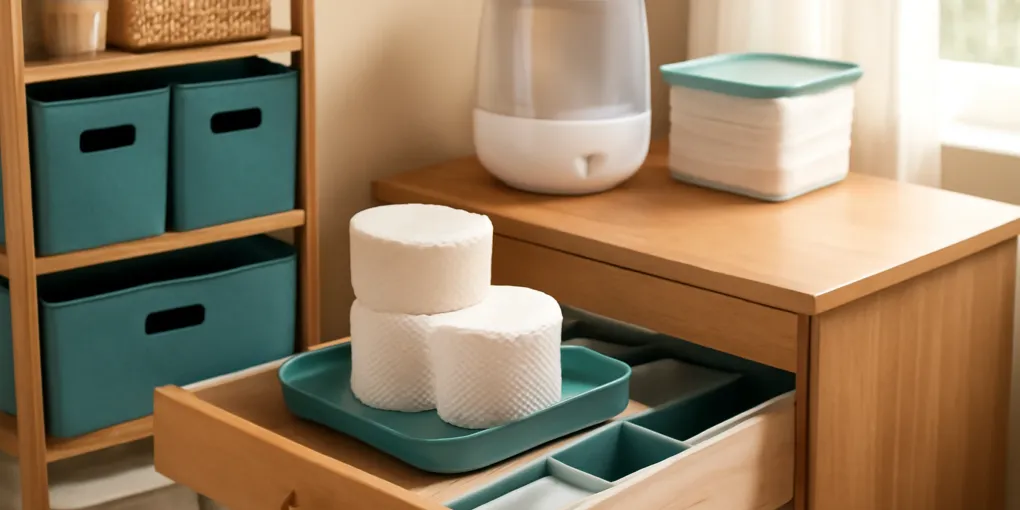
Use a clear latching bin or handled caddy. Put the filters upright if they are boxed, flat if they would bend, and in their original packaging when possible. Add a small bag for brushes and descaling packets so they do not fall between filters.
Label the bin with the room or appliance model: bedroom humidifier, nursery humidifier, or living-room evaporative humidifier. A label like “misc appliance” is too vague and will attract unrelated parts.
Step 4: choose a storage location
Store the bin near the appliance shelf, not under a bathroom sink or beside chemicals. A linen closet, utility shelf, or seasonal appliance shelf works if it stays dry and accessible. Avoid garages and damp basements unless the filters stay sealed and the temperature/moisture conditions fit the product instructions.
The humidifier itself should be empty and dry before off-season storage. Keep the bin beside it or on the shelf above it. If the parts live in another room, they will be lost again by the next dry season.
Step 5: set a replacement trigger
Put one replacement trigger in the bin: a calendar note, a sticky note on the box, or a line on the appliance card. The trigger should say when to check the filter, not simply “buy more.” Use the humidifier manual for exact replacement timing because evaporative wicks, ultrasonic cartridges, and demineralization parts are not the same.
This is also where a hygrometer helps. If the room is already in a comfortable humidity range, the right move may be storing the humidifier rather than running it longer. Place the hygrometer away from direct mist so it measures the room, not the plume.
Model-specific setup examples
Single bedroom humidifier: tape or write the model number on an index card inside the parts bin, then store one unopened wick or filter, the small cleaning brush, and descaling packets together. Keep the card separate from the wet tank so the label stays readable. When the last replacement filter goes into the machine, add the model number to the shopping list before the empty box disappears.
Whole-home or multi-room setup: use one clear bin per appliance family, not one big mixed humidifier box. Filters for different tank shapes can look similar after the packaging is opened, and the wrong wick can leave gaps that reduce evaporation. Put a painter’s-tape label on each sealed package with the room name and model, then keep the manual or a photo of the model plate in the same bin.
Off-season closet storage: clean and dry the tank before it goes on the shelf, but store replacement filters outside the tank. A closed appliance body can trap odor and moisture; a clear latching bin lets you see whether supplies are dry, sealed, and still matched to a machine you own.
What to buy today
Buy the organizer only after you identify the model numbers. For most homes, the best first purchase is a clear latching bin that fits one season of unopened filters plus the cleaning brush. Add a small hygrometer if you are deciding when to run the machine; add a bottle brush only if your tank has a narrow neck the factory brush cannot reach. Do not buy bulk filters until you confirm the humidifier model will stay in service through the next season.
Parts-bin checklist
| Item | Keep in the bin? | Why |
|---|---|---|
| Unopened matching filters | Yes | They are the main backstock item |
| Model number card | Yes | Prevents wrong-filter purchases |
| Dedicated cleaning brush | Yes, if dry | Keeps tank cleaning tools findable |
| Descaling packets | Yes, if sealed | Useful only when paired with the appliance |
| Used damp wick | No | Moisture does not belong in storage |
| Mystery filter | No | It creates future guessing |
Seasonal shutdown routine
At the end of humidifier season, empty the tank, clean the appliance according to the manual, and let every part dry fully. Put the appliance on the seasonal shelf. Put unopened filters and dry tools in the labeled bin. Add the model card on top so the first thing you see next season is the part number.
Do not store the appliance with water in the tank, and do not hide dirty brushes in the parts bin. The shutdown routine is what makes the next setup fast instead of suspicious.
Humidifier Filter Storage FAQ
Where should humidifier filters be stored?
Store dry unused filters in a labeled bin near the humidifier or seasonal appliance shelf, away from bathroom moisture and cleaning chemicals.
Should used humidifier wicks be stored for next season?
No. Store only clean reusable parts and unopened replacement filters; discard used disposable wicks according to the humidifier manual.
What should go in a humidifier parts bin?
Keep replacement filters, the model number, cleaning brush, descaling packets, and the manual or a QR note together.
Can humidifier filters be stored in the bathroom?
It is better to store them in a dry closet or utility shelf. Bathroom humidity can make packaging and paper instructions deteriorate.
Should cleaning brushes stay with the humidifier?
Yes, if they are clean and dry. Keep humidifier brushes separate from bottle brushes, dish brushes, and toilet-area tools.
What if I cannot find the model number?
Look on the appliance label, base, manual, or manufacturer’s product page before buying filters. Guessing by shape is how wrong filters accumulate.
Sources
- EPA mold and moisture basics: https://www.epa.gov/mold
- EPA guide to air cleaners in the home: https://www.epa.gov/indoor-air-quality-iaq/guide-air-cleaners-home