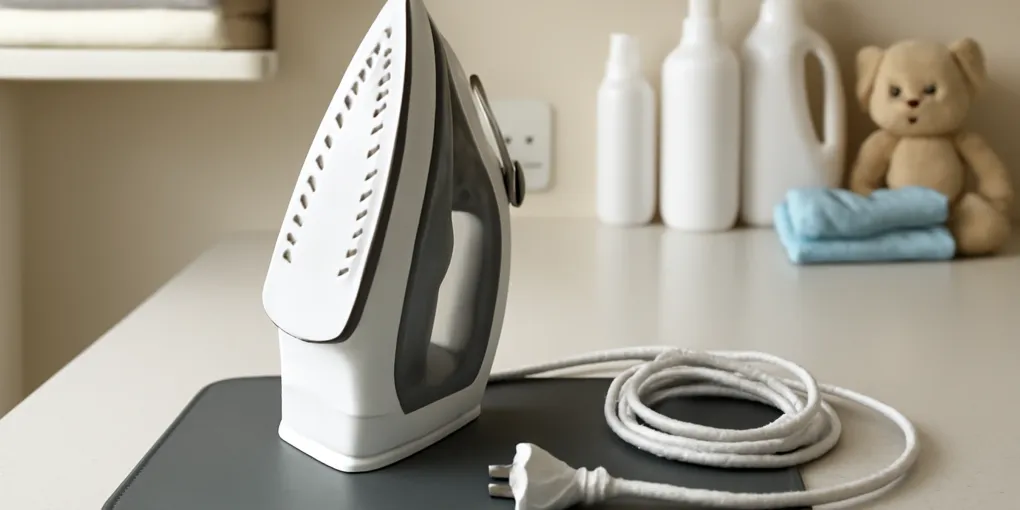
Laundry Iron Cooling Station Protocol: Stop Hot Soleplate and Cord Clutter
ProtocolQuick picks
Heat-resistant iron rest mat
★ Top pick Best first tool- Note: Creates a visible cooling zone so the hot soleplate does not land on fabric, plastic, or a crowded shelf.
Wall-mounted iron holder
Best after cooling- Note: Useful only after the iron is unplugged and cool enough for the holder instructions.
Cord label and reusable ties
Best cord reset- Note: Keeps the iron cord separate from lint rollers, spray bottles, and steamer cords.
An iron is one of the few laundry tools that can be both ordinary clutter and an immediate burn risk. The problem usually starts after use: the iron is unplugged, the soleplate is still hot, the cord is stretched across the washer, and the nearest shelf already holds stain spray, lint rollers, and dryer sheets.
This protocol creates a small cooling-and-storage station. It is for households that iron or steam occasionally and then lose the appliance in a laundry shelf, hallway closet, or bedroom chair pile. For lint and dryer-zone clutter, use the laundry room lint fire-risk reset. For cords in the garage, use the garage extension cord storage safety protocol.
Quick picks for an iron station
- Cooling surface: Search Amazon for heat-resistant iron rest mats. Choose a mat or rest that matches the iron manufacturer’s use instructions.
- Final storage: Search Amazon for wall-mounted iron holders. Mount only where the iron will not block a door, walkway, or child-accessible edge.
- Cord cleanup: Search Amazon for reusable cord ties. Use loose ties, not tight wraps around a warm appliance.
Why the cooling zone matters
Electrical Safety Foundation International emphasizes safe appliance and cord use, including keeping cords in good condition, using appliances as instructed, and avoiding damaged wiring (ESFI home electrical safety). ESFI’s extension-cord guidance is also a useful reminder for temporary laundry setups: cords should not be pinched, hidden under rugs, or routed where people walk (ESFI extension-cord safety).
For an iron, that guidance becomes a storage rule: the cooling location is part of the system. If the iron cools on a pile of laundry or beside plastic bottles, the organizer failed before storage even begins.
Step 1: choose one cooling surface
Pick a stable surface close to the outlet and ironing board. The surface should be adult-controlled, level, and away from fabric piles, paper, plastic bins, spray bottles, and water. A heat-resistant mat or approved iron rest can help, but it must be used the way the product and iron instructions allow.
Do not choose the top of a washer if vibration makes the iron wobble. Do not choose a narrow shelf where the cord hangs into the walking path. Do not choose the ironing board if the board is often folded while the iron is still warm.
Step 2: make unplugging visible
The station should make the unplugged state obvious. After use, turn the iron off, unplug it, and place the plug end on the cooling surface or in a small open cup labeled by function if your household uses labels. The point is visual confirmation: nobody should wonder whether the iron is still powered.
Avoid running the cord behind other bottles or tools while the appliance is cooling. A hidden cord gets tugged. A tugged iron can fall.
Step 3: separate the cord from spray and lint tools
Iron cords tangle easily with steamer cords, spray-bottle triggers, lint rollers, and spare hangers. Give the iron cord its own loose tie after cooling. If you own both an iron and a garment steamer, store the cords in separate loops so the wrong appliance is not pulled down when someone grabs one.
Never wrap a cord tightly around a hot or warm iron unless the manufacturer specifically allows that storage pattern. Tight wrapping can stress the cord near the strain relief, and heat can make bad habits worse.
Step 4: move from cooling to final storage
Once cool, the iron can move to a wall holder, shelf bin, or cabinet. Wall holders are useful when laundry shelves are crowded, but they need a secure mount and a location that does not create a head-level corner or a child-reachable handle. Shelf bins are better when the iron is used rarely, as long as the bin is not shared with loose bottles.
If the final holder requires the iron to be cool, obey that instruction. A holder is not a safe shortcut for a hot soleplate.
Fit checklist before buying a holder
| Check | What to measure |
|---|---|
| Iron size | Soleplate length, handle height, and heel width |
| Cord path | Whether the plug can sit without bending sharply |
| Mounting surface | Stud, cabinet side, masonry, or hollow door limits |
| Door swing | The holder should not be hit by a door or laundry basket |
| Child access | Handles and cords should not invite pulling |
Maintenance reset
Once a month, empty the station. Remove dried spray residue, lint, paper tags, and random cloths. Inspect the cord for nicks, crushed spots, or heat damage. If the soleplate has residue, clean it according to the iron manual rather than scraping it with drawer tools.
This is also the moment to decide whether the iron still deserves prime storage. If you use it twice a year, a labeled shelf bin may beat a wall holder. If you use it weekly, the holder and cooling mat should stay near the board.
Iron cooling station FAQ
Can I put the iron straight into a cabinet?
Only if it is cool and the manufacturer instructions allow that storage. A cabinet full of cloth, paper, plastic, and cleaning products is not a cooling surface.
Is a silicone mat safer than standing the iron upright?
It depends on the iron and mat instructions. The safer choice is the approved position on a stable heat-safe surface, with the cord out of the walking path and the appliance unplugged.
What if my laundry room is too small for a station?
Use a portable tray or mat that lives with the ironing board. The station can be small, but it cannot be imaginary. The iron needs a designated cooling place every time.
Bottom line
A laundry iron station is a sequence, not a container: unplug, cool visibly, gather the cord loosely, then store. Buy a mat or holder only after you know where the hot appliance will sit, how the cord will route, and who can reach it.
Frequently Asked Questions
- Use a stable, heat-safe, adult-controlled surface where the iron can sit upright or on an approved rest away from fabric, plastic, water, and children.
- No. Let the appliance cool, then gather the cord loosely according to the manufacturer's instructions so the cord is not kinked or stressed.
- It is storage, not a cooling shortcut. Follow the holder and iron instructions for when the appliance can be placed in it.