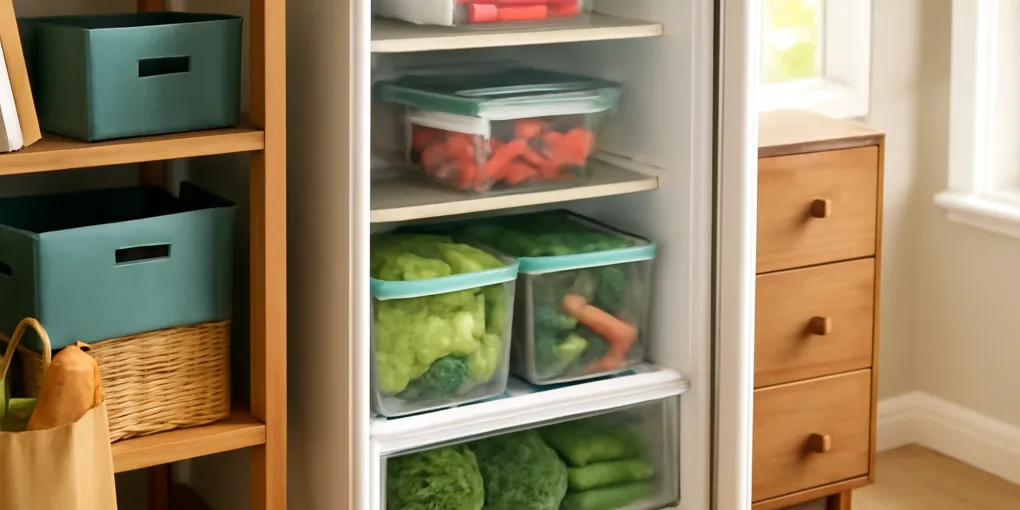
Best Produce Saver Containers for Fridge Drawers: Stop Lettuce Slime and Berry Avalanches
Buyer's GuideRubbermaid FreshWorks produce saver containers
Best vented container setBest For: Berries, greens, and small produce that need airflow plus a visible home
Quick picks
| Product | Key Specs | Pros / Cons |
|---|---|---|
| See price on Amazon |
|
|
| See price on Amazon |
|
|
| See price on Amazon |
|
|
Product availability, certifications, and retailer details can change; check the current Amazon page before buying.
Produce saver containers are useful only when they solve a specific fridge failure: wet greens pressed into plastic bags, berries crushed behind leftovers, carrots disappearing under a lettuce head, or drawer corners that collect loose stems. They are not a moral upgrade from grocery packaging. The right container makes the food easier to see, dry, and use before it spoils.
If your whole refrigerator is overloaded, start with our fridge leftover bin reset protocol before buying more containers. If the freezer is where food vanishes, see our freezer inventory bin system guide. This guide is for fresh produce drawers where visibility, moisture, and crushing are the daily problems.
Quick product shortlist
- Best vented set: Search Amazon for Rubbermaid FreshWorks containers when berries and greens need clear, stackable homes.
- Best adjustable airflow: Search Amazon for OXO GreenSaver produce keepers when a removable basket and vent control matter.
- Best lettuce-specific box: Search Amazon for Progressive lettuce keepers when whole heads of lettuce are your repeat failure.
Buy by drawer dimensions and the produce you actually waste, not by a matching-fridge photo.
What produce saver containers can and cannot do
Produce quality depends on starting freshness, temperature, humidity, airflow, and handling. The FDA advises keeping the refrigerator at 40°F or below and separating produce from raw meat, poultry, and seafood. A produce saver helps inside that basic safety setup by controlling where moisture collects and whether fragile food gets crushed.
The container cannot fix a warm fridge, a drawer packed past visibility, or a shopping routine that buys three heads of lettuce for a household that eats one. It also cannot replace food-safety judgment. Slimy leaves, moldy berries, and off odors should not be reorganized back into the drawer.
Best for most households: vented clear produce containers
A vented clear container such as Rubbermaid FreshWorks is the most flexible starting point. It gives berries, grapes, baby carrots, snap peas, and small greens a defined footprint. Clear sides help you see quantity without opening the drawer. A raised base or insert keeps food from sitting in every drop of moisture.
Choose this style if your current drawer contains half-open clamshells, loose bags, and produce stacked two layers deep. Skip the giant set if you only need a berry box and a greens box. Too many containers can turn the drawer into a sliding puzzle.
Best for rinsed greens: basket-style keeper
Basket-style keepers work well when you rinse lettuce, herbs, or grapes and want the excess water to drain away from the food. The removable basket also makes it easier to lift the produce out while the outer shell catches drips.
The tradeoff is bulk. Measure the internal drawer height and front-to-back depth. If a keeper forces the drawer to jam, it will be ignored. Also check whether the model uses replaceable filters. A filter you will not replace is not a reason to pay more.
Best single-job choice: lettuce keeper
A lettuce keeper is worth considering if your repeat waste is whole romaine, green leaf lettuce, or herbs folded into a bag. The vertical shape protects leaves from being flattened under heavier vegetables. It also gives one obvious home to the item most likely to collapse.
Do not buy a lettuce keeper as a general produce system. It is too specialized for berries, tomatoes, peppers, and cut vegetables. If you rarely buy whole heads, use a lower, more flexible vented container instead.
Fit checklist before buying
- Measure drawer height, width, and how far the drawer opens.
- Name the top two produce items you throw away most often.
- Choose clear containers that hold one normal shopping unit, not half a package plus overflow.
- Prefer removable trays or baskets that can be washed separately.
- Avoid opaque boxes, deep stacks, and container sets that require the whole drawer to be unloaded.
Practical score
| Factor | Weight | What matters |
|---|---|---|
| Visibility | 30% | You can see the food and quantity before shopping again. |
| Moisture control | 25% | Food is not sitting in pooled water or sealed into a damp bag. |
| Drawer fit | 20% | The container clears the drawer and leaves space for loose produce. |
| Cleaning friction | 15% | Inserts, vents, and seals can be washed without a project. |
| Shopping discipline | 10% | The system matches how much produce the household eats. |
Common fridge-drawer mistakes
The first mistake is sealing wet produce in a box because the box looks more organized than a bag. Berries that were rinsed and not dried still carry water into the container. Lettuce that was packed with a wet paper towel can collapse against the sidewall. A saver container should separate food from pooled water, not trap extra water in a smaller space.
The second mistake is mixing ethylene-sensitive and high-ethylene produce without thinking about use timing. Apples, pears, and some ripening fruit can speed changes in nearby produce. The container system should make categories easier to manage: berries in one visible box, greens in another, carrots or celery in a third if those are regular purchases. Do not turn one large bin into a mixed produce drawer inside the produce drawer.
The third mistake is hiding expiration clues. Original clamshells and bags sometimes show packed-on dates, brands, or handling instructions. If you decant produce, keep date awareness by writing the purchase date on a removable label or by using one container per shopping trip. Combining old berries with new berries is how a clean-looking box becomes a spoilage accelerator.
Match the container to the produce
| Produce | Better container style | Avoid |
|---|---|---|
| Strawberries and blueberries | Low clear vented box with raised base | Deep stacking that crushes lower fruit |
| Romaine or leaf lettuce | Tall lettuce keeper or wide greens keeper | Tight sealed bag with wet leaves pressed together |
| Carrots and celery | Clear bin with enough length and a dry base | Loose sticks buried under greens |
| Herbs | Small vented keeper or upright water method when appropriate | Forgetting them in a produce drawer corner |
| Cut fruit or cut vegetables | Food-storage container kept cold and used quickly | Treating cut produce like whole produce |
Cut produce is a different safety case from whole produce. Once produce is cut, the handling surface, refrigerator temperature, and use window matter more. Use clean containers, keep cut produce cold, and discard food that shows spoilage.
When a simple drawer bin is better
Sometimes the best produce organizer is not a specialty saver. If the real problem is that apples roll behind yogurt or cucumbers vanish under lettuce, a simple clear drawer bin can be enough. Use specialty vented containers for fragile or moisture-sensitive items and plain bins for sturdy produce that only needs a boundary.
This is especially true for households that shop every two or three days. If produce turns over quickly, visibility may matter more than microclimate control. A low clear bin labeled eat first can outperform an expensive vented set because it changes the behavior at the drawer, not just the container.
How to test one container before buying a set
Buy one size, put it in the actual drawer, and load it with the produce you waste most often. For one week, check whether the food is easier to see, whether moisture collects, whether the lid is annoying, and whether the container returns to the fridge after washing. If the test container sits on the counter because it is too fussy to clean, the set will not improve the fridge.
Also test shopping fit. A saver that holds half a clamshell of strawberries creates a second partial package. A greens keeper that is too tall for the drawer will migrate to a shelf and block leftovers. The container should absorb the normal grocery unit cleanly. If it cannot hold the normal amount you buy, choose a simpler bin or change the shopping quantity before buying a full set. That small test prevents an expensive container set from becoming another half-used fridge accessory.
Produce saver FAQ
Are airtight containers good for produce?
Not always. Some produce benefits from ventilation and humidity control rather than a fully sealed box. For fresh-cut produce, follow food-safety storage guidance and keep it cold. For whole produce, choose the container style that matches moisture and airflow needs.
Should tomatoes go in a produce saver container?
Usually no for everyday counter-ripening. Tomatoes are often better stored according to ripeness and use timing rather than hidden in a crisper box. Use the produce drawer for foods that are supposed to stay cold.
What is the easiest way to clean produce containers?
Empty them on grocery day, remove baskets or trays, wash sticky juice or leaf residue, and dry the parts before reloading. A container that goes back wet can recreate the slimy-bag problem.
Sources and safety notes
- FDA refrigerator and freezer storage guidance: https://www.fda.gov/food/buy-store-serve-safe-food/refrigerator-thermometers-cold-facts-about-food-safety
- FDA selecting and serving produce safely guidance: https://www.fda.gov/food/buy-store-serve-safe-food/selecting-and-serving-produce-safely
- University of Maine Cooperative Extension produce storage guidance: https://extension.umaine.edu/publications/4135e/
Frequently Asked Questions
- They help most when the current failure is hidden, wet, or crushed produce. They cannot rescue overbuying or food that is already old when stored.
- Wash only when you can dry them well, or wash just before eating. Standing moisture in any container shortens berry life.
- Start with one or two high-turnover foods. A drawer full of specialized boxes can hide produce as badly as bags do.