Why Reusable Ice Packs Leak in Freezer Drawers and How to Store Them So Lunch Packing Is Faster
Evidence ExplainerQuick picks
| Product | Key Specs |
|---|---|
| See price on Amazon |
|
| See price on Amazon |
|
| See price on Amazon |
|
Product availability, certifications, and retailer details can change; check the current Amazon page before buying.
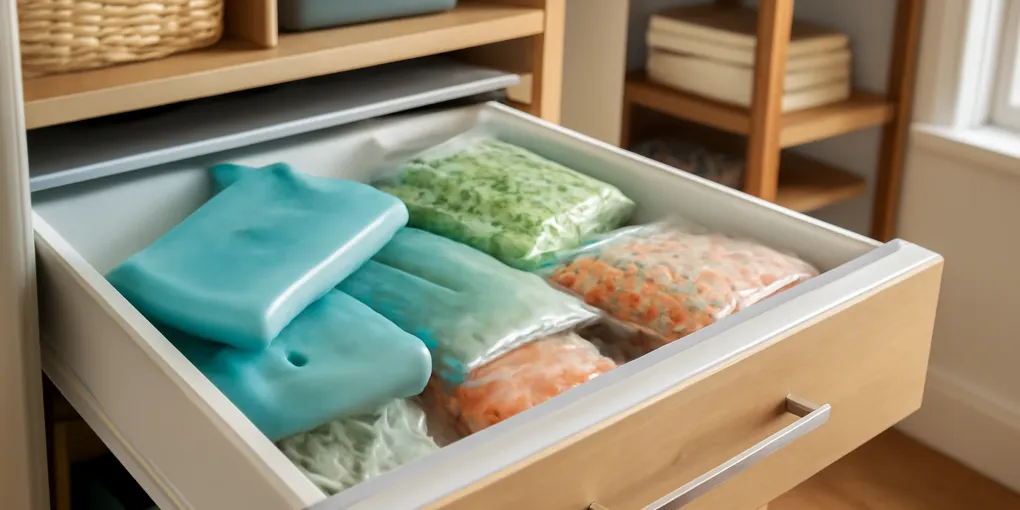
Reusable ice packs are small enough to ignore until they make the freezer drawer annoying. They slide under frozen vegetables, crack when wedged against hard food boxes, return from lunch bags damp, and somehow vanish on the morning a lunch needs to leave quickly.
The storage problem is not that ice packs are complicated. It is that they move between warm, wet, handled lunch bags and a freezing drawer. They need a drying step, a consistent freezer spot, and a size rule. For adjacent kitchen systems, see our school lunch supply organization guide and freezer inventory bin system explained.
Product starting point
- Freezer zone: Search Amazon for shallow freezer-safe bins for ice packs
- Replacement set: Search Amazon for flexible lunch box ice packs
- Drying zone: Search Amazon for reusable lunch container drying racks
Buy storage only after sorting the ice packs you already own. If half are cracked, sticky, bulging, or the wrong shape for the lunch boxes, the organizer will only preserve a bad set.
Why the freezer drawer makes leaks more likely
Freezer drawers are rough on thin lunch packs. The pack is cold and stiff. The drawer moves. Other frozen items press into the edges. A flat pack that would be fine on an open shelf can bend or catch when it is buried under bags and boxes.
FDA cold-storage guidance and National Center for Home Food Preservation freezer guidance both point back to the same practical need: cold items work best when they are frozen, intact, and handled deliberately. A lunch ice pack supports that job only if it is intact, frozen, and easy to grab. A mystery pack stuck under the drawer is not helping anyone pack a safer lunch.
The organizer’s job is to prevent three failure modes:
- Crushing: heavy frozen food presses into thin pack seams.
- Hiding: packs disappear under bags and do not refreeze evenly.
- Re-freezing wet: sticky or damp surfaces freeze to the drawer or each other.
A shallow bin solves all three better than a deep basket. The packs stand or stack in one visible zone, and damaged ones are easier to notice.
Build a thaw, dry, refreeze loop
The best freezer setup starts outside the freezer. When lunch bags come home, ice packs should not be tossed directly into the drawer from a damp bag. Give them a small landing routine:
- Remove from lunch bag.
- Wipe obvious spills.
- Let the pack dry with containers or water bottles.
- Check for swelling, cracks, or sticky seams.
- Return to the freezer bin.
This is not about making the kitchen fussy. It is about preventing one sticky pack from contaminating the whole drawer. If the pack has leaked, follow the product’s disposal directions rather than refreezing it in a plastic bag.
Use a size rule so the bin does not jam
A lunch ice pack bin fails when it holds every promotional, cooler, baby-bottle, and picnic pack in the house. Keep the daily bin for the packs that match daily lunch containers. Move large cooler blocks to a separate freezer or garage chest freezer zone if you use them.
Good daily-bin rules:
- Same general thickness so packs stack or stand neatly.
- Flat enough to fit the actual lunch bag.
- No odd novelty shapes unless a child truly uses them.
- One spare set, not a drawer full of backups.
If a pack is too tall for the bin, too bulky for the lunch box, or too old to identify, it does not belong in the daily zone.
Storage options that work
| Option | Best use | Watch-out |
|---|---|---|
| Shallow clear freezer bin | Daily flat lunch packs | Measure drawer height before buying |
| Narrow vertical file bin | Standing packs like folders | Can tip if the drawer is slammed |
| Small silicone tray | Tiny snack-bag packs | Too flexible for heavy drawer loads |
| Door shelf container | Upright freezers with stable door shelves | Door temperature can vary more than inner shelves |
Do not use cardboard, fabric, or a woven basket in the freezer. Those materials trap moisture and make the bin harder to clean after a leak.
When to replace the pack instead of reorganizing
Replace reusable ice packs that are cracked, leaking, swollen, sticky after washing, or no longer freeze solid according to the product’s design. Also replace sets that are so mismatched that every lunch requires a search. The cheaper fix is often a consistent multipack plus one labeled bin, not a larger drawer organizer.
If you pack medication, infant feeding supplies, or food that needs stricter cold handling, follow the product and food-safety guidance for that specific use. A lunch-box ice pack storage article should not be your medical or food-safety plan.
How we evaluate the setup
| Factor | Weight | What matters |
|---|---|---|
| Visibility | 25% | The right pack is grab-ready during morning packing. |
| Damage prevention | 25% | Packs are not crushed under heavy frozen food. |
| Drying habit | 20% | Damp packs do not go straight back into the drawer. |
| Size discipline | 20% | The daily zone holds matching lunch packs, not every cooler block. |
| Cleanability | 10% | The bin can be washed after a leak. |
FAQ
Can I store ice packs loose in the freezer door?
Sometimes, but only if they stay frozen, visible, and contained. Many households do better with a shallow inner-drawer bin because the packs are less likely to fall, thaw at the edge, or scatter.
Are hard-sided packs better than flexible packs?
Hard-sided packs are useful for coolers and crush resistance. Flexible packs often fit lunch bags better. Choose by the container you pack, then keep only the sizes that actually get used.
What if the freezer is already too full?
Create a small lunch-only freezer zone before buying more packs. If the freezer drawer cannot spare enough space for a shallow bin, the real problem may be frozen-food inventory rather than ice-pack storage.
Sources
- National Center for Home Food Preservation freezer guidance: https://nchfp.uga.edu/how/freeze/general-information-freezing/
- FDA refrigerator and freezer storage chart: https://www.fda.gov/media/74435/download