Why Nightstand Clutter Builds Up: The Bedside Friction Loop Explained
Evidence ExplainerQuick picks
Bedside catchall tray
★ Top pick Best first boundary- Best For: Glasses, lip balm, watch, earbuds, and one small daily pocket item
- Caveat: A tray is a boundary, not an excuse to keep everything
Nightstand cable clip set
Best charger fix- Best For: Phone, watch, earbud, and lamp cords that slide behind the table
- Caveat: Adhesive clips need a clean surface and slack management
Small drawer organizer tray
Best hidden-control option- Best For: Medication packets, tissues, reading accessories, and sleep masks
- Caveat: Drawer organizers fail if the drawer is used for unrelated storage
Nightstand clutter builds up because the bedside table is the last landing zone of the day. It catches the phone, book, glasses, water, tissues, lip balm, medication packet, watch, receipts, and the cable that fell behind the table again. By the time the clutter happens, attention and energy are low.
That timing matters. A nightstand is not just a small table. It is a transition surface between waking, sleeping, illness, reading, charging, and getting out the door. If the surface has no boundaries, every small bedtime object earns a temporary home and many never leave.
Quick comparison: fixes that match the nightstand failure
- For tiny daily items: bedside catchall tray (Search Amazon for bedside catchall trays).
- For charging cords: nightstand cable clips (Search Amazon for nightstand cable clips).
- For hidden essentials: small drawer organizer tray (Search Amazon for small nightstand drawer trays).
Do not buy a large tabletop organizer first. Most nightstands need fewer surface categories, not more vertical cubbies.
The bedside friction loop
Nightstand clutter starts with friction. It is easier to drop something on the table than to open a drawer, walk to the bathroom, return a book to a shelf, or coil a cable. At night, the lower-effort option wins. In the morning, the same surface is often ignored because the household is leaving the bedroom.
This mirrors the pattern in why junk bowls spread across counters: a small unassigned object lands in the easiest visible place, then attracts similar objects until the surface becomes a mixed-category holding zone.
Why chargers make it worse
Charging cords add a mechanical problem. A six-foot phone cable can slide behind the nightstand, wrap around the lamp cord, or run across the exact spot where the water glass and book should sit. When the cord is annoying, people leave the phone diagonally across the tabletop, then stack tissues, earbuds, and receipts around it.
A cable clip or small charging dock helps only if it fixes that route. Stick the clip to the back edge or side rail after cleaning the surface, keep the cable head parked at the bed-facing corner, and leave just enough slack to pick up the phone without dragging the lamp or water glass. If a watch charger, earbud case, and phone all charge bedside, give each one a separate clip or move the less-used charger to the drawer.
The tray boundary
A bedside tray works because it gives small items a physical limit. Glasses, a watch, earbuds, lip balm, and one medication reminder can share a tray. Receipts, old cups, extra books, and random packaging should not.
The tray should be small enough that overflow is visible. If the tray covers half the table, it becomes a decorative junk bowl. If it holds only the true nightly items, the reset takes less than a minute.
What belongs in the drawer
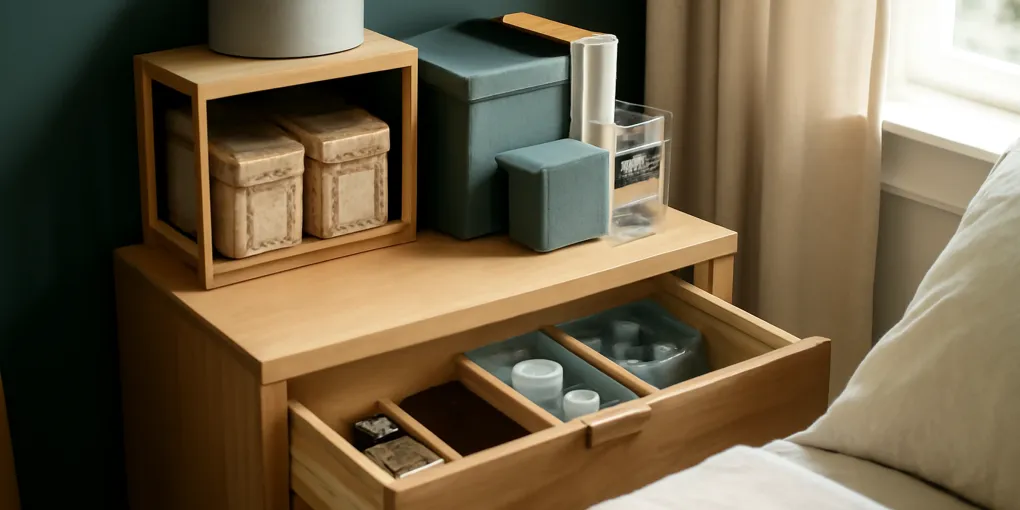
A drawer is useful for items that should be close but not displayed: earplugs, sleep mask, tissues, medication packets, reading light, spare charging brick, or a thermometer. Use a shallow organizer tray so categories do not slide together.
Do not store unrelated backups in the nightstand drawer. Batteries, old cables, paperwork, and souvenir objects create the same search problem as surface clutter, only hidden.
Fit checks that matter
| Fit check | What to verify |
|---|---|
| Fit and safety | Strong when the setup reduces bedtime decisions and keeps the sleep surface visually calm. |
| Verifiable details | Best judged by actual nightly objects, cable route, drawer depth, and whether the reset works while tired. |
| Value and capacity | High for a small tray or cable clips; low for bulky organizers that add more categories to the surface. |
| Daily friction | Common friction points are cords slipping, too many books, old cups, and drawers used for unrelated storage. |
| Listing clarity | Product listings should show dimensions, bottom grip, cable-slot size, and material closeups. |
Safety and sleep notes
The nightstand often holds medication, liquids, cords, and glass near a bed. Keep medications in child-resistant storage when children or guests may access the room. Route cords so they do not pull lamps or devices off the table. Keep water away from power strips and charging bricks.
The CDC notes that insufficient sleep is a public health issue, and sleep environments work better when they reduce disruptions. Organization is not a medical sleep treatment, but a calmer bedside setup can remove small avoidable irritants from the sleep routine.
Sources: CDC sleep and sleep disorders, https://www.cdc.gov/sleep/, and FDA safe medicine storage and disposal, https://www.fda.gov/drugs/safe-disposal-medicines/disposal-unused-medicines-what-you-should-know.
A five-minute nightstand reset
Remove everything from the top. Put back the lamp, current book or reader, water spot, and one tray. Clip or route the charging cable. Move extra books to a shelf, cups to the kitchen, medication back to its safe storage location if it does not need to be bedside, and receipts to the paper inbox.
Then empty the drawer enough to add one small organizer tray. Give each compartment a job. If an item does not help with sleep, illness, reading, charging, or waking up, it probably does not belong in the nightstand.
FAQ
How many books should stay on a nightstand?
One current book or reader is the cleanest rule. A second book is fine if it is actively being read. Stacks of aspirational books turn the nightstand into a guilt shelf.
What is the best way to stop bedside cable clutter?
Anchor the cable route with clips or a small dock, then remove unused chargers. One phone cable and one watch or earbud cable are manageable; a mixed charging nest usually needs a separate drawer or charging station.
Should medicine stay on the nightstand?
Only keep medicine bedside when it is part of a safe, current routine and is not accessible to children, pets, or guests. Otherwise use safer medicine storage and keep a reminder card or alarm instead.